Loading cart…
No products in the cart.

The Trojan War in Paintings · Part 2 of 3

The Iliad is not about the Trojan War. It is about a few weeks in the tenth year of it, and about one man's anger. Achilles, the son of a goddess, the fastest and deadliest soldier at Troy, is insulted by his commander, withdraws from the fight, and the poem follows what his absence costs. This is his story in paintings, from the centaur who raised him to the old king who came to his tent at night.
Thetis, the sea goddess whose wedding started all this, knew her son would die young if he went to Troy. She tried everything: she dipped him in the Styx to make him invulnerable, holding him by the heel, and when he was old enough she sent him to be taught by Chiron, the wise centaur, who taught him hunting, music and medicine.

John Singer Sargent painted Chiron and Achilles in 1921 for the ceiling of the Boston museum, at the end of his life, in the classical manner he had turned to after giving up portraits. Donato Creti, two centuries earlier, shows the handing over: the little boy passed up onto the centaur's back by a nurse. Pompeo Batoni shows the reverse, Thetis coming to take him back when the war is coming and she has a plan.
The plan was to hide him. Thetis dressed Achilles as a girl and sent him to the court of King Lycomedes on the island of Skyros, among the king's daughters. It worked until Odysseus arrived disguised as a merchant with a basket of jewellery and a sword. The daughters reached for the jewellery. One of them reached for the sword.
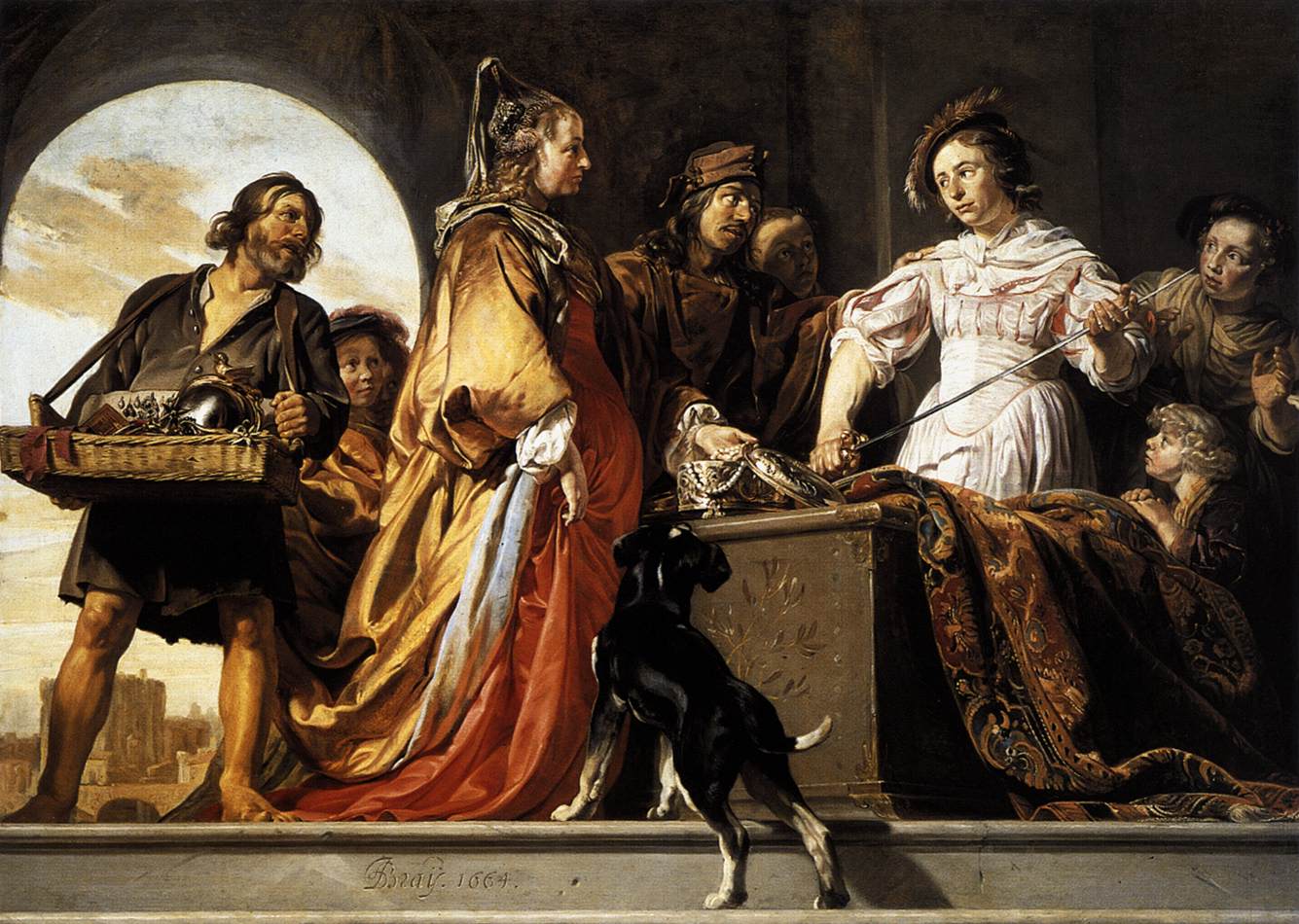
The story is not in Homer, who would have found it undignified, but painters could not resist it: a hero in a dress, a trick, a room full of women and one wrong movement. Batoni gives it the polish of a Roman salon; de Bray, in Haarlem, makes it a family group, and is said to have used his own relatives as models.

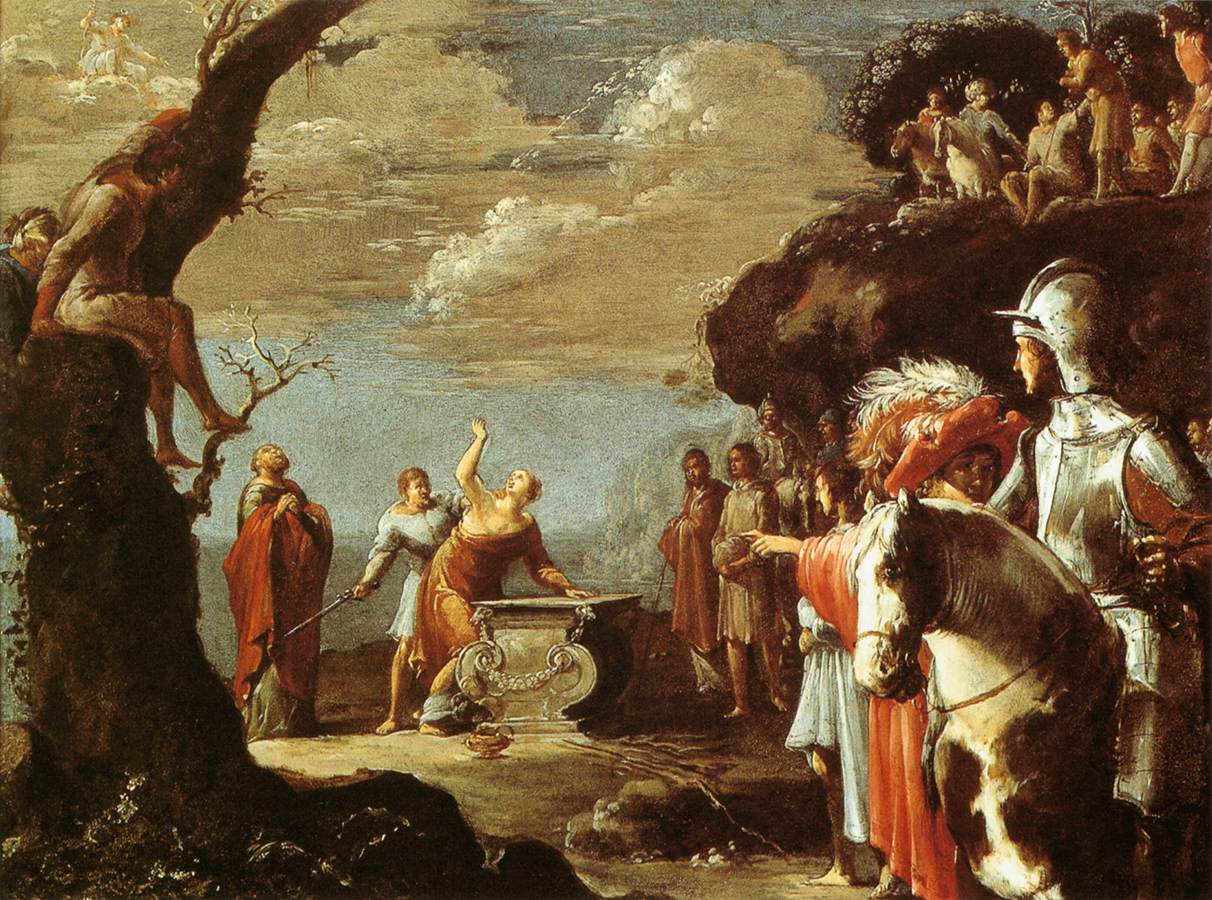
The fleet gathered at Aulis and could not sail. The price of the wind was Agamemnon's daughter Iphigenia, brought to the camp on the promise of a marriage to Achilles, and put on the altar. Achilles, in Euripides' play, is the one man who tries to stop it. In most paintings the goddess Artemis snatches her away at the last moment and leaves a deer. We have told that story at the start of our Odyssey series; here it is the reason the ships sailed at all.
Sing, goddess, the wrath of Achilles, Peleus' son, the ruinous wrath that brought the Greeks endless pain and threw many strong souls of heroes down to Hades.
Homer, Iliad, translated for this article, Book 1, the opening lines
That is where the poem starts: not with the apple, not with Helen, but with an argument over a different woman. Agamemnon has taken as a prize the daughter of a priest of Apollo, and refused to give her back. Apollo sends a plague. When Agamemnon is finally forced to return her, he takes Achilles' prize, Briseis, instead. Achilles reaches for his sword to kill him, and Athena comes down and grabs him by the hair.
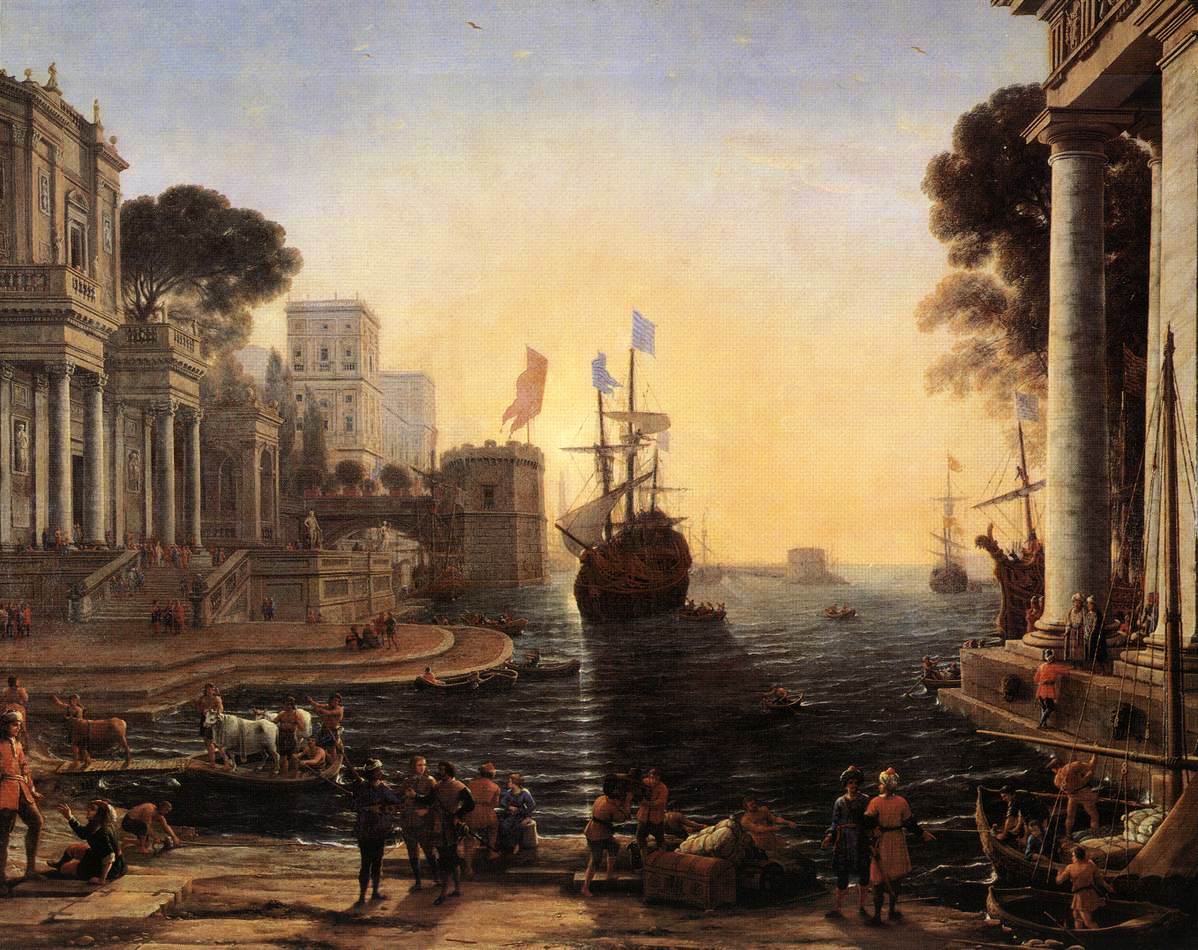
François-Léon Benouville painted the exact second of Book 1: the hand on the hilt, the head yanked back, the fury. It won him the Prix de Rome. Claude Lorrain painted the other half of the bargain, Odysseus bringing the priest's daughter home to her father, as a harbour scene at sunrise in which the human business is almost too small to find. That was Claude's way with any story: the light is the subject and the people are the excuse.
Achilles keeps his word. He goes to his tent and stays there, and the Greeks are driven back to their ships. The poem spends eight books on what happens without him.
The man who drives them back is Hector, the eldest son of Priam and the best of the Trojans, who is everything Achilles is not: a husband, a father, a man fighting for his city rather than his honour. In Book 6 he goes into Troy to find his brother Paris, who has been sulking in his bedroom with Helen while the city fights his war.
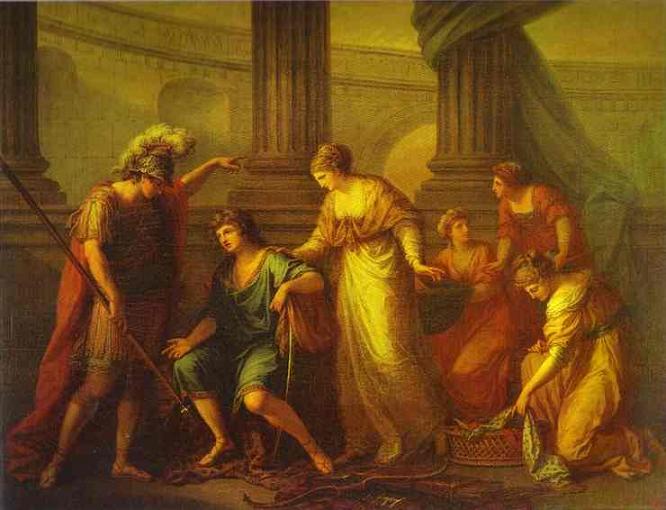
Angelica Kauffman, one of the two women among the founders of the Royal Academy, painted the scene with Helen looking on and Paris doing what he is told. Homer's Paris says he was just about to go. The same book has the most famous domestic scene in epic, Hector saying goodbye to his wife Andromache and their baby, who is frightened by the plume on his helmet; he takes it off to kiss him. No painting of that scene is in our collection yet, and it will be.
Then Achilles' closest friend, Patroclus, borrows his armour to frighten the Trojans, and Hector kills him. The wrath turns. Achilles will fight, but he has no armour, so his mother goes to the forge.

Homer spends a hundred and thirty lines on the shield Hephaestus makes, a picture of the whole world, cities at peace and at war, harvest, dance and sea, hammered in metal. Francesco Bassano's forge is a Venetian workshop with a furnace, which is fair enough; the shield is what the poet made, not the smith. Achilles puts the new armour on, is reconciled with Agamemnon, and Briseis is returned.
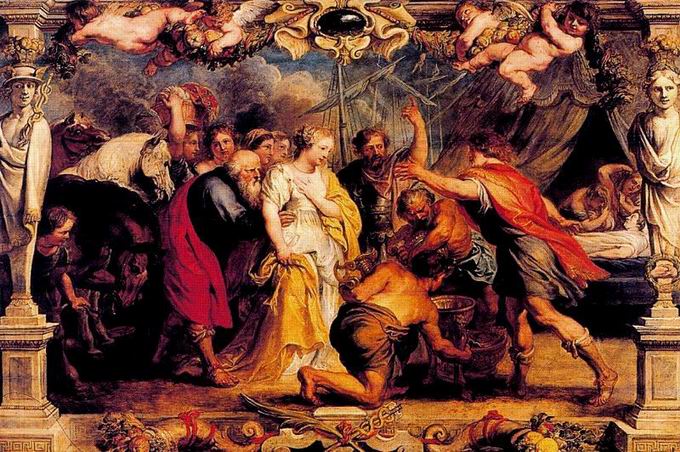
Book 22. Achilles chases Hector three times around the walls of Troy, kills him with a spear through the throat, strips the armour, ties the body to his chariot by the ankles and drags it to the ships. Then he drags it round Patroclus' tomb, every day, for twelve days. The gods themselves are disgusted.
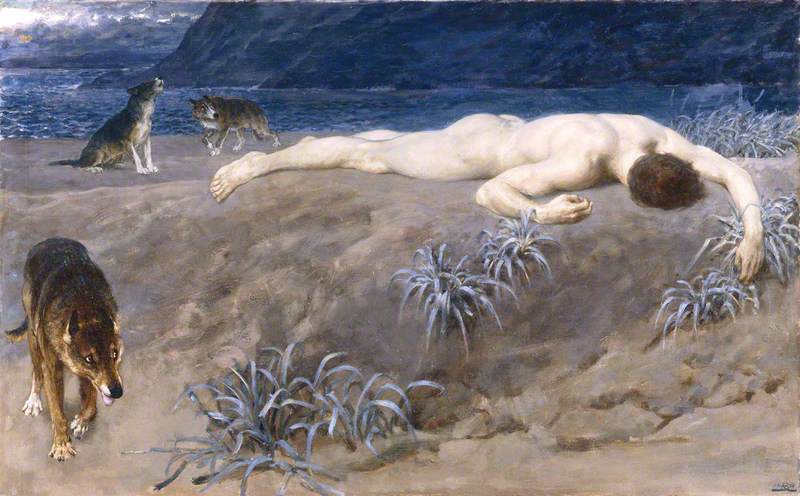
Briton Rivière, who painted animals better than any Victorian, paints the aftermath. Hector's body lies on the beach in the dawn, and the dogs of the camp have come to it and stopped, held off by something they cannot see. Homer says Aphrodite kept the dogs away and Apollo kept the body from decay. Rivière gives you the dogs, the corpse, the cold light, and lets you supply the god. We have a full article on this painting.
The last book of the Iliad is the greatest thing in it. Priam, the old king of Troy, with a god to guide him, drives at night through the Greek lines into Achilles' tent, kneels, and kisses the hands that killed his son.
I have endured what no other man on earth has endured: I have put to my lips the hands of the man who killed my sons.
Homer, Iliad, translated for this article, Book 24

Jules Bastien-Lepage, who would become the painter of French peasants, painted it as a student for the Prix de Rome, and it has the stillness the scene needs: an old man on the floor, a young one on his couch, the body somewhere outside. Achilles weeps for his own father, and gives the body back. The poem ends with Hector's funeral, not with the horse and not with the fall of the city. Homer stops where the anger stops.

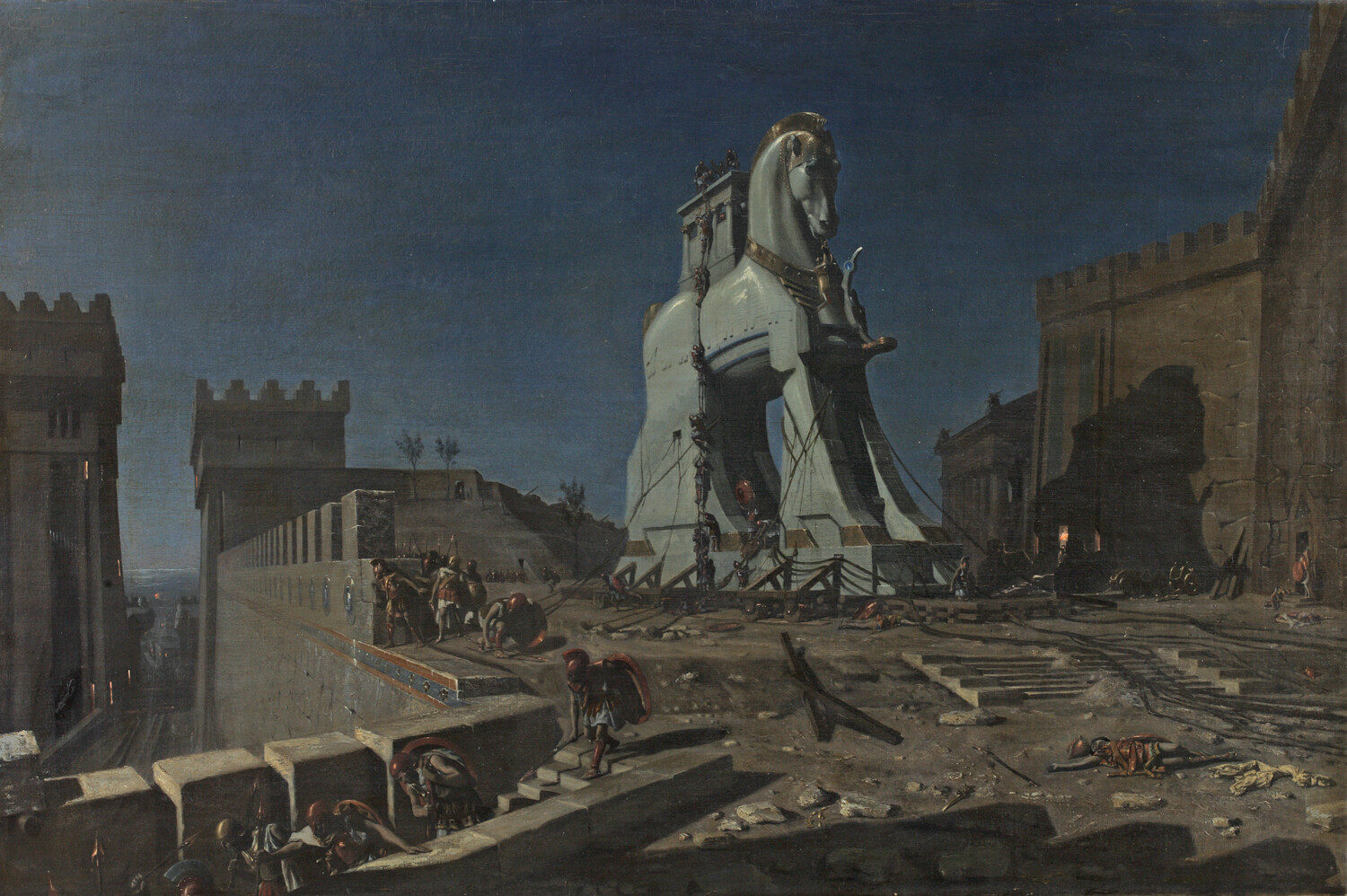
Jacques-Louis David painted the funeral in 1783 as his reception piece for the Academy: Andromache beside the body with the little boy, Astyanax, who does not understand, and the lamp and the bed laid out with a Roman severity that was new in French painting. Astyanax will be thrown from the walls when the city falls. David does not say so. He did not need to; everyone who saw the painting knew the rest of the story, and it is the subject of the last part.
Homer is quoted in our own prose translation. Where a painting shows an episode Homer does not tell (Skyros, the Styx), the later source is named.