Loading cart…
No products in the cart.

Art Guides · Symbolism
Save articles to your collection
Log in or create a free account, and this article will be waiting in your Private Collection.
Log in or sign upSymbolist painters did not try to copy the visible world. They used dreams, myths, color and strange figures to make inner life visible. Explore ten famous Symbolist paintings, from the scream that bends an entire landscape to an island built for the dead.
The selection draws on October 2026 United States search estimates and works available in the ByMuseum collection. Start with the top three, or continue through the full list to see how Symbolism turned love, fear, desire and death into images.
Symbolism was an international movement that developed in the late nineteenth century. Instead of recording modern life as Realist and Impressionist painters often did, Symbolist artists used visible forms to suggest emotions, ideas and states of mind. A flower could mean desire. An island could become death. A painted sky could sound like a scream.
The Symbolists never shared one visual style. Gustave Moreau filled surfaces with jewel-like detail, Edvard Munch simplified bodies into waves of emotion, and Gustav Klimt wrapped human figures in gold ornament. What joined them was the belief that art could reveal a reality beneath ordinary appearances. The movement spread from France across Europe and helped prepare the way for Expressionism and abstraction. Explore our collection of works associated with Symbolism in the Symbolism collection.
 Explore the artistEdvard Munch →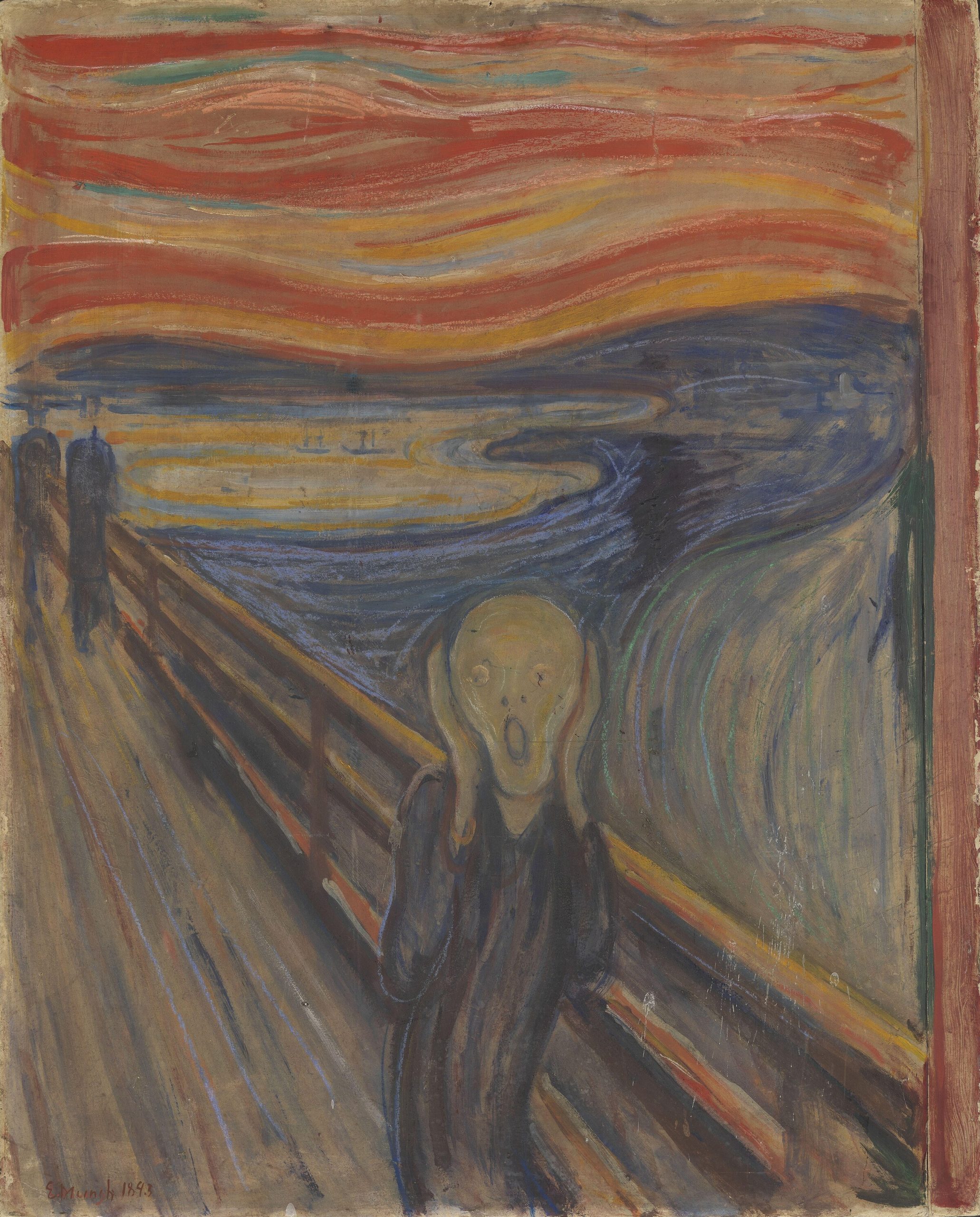
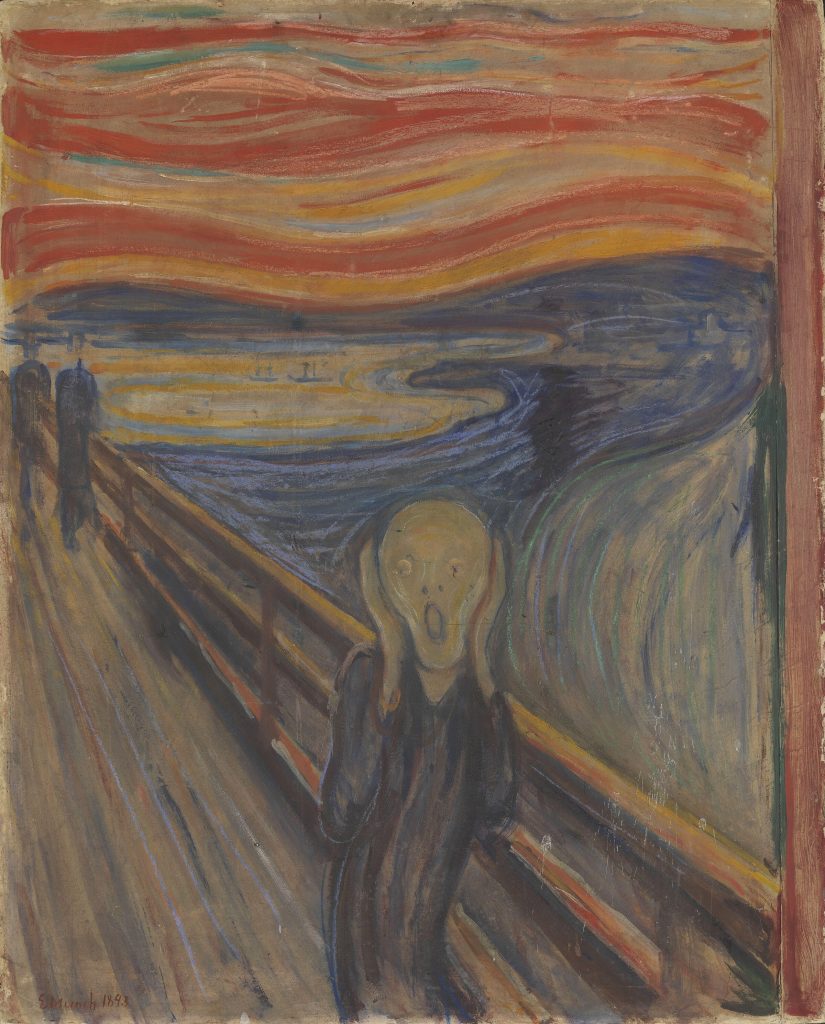
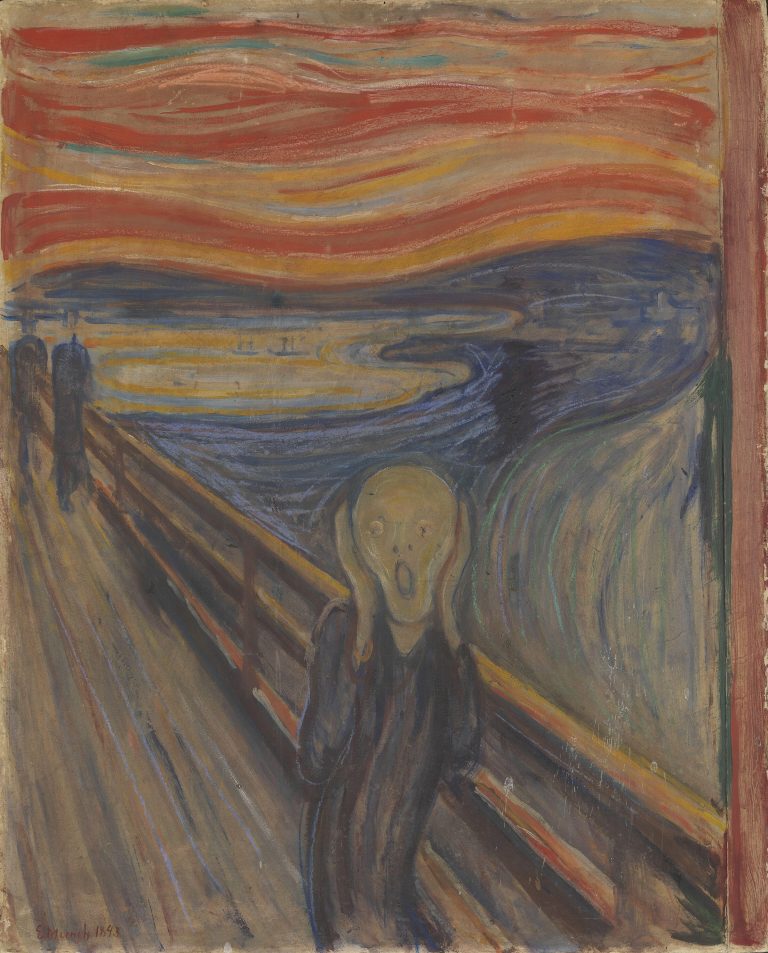
Munch described walking at sunset when the sky turned blood red and he felt what he called a great scream through nature. In the painting, the person on the bridge is not necessarily screaming. The hands cover the ears while the mouth opens, as if the figure is trying to protect itself from a sound moving through the sky, water and hills.
That is why The Scream is a defining Symbolist image. It does not illustrate one event or one person. Munch bends the entire landscape into the shape of anxiety, making an invisible feeling visible. He returned to the composition in paint, pastel, drawing and print, but the 1893 painted version in Oslo remains the most famous.
Museum reference: National Museum, Oslo.
Edvard Munch · oil on canvas, made to order
 Explore the artistGustav Klimt →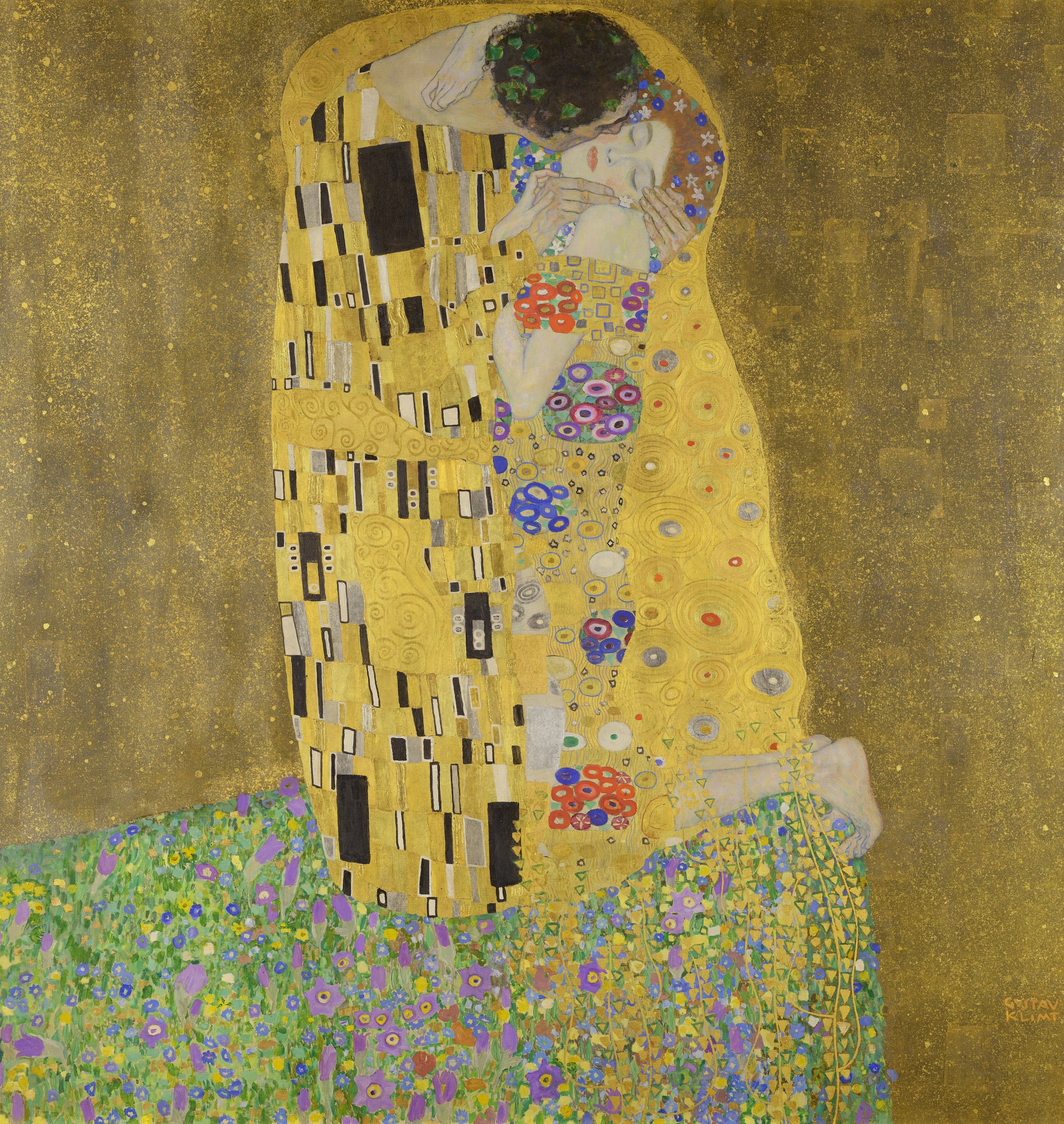
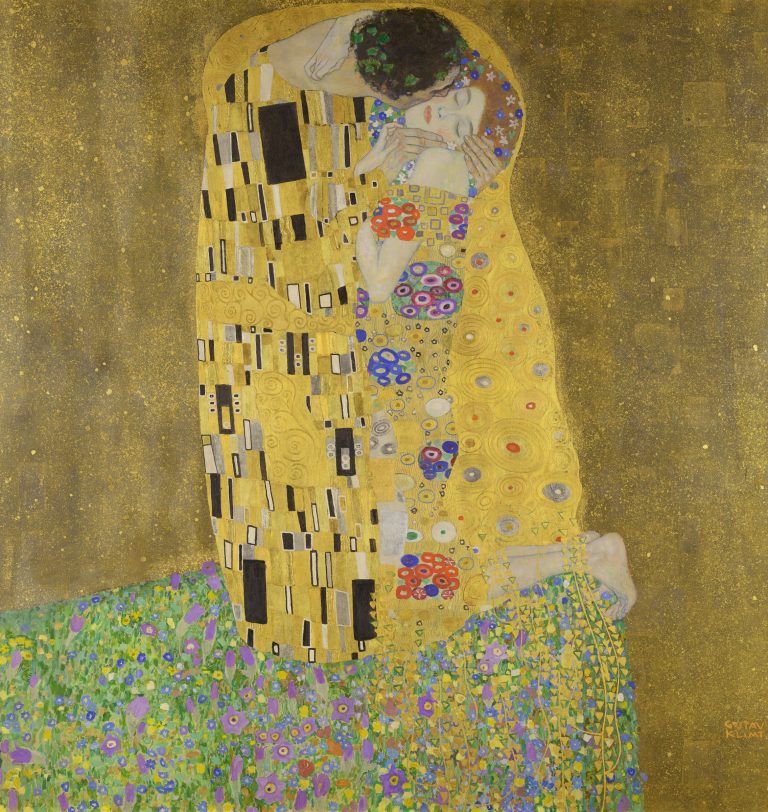
Klimt places two lovers at the edge of a meadow and removes almost everything else. Their bodies disappear inside a single gold shape. Rectangles cover the man's robe, circles and flowers cover the woman's, and only their faces, hands and feet remain natural. Love becomes both a physical embrace and a glittering world of its own.
The painting belongs to Klimt's Golden Period, when he combined oil paint with gold, silver and platinum leaf. The Austrian state bought it at its first public showing in 1908, before Klimt had finished it. Its mixture of intimate skin and flat ornament joins Symbolism to the Vienna Secession and Art Nouveau.
Museum reference: Belvedere, Vienna.
Gustav Klimt · oil on canvas, made to order
 Explore the artistArnold Böcklin →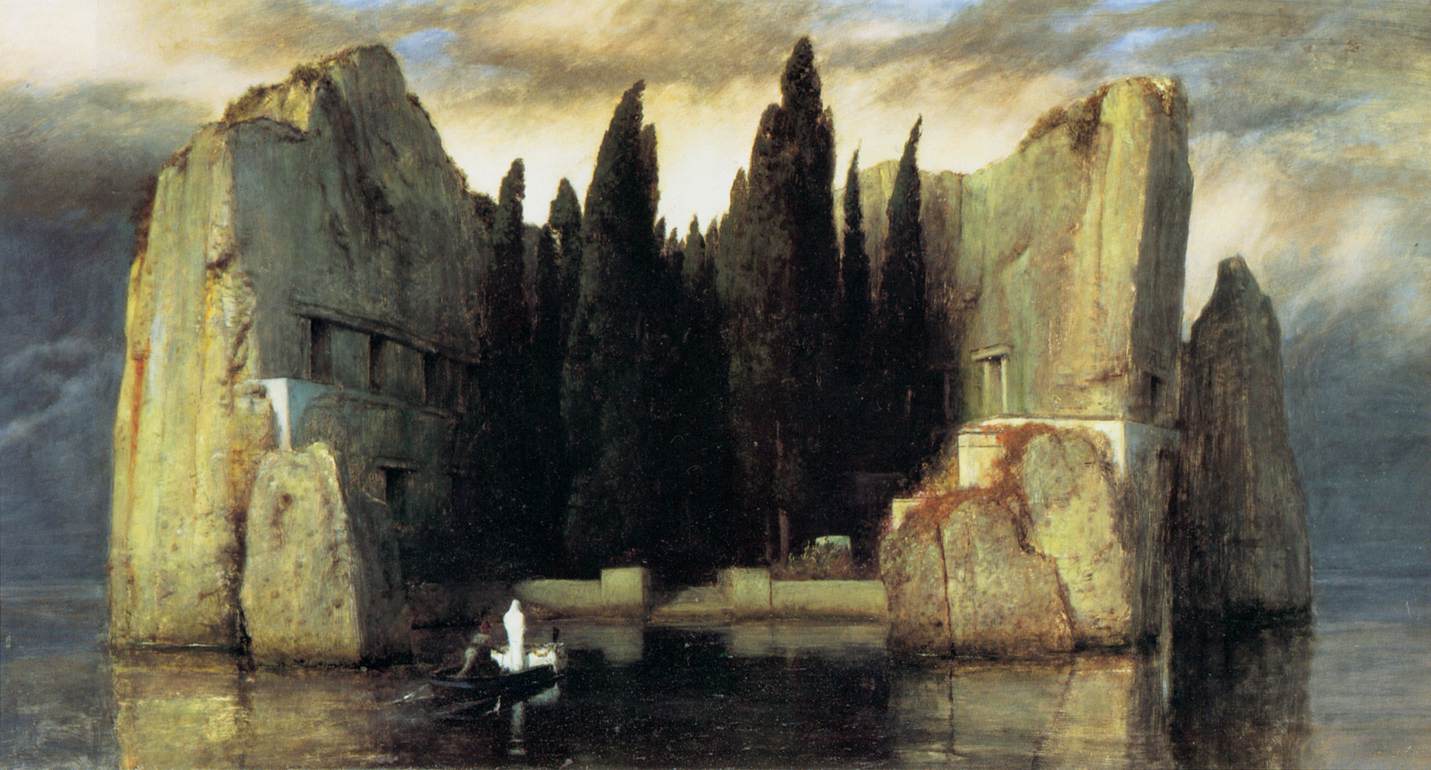
Böcklin developed the subject in 1880. His patron Marie Berna commissioned a version as a memorial to her husband and requested the shrouded figure and coffin in the boat. That painting is now in New York. The image shown here is the third version, painted in 1883 and held by the Alte Nationalgalerie in Berlin.
Böcklin never explained the island as a specific place or story. Its cypress trees, rock chambers and silent water suggest a cemetery, but the scene remains suspended between landscape and afterlife. He painted five versions, and reproductions became so common that the image inspired music by Sergei Rachmaninoff and later paintings by Salvador Dalí.
Museum reference: Alte Nationalgalerie, Berlin.
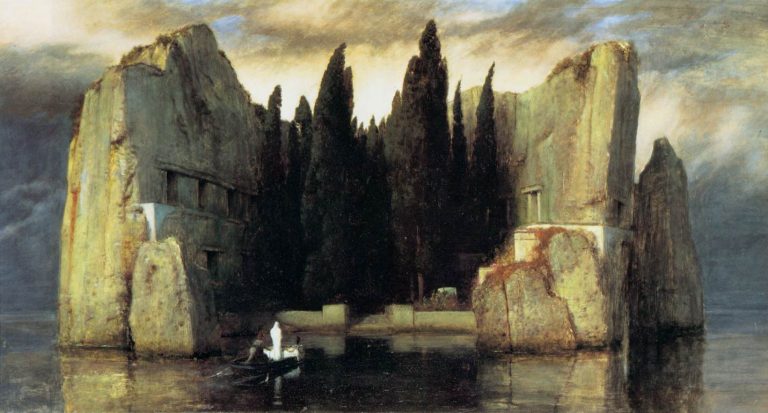
Arnold Bocklin · oil on canvas, made to order
 Explore the artistPaul Gauguin →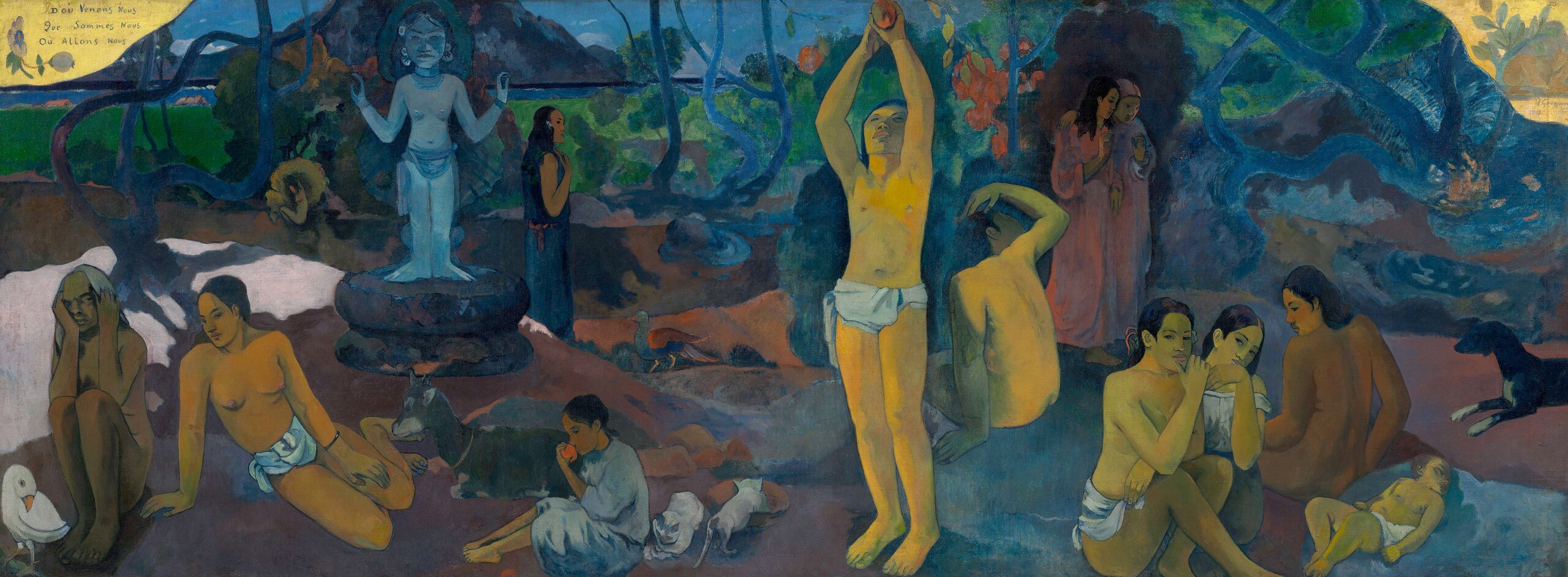
Gauguin painted this enormous canvas in Tahiti during a period of illness, debt and despair. He asked viewers to read it from right to left. A sleeping infant begins the sequence, adults occupy the center, and an old woman sits at the far left facing death. A blue idol raises its arms behind them, pointing toward what Gauguin called the Beyond.
The title asks three questions, but the painting refuses to answer them. Gauguin wanted it to resemble an ancient mural whose meaning could not be reduced to a simple explanation. That resistance is central to Symbolism: the figures carry ideas, yet the whole remains mysterious enough for the viewer to complete.
Museum reference: Museum of Fine Arts, Boston.
Paul Gauguin · oil on canvas, made to order
Explore the artistGustav Klimt →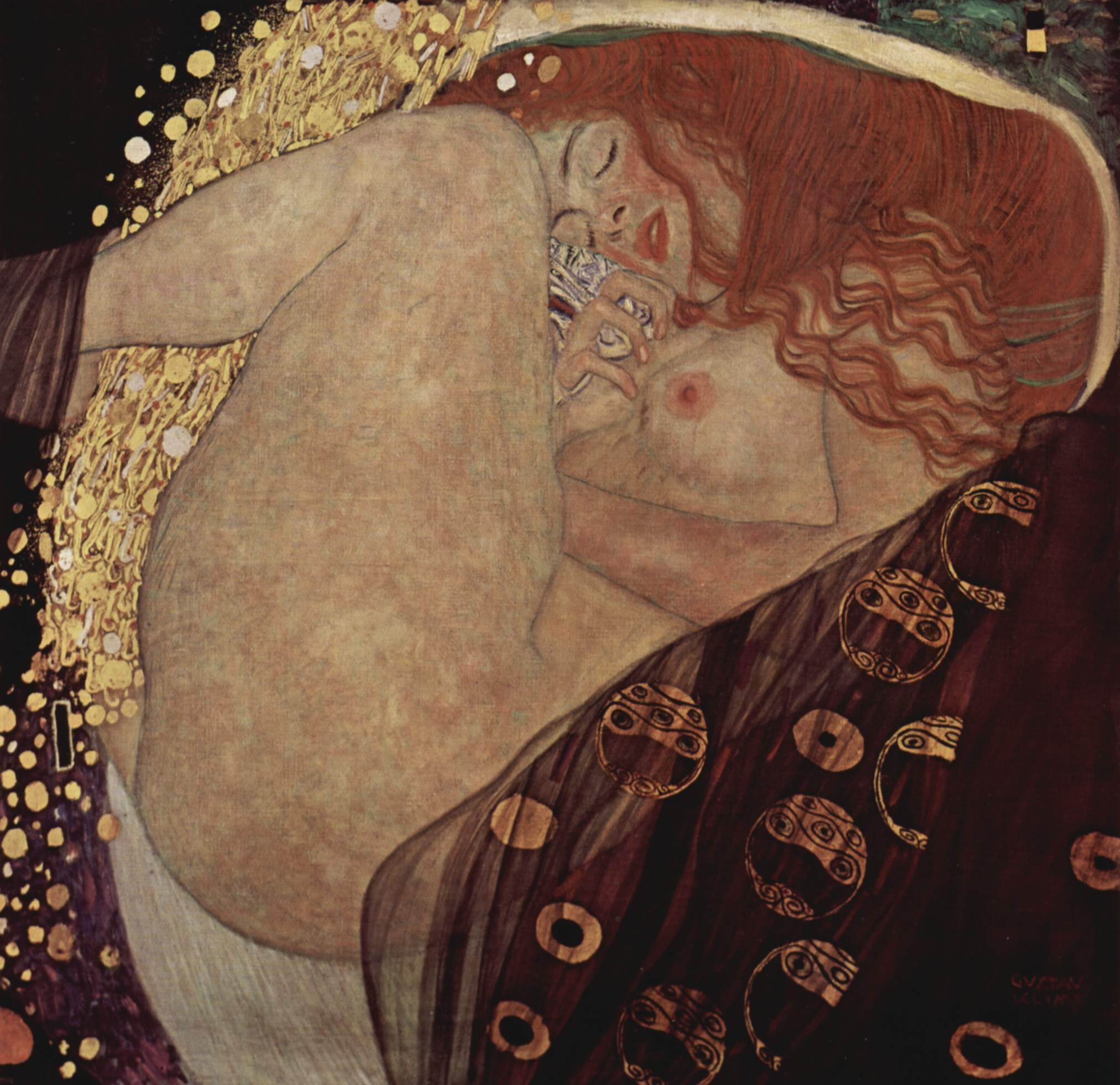
In Greek myth, Danaë's father locks her in a chamber after an oracle predicts that her son will kill him. Zeus enters as a shower of gold, and Danaë later gives birth to Perseus. Klimt reduces the story to a tight spiral of body, purple fabric and gold, turning a narrative about divine power into an intensely private vision.
The woman's closed eyes and folded pose have made the picture one of Klimt's most debated treatments of desire. Gold is both the god and the decorative substance of the painting. Symbolism allowed Klimt to use an ancient myth as a language for sexuality, ecstasy and transformation rather than as a distant historical scene.
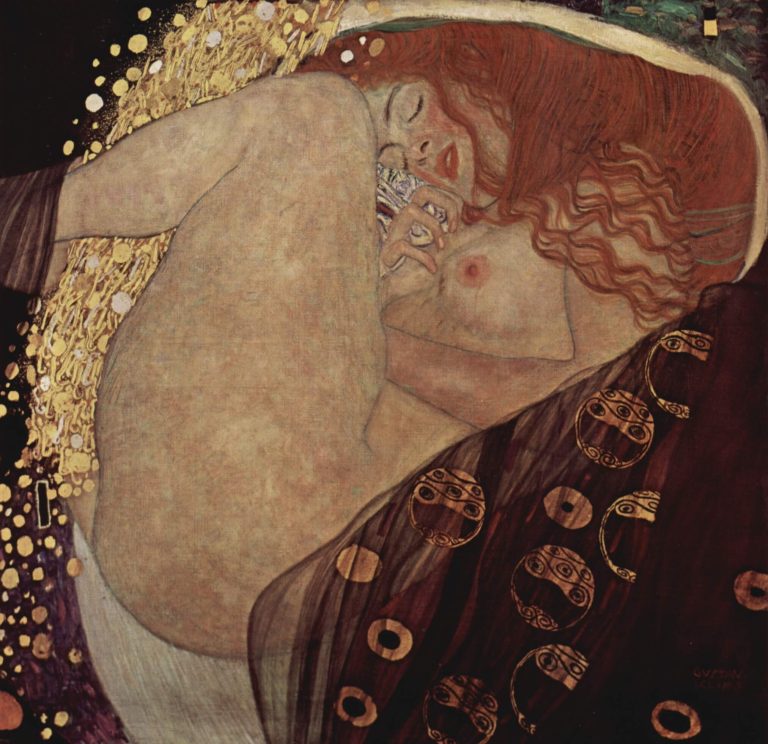
Gustav Klimt · oil on canvas, made to order
Explore the artistArnold Böcklin →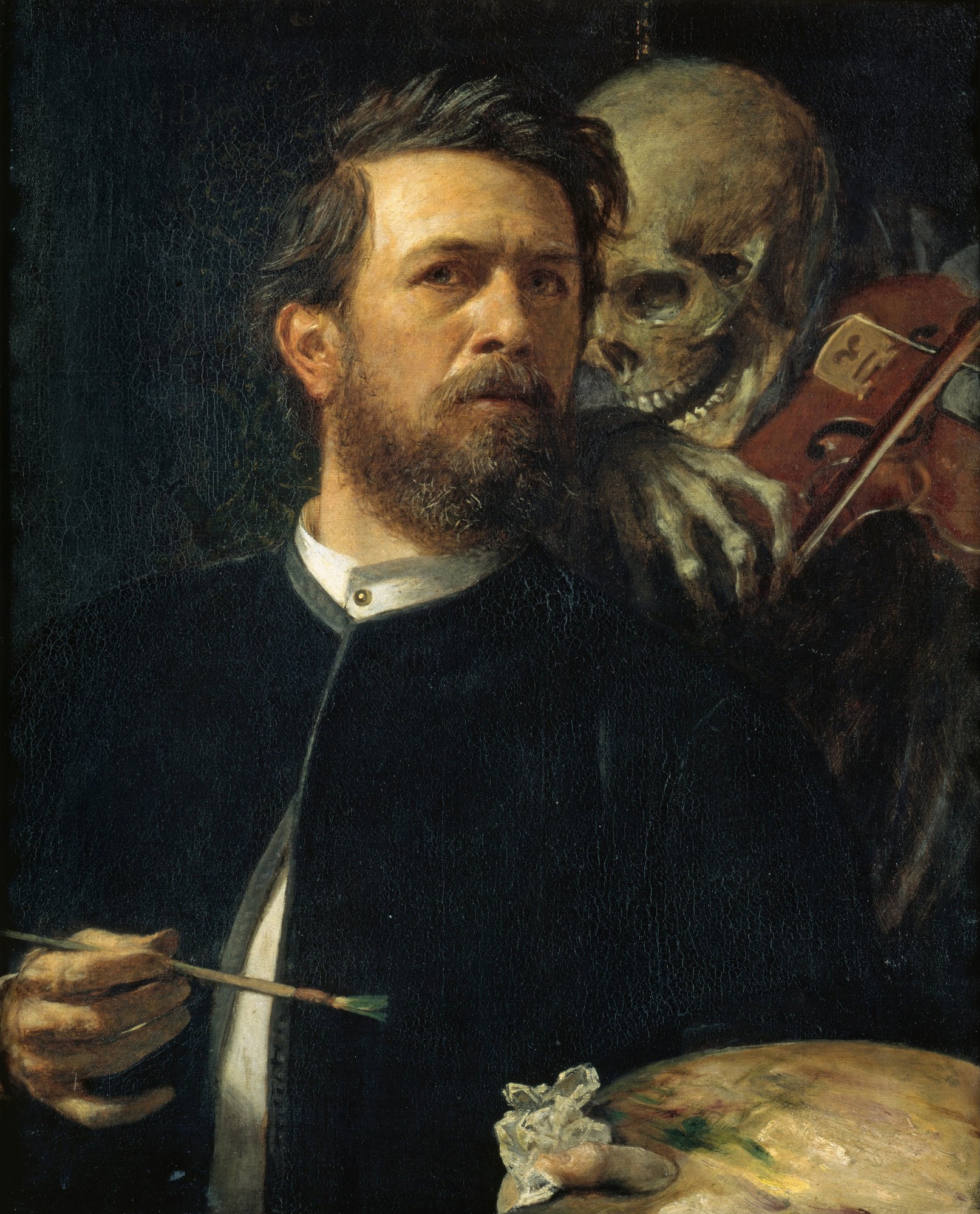
Böcklin stops working and turns his head toward a skeleton playing a fiddle behind him. The painter still holds his brush and palette, but he is listening. Death's instrument has only one string left, traditionally identified as the lowest G string, giving the encounter the gravity of a reminder of mortality.
The skeleton is not attacking. It can be read as an inner voice or permanent companion, close enough to whisper through music. The Berlin museum also interprets this listening pause as a moment of inspiration. Böcklin brings mortality into the studio without showing it stopping the painter’s work.
Museum reference: Alte Nationalgalerie, Berlin.
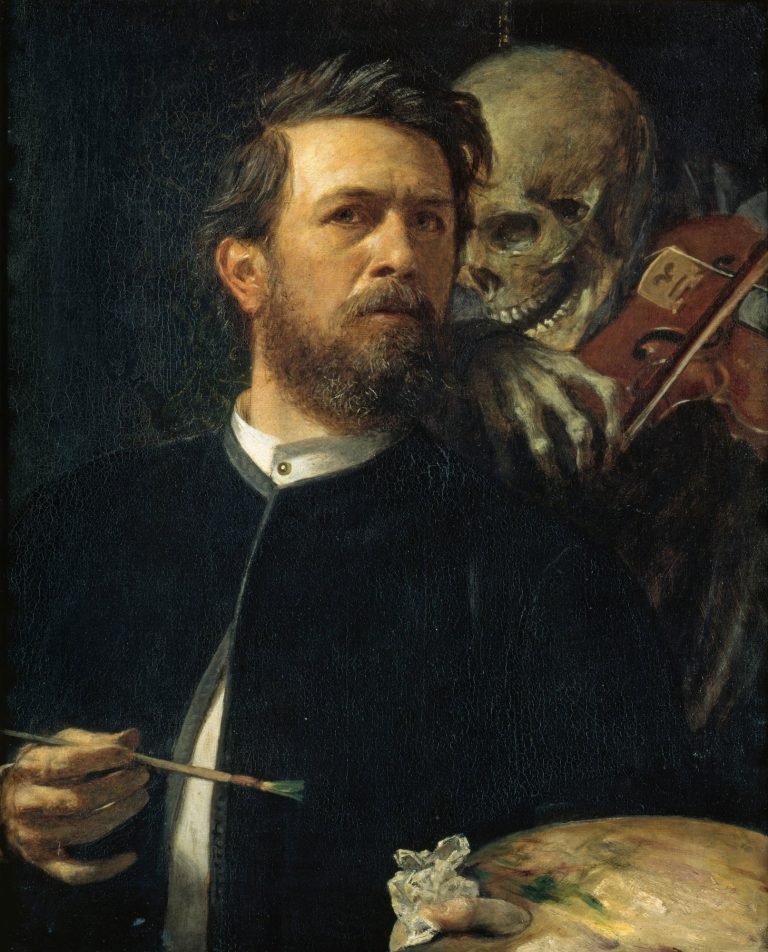
Arnold Bocklin · oil on canvas, made to order
 Explore the artistGustave Moreau →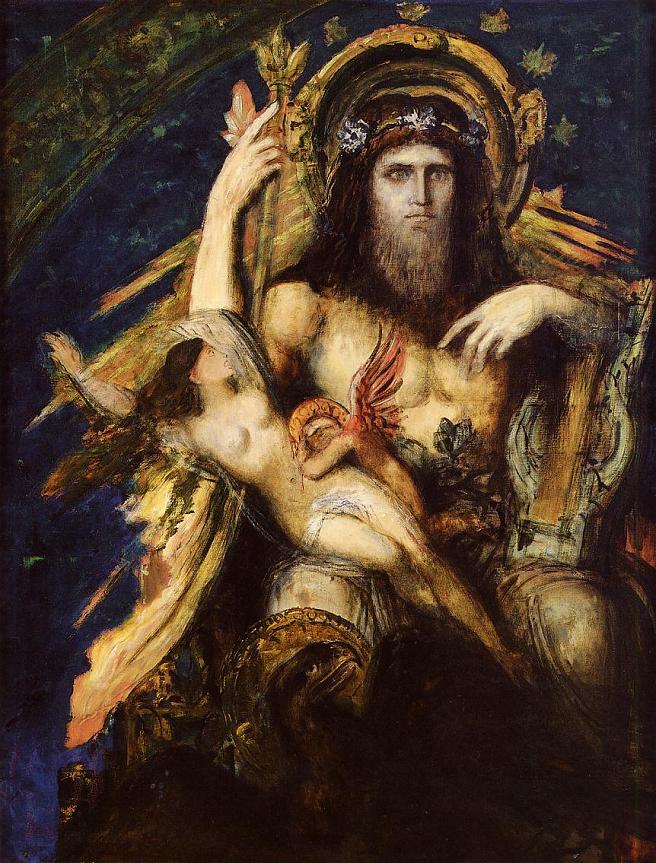
Semele asks Jupiter to reveal himself in his full divine glory. A mortal cannot survive the sight, and Moreau paints the instant she is overcome against the god's body. Around them, an eagle, Pan, Hecate, sphinxes and shadowy beings turn the myth into a vertical universe stretching from the underworld toward spiritual light.
Moreau worked on the composition for years and considered it a synthesis of his art. The surface is crowded with symbols that cannot be understood in one glance. It asks the viewer to move slowly through color, texture and myth, exactly the kind of suggestive experience Symbolist painters valued over plain narration.
Museum reference: Musée Gustave Moreau, Paris.
Gustave Moreau · oil on canvas, made to order
Explore the artistEdvard Munch →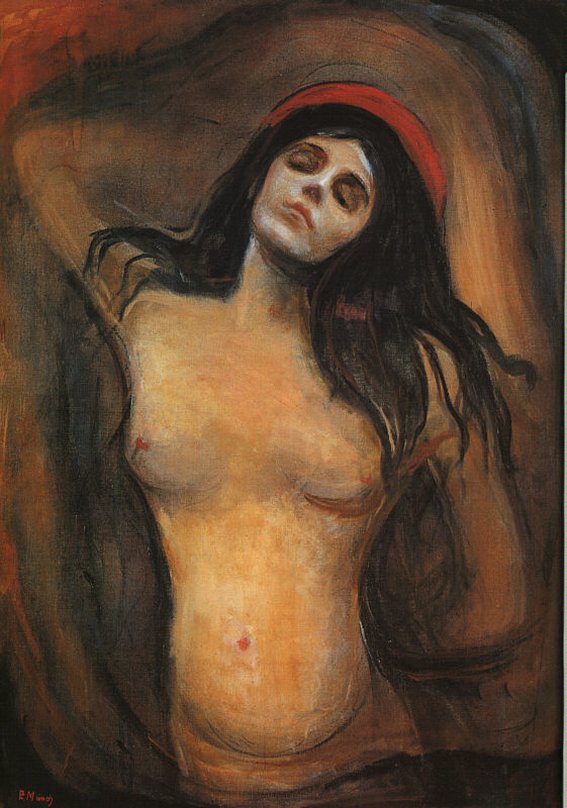
Munch borrows the title of the Virgin Mary but removes the child, clothing and sacred setting. A nude woman leans back with closed eyes while a red halo hovers above her dark hair. She may appear ecstatic, sleeping or lost within herself, and the ambiguity is the point.
In printed versions, Munch surrounded the image with a border of sperm cells and a small fetus, making the connection between desire, conception and death more explicit. The painting belongs to his Frieze of Life, a group devoted to love, anxiety, jealousy and mortality. The sacred and erotic occupy the same body.
Museum reference: National Museum, Oslo.
Edvard Munch · oil on canvas, made to order
 Explore the artistOdilon Redon →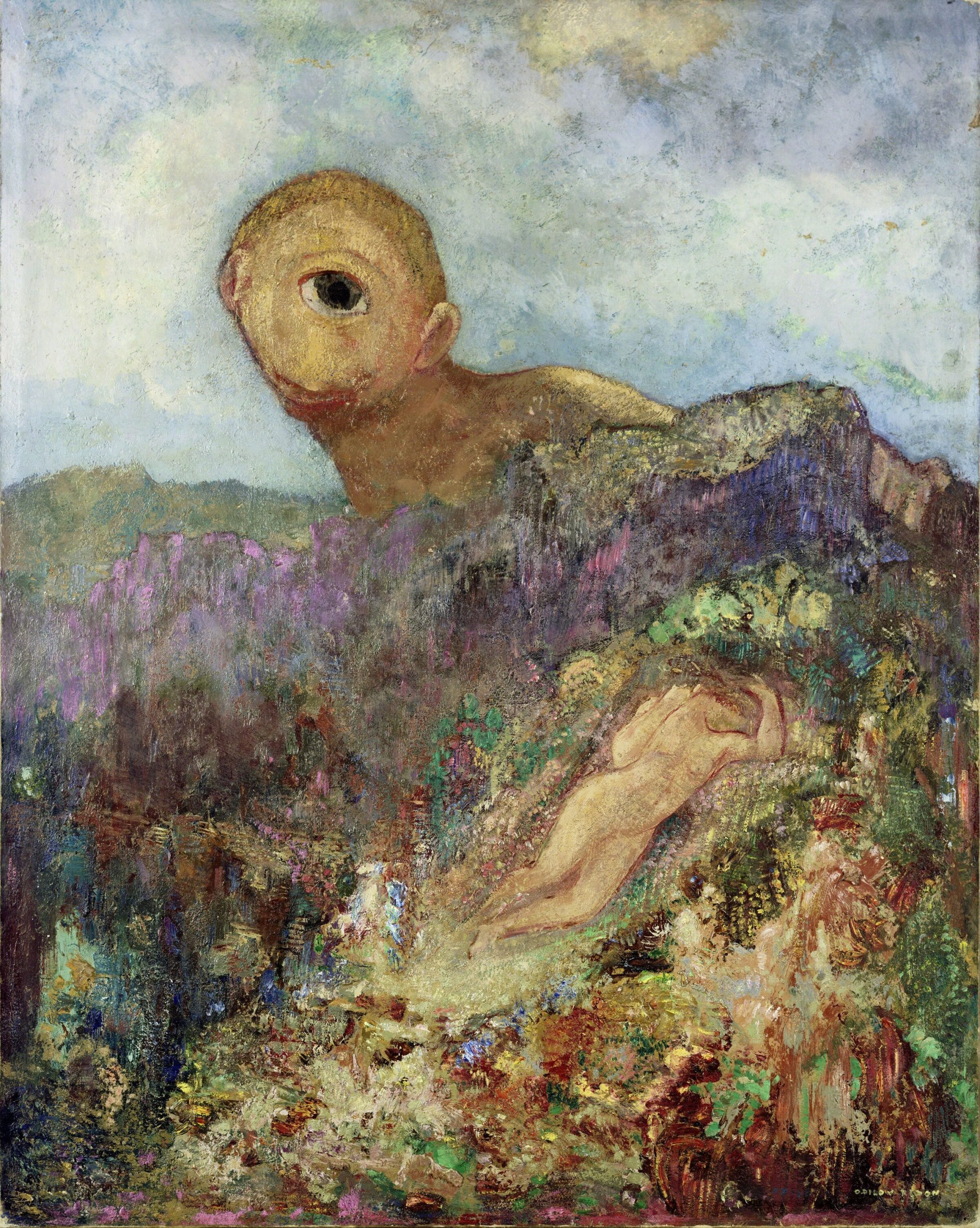
Redon takes the Cyclops Polyphemus from Greek myth and changes his character. Instead of the man-eating monster faced by Odysseus, this giant hides behind a hill and looks down at the sleeping sea nymph Galatea. His single eye is enormous. Its gaze may seem lonely and tender, yet it also makes the sleeping woman’s vulnerability unsettling.
The flowers and strange colors do not describe a real landscape. They form a dream around two minds that never meet. Redon began his career with dark charcoal visions and later turned toward luminous pastels and oils. The Cyclops joins both sides of his imagination: luminous color makes the monster’s watchfulness feel beautiful and disturbing at once.
Museum reference: Kröller-Müller Museum, Otterlo.
Odilon Redon · oil on canvas, made to order
 Explore the artistFranz von Stuck →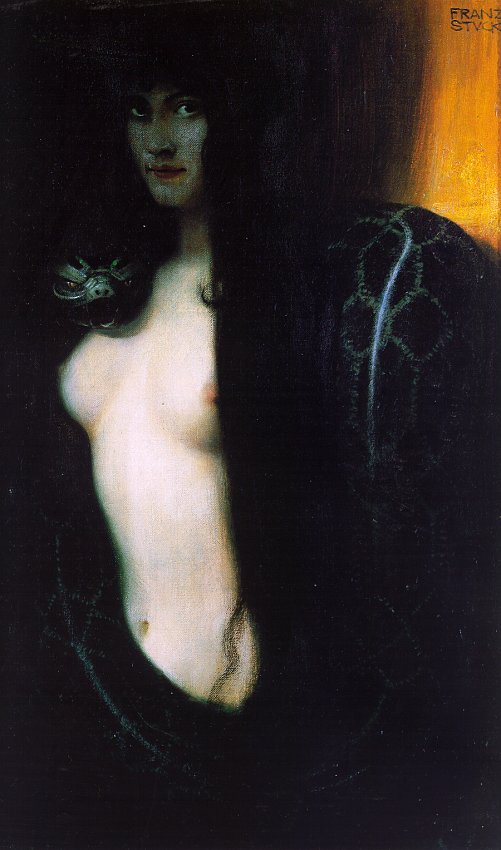
A pale body emerges from near-blackness while a blue patterned snake curves around the woman's shoulders. Both faces confront the viewer. Stuck called the figure Sin, linking her to Eve and temptation, but he made the image too commanding to function as a simple warning.
The first painted version caused a sensation at the Munich Secession exhibition in 1893. Stuck repeated the composition many times and placed one version at the center of an altar-like display in his own villa. Desire, danger and the viewer's act of looking become inseparable. That tension made the femme fatale one of Symbolism's most persistent figures.
Museum reference: Neue Pinakothek, Munich.
Franz von Stuck · oil on canvas, made to order
Well-known examples include Edvard Munch's The Scream, Gustav Klimt's The Kiss, and Arnold Böcklin's Isle of the Dead. Gauguin's Where Do We Come From? and Klimt's Danaë are also central works.
Symbolism is a late nineteenth-century movement that used images, color, myth and fantasy to express ideas and emotions instead of describing the visible world objectively.
It developed first as a French literary movement in the 1880s and spread through European visual art during the final two decades of the nineteenth century.
Gustav Klimt, Edvard Munch, Paul Gauguin, Odilon Redon, Gustave Moreau, Arnold Böcklin, Franz von Stuck and Edward Burne-Jones are among the best known.
Yes. Munch based it on a personal experience, then transformed the landscape so that color and line express anxiety. It is also an important precursor to Expressionism.
He is both. Klimt used Symbolist subjects and ideas while his flat patterns, flowing lines and decorative surfaces connect him to Art Nouveau and the Vienna Secession.
They painted dreams, myths, religious visions, death, desire, fear, spiritual longing and imaginary landscapes. Their subjects often came from the Bible, classical mythology and private fantasy.
Symbolism began in the 1880s and used suggestive imagery to express ideas and emotions. Surrealism emerged in the 1920s and focused more directly on dreams, chance and the unconscious, influenced by psychoanalysis.
Enjoyed this story?
Save articles to your collection
Log in or create a free account, and this article will be waiting in your Private Collection.
Log in or sign upRanking follows estimated monthly United States Google search volume for each painting's name, using OpenSEO research from October 2026. Where a title has ambiguous intent or no stable volume estimate, placement also considers clickstream demand and recognition. The selection includes only paintings available in the ByMuseum collection.
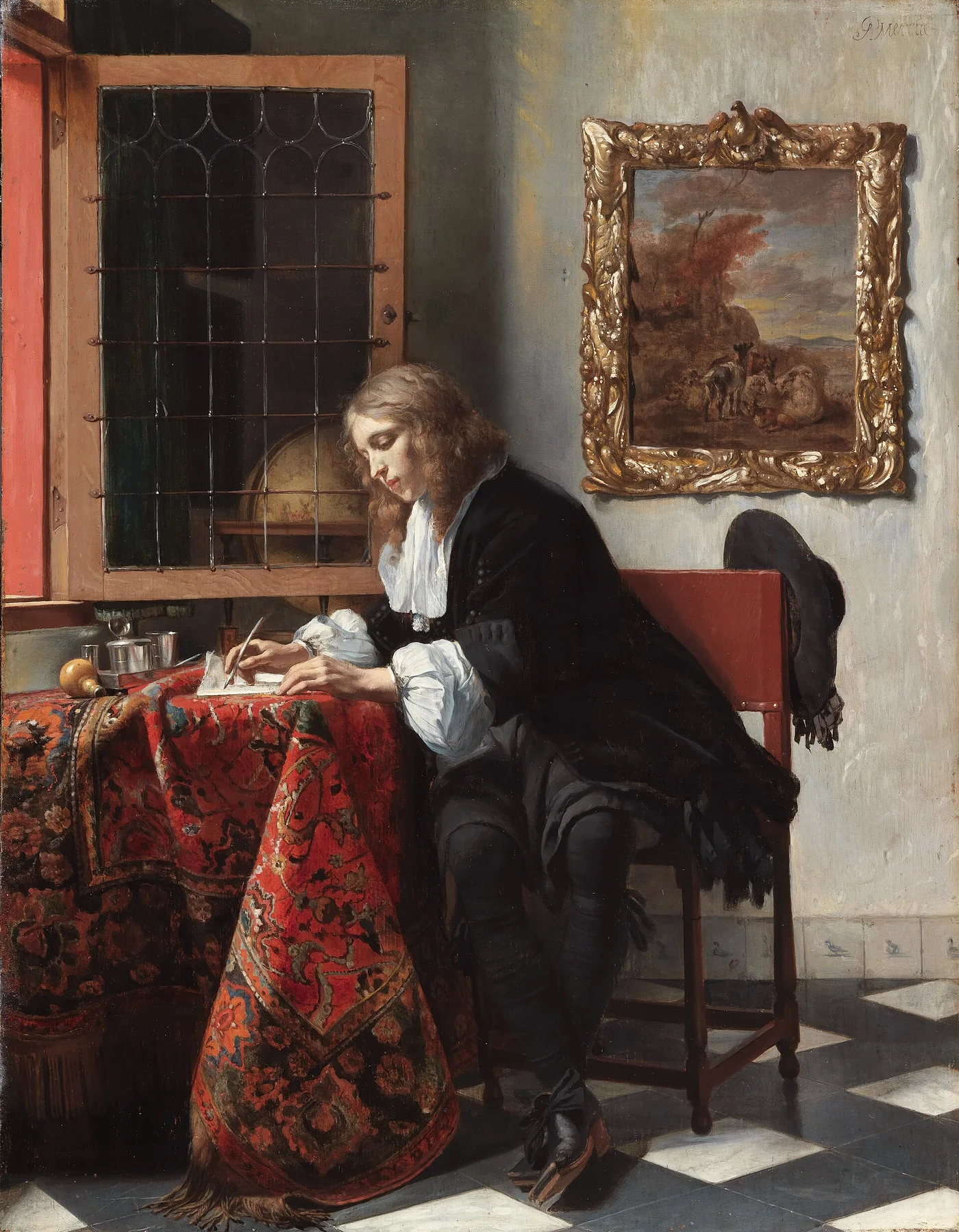
Man Writing a Letter
Gabriel Metsu, c. 1664
The gallery list
Every painting is already 50% off. Join the list and we will send you an extra $15 code, plus first access to new collections.
No spam. Unsubscribe anytime. · Privacy Policy
Welcome
Your $15 code is on its way. Explore the gallery while you wait.