Loading cart…
No products in the cart.

Art Guides · Interiors
Save articles to your collection
Log in or create a free account, and this article will be waiting in your Private Collection.
Log in or sign upThe quickest way to change a living room is not a new sofa or a new paint colour. It is what hangs on the wall. One good painting gives a room a centre, a mood and a conversation. Here are twelve living room decor ideas built around wall art, each shown in a real room, with the simple rules on size and height that designers use, so your walls look finished rather than filled.
Whether you call it a living room, a sitting room or a lounge, the rules are the same. Every painting shown is a hand-painted oil reproduction from our collection, and each one links to its full story.
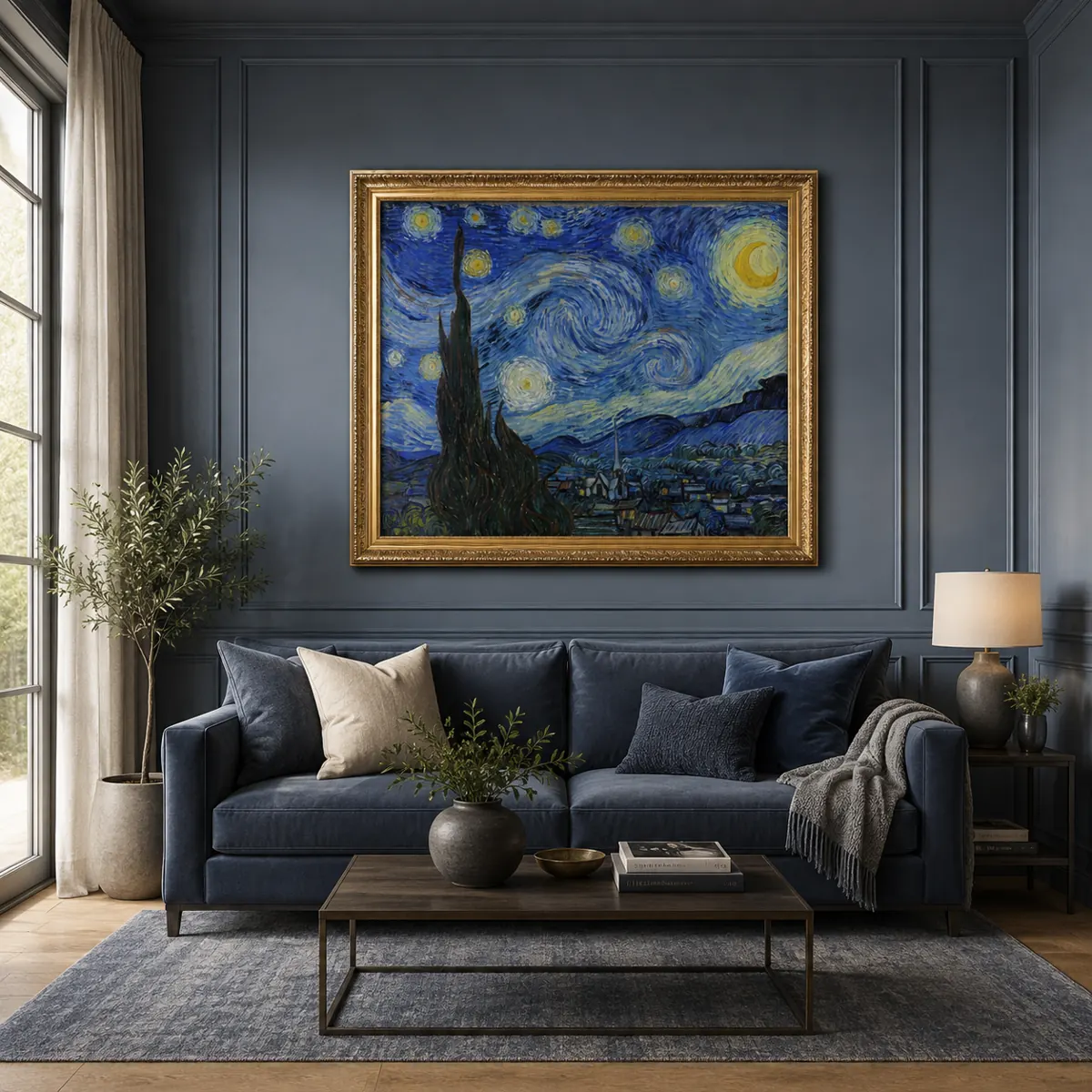
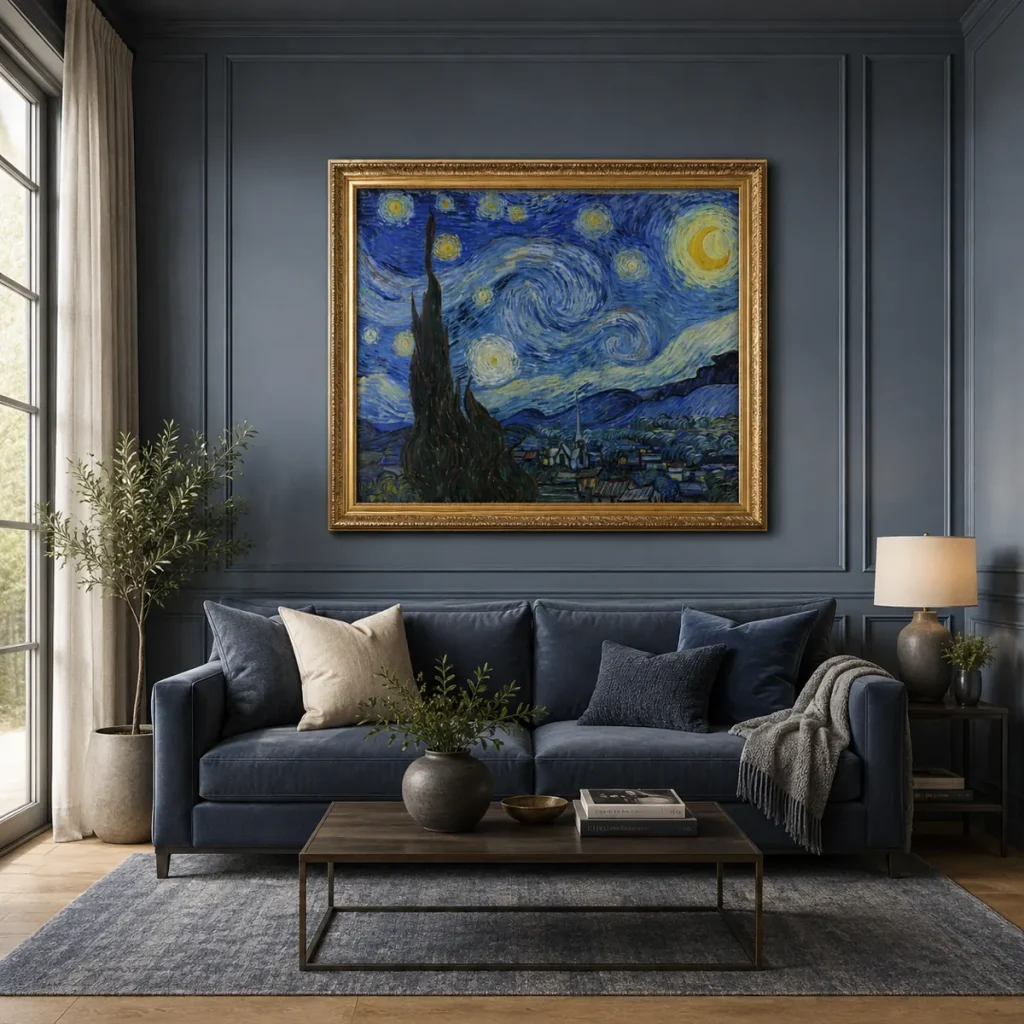
The wall above the sofa is the first place everyone looks when they walk in, and the most common mistake is to fill it with something too small. A single large painting looks calmer and more expensive than several small ones, and it gives the whole room a focal point.
The rule of thumb: choose a painting about two-thirds of the width of the sofa. Over a 210 cm (83 inch) sofa, that means a painting around 140 cm (55 inches) wide, frame included. Hang it so the bottom of the frame sits 20 to 25 cm (8 to 10 inches) above the back of the sofa, close enough to read as one group, high enough that nobody's head touches it.
Read the full story of The Starry Night · hand-painted reproduction
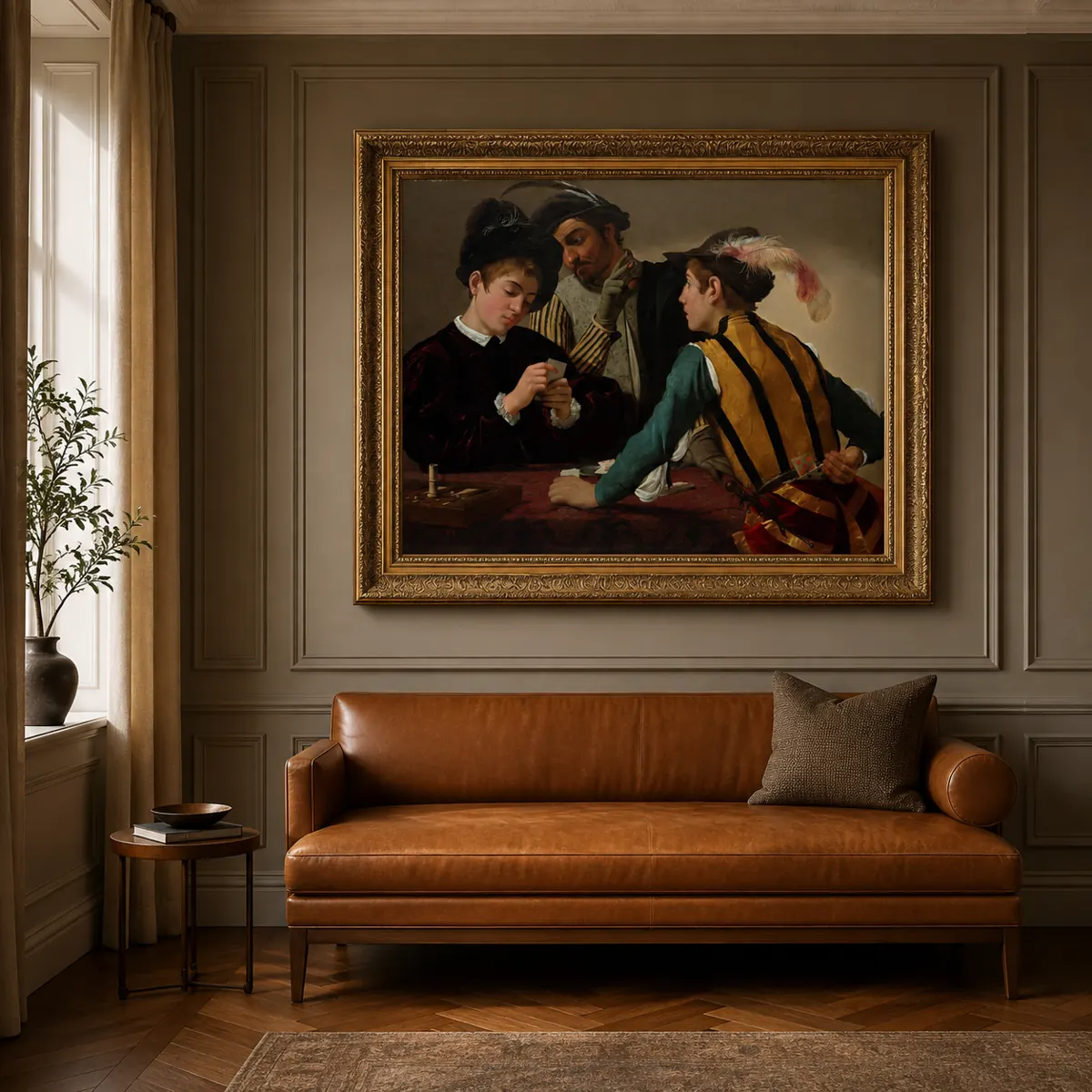
The easiest way to make art look as if it belongs is to let it share one colour with the room. Not every colour: one. Look at your sofa, rug or curtains, find the strongest colour, and choose a painting where that colour appears clearly, even in a small area.
Here, the warm amber of the players' clothes and the gilded frame echo the leather sofa, so the painting and the furniture feel chosen together. It works the other way too: if you fall in love with a painting first, take one colour from it for a cushion or a throw.
Read the full story of The Cardsharps · hand-painted reproduction
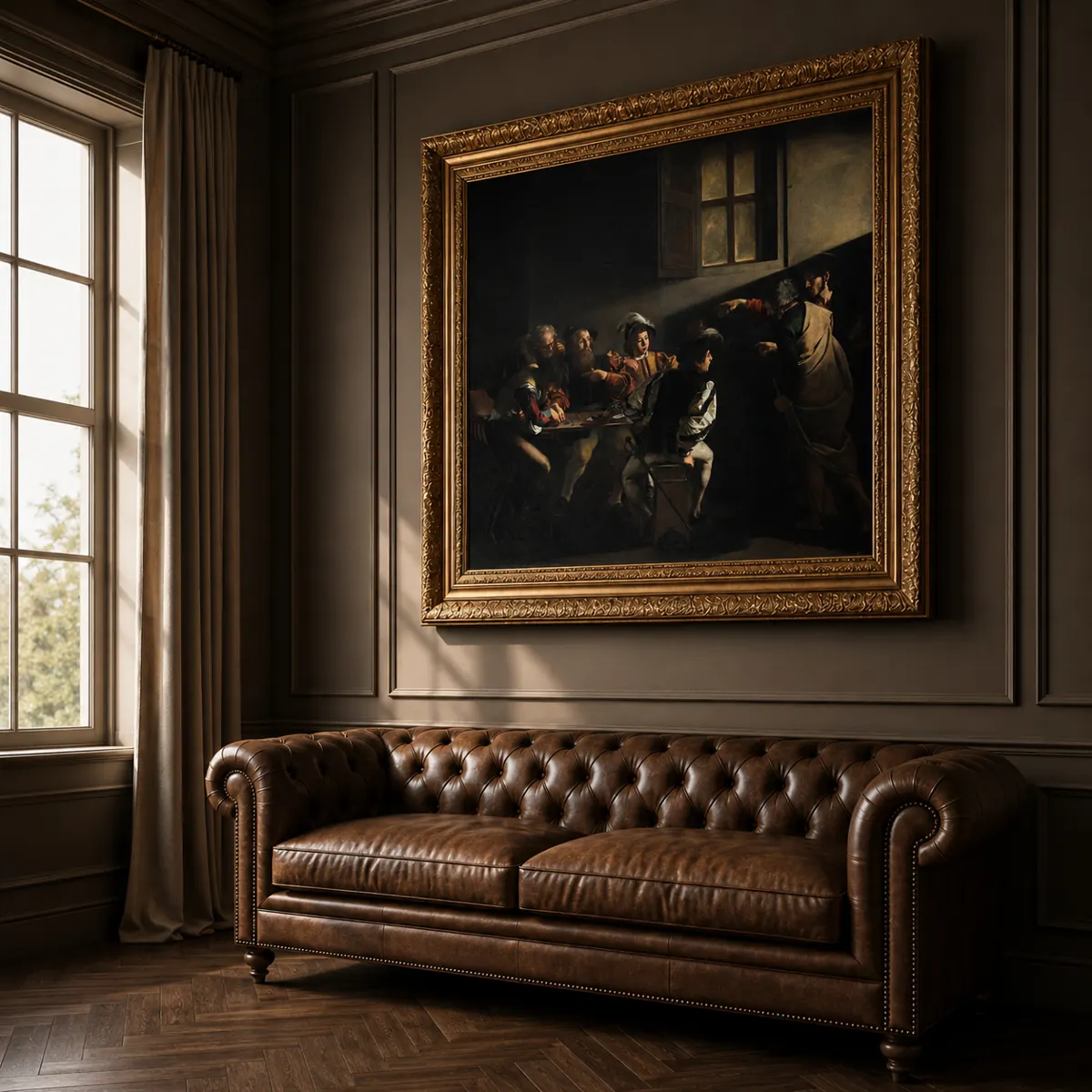
Dark walls are one of the strongest living room trends of recent years, and they are made for old master paintings. Deep charcoal, chocolate brown or forest green walls make a gilded frame glow, and paintings with strong light and shadow, like Caravaggio's, look almost lit from inside.
The trick is contrast: a dark painting on a dark wall needs a bright frame, and a light painting on a dark wall needs nothing at all. Pair it with leather, wood and warm lamps rather than overhead light, and the room feels like a private library.
Read the full story of The Calling of Saint Matthew · hand-painted reproduction
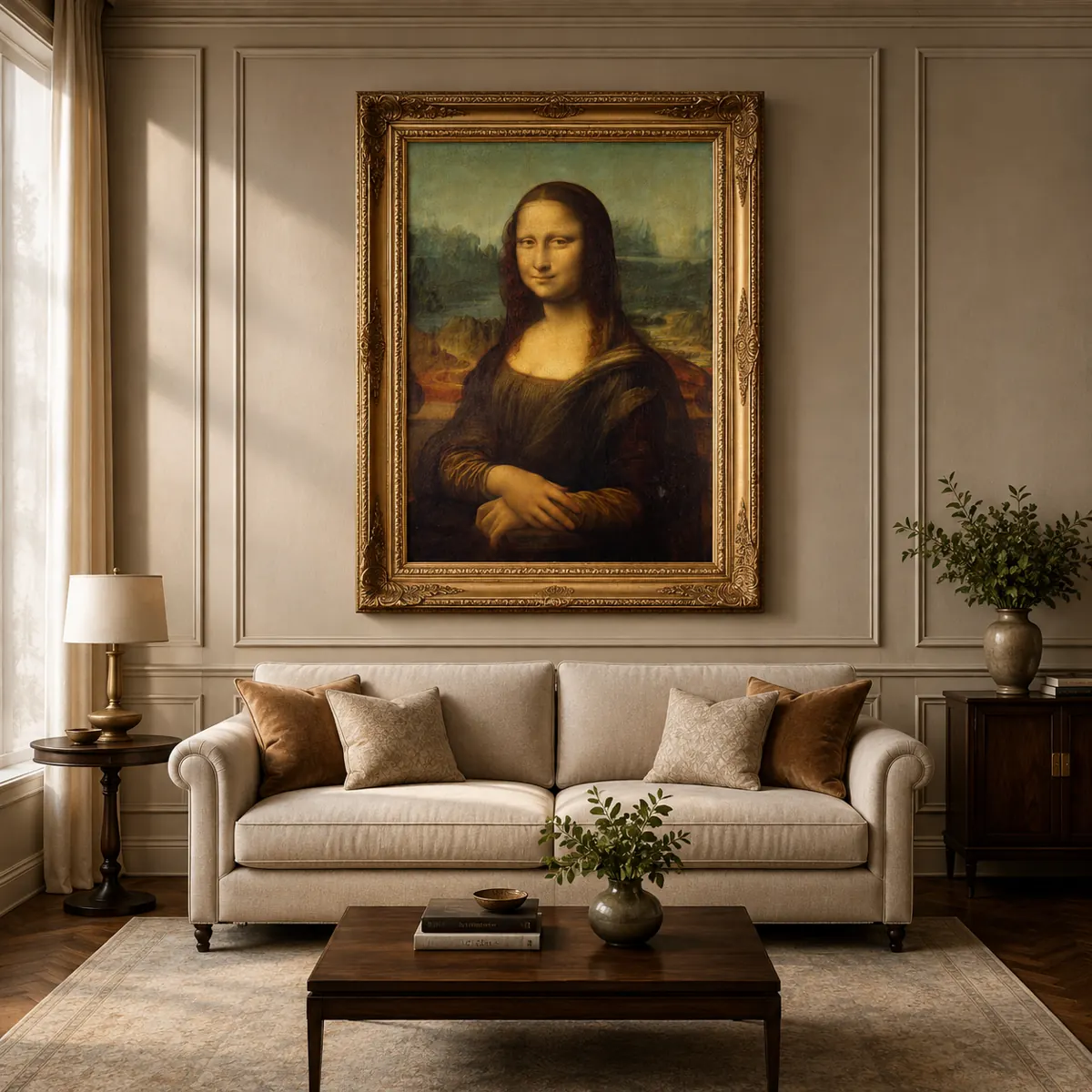
If your living room is light and neutral, a painting is the easiest way to add warmth without repainting anything. Old portraits and landscapes, with their browns, golds and soft greens, sit beautifully on cream, white and greige walls.
Portrait-shaped paintings work best on narrower walls or centred over a smaller sofa or console. Keep the furniture symmetrical, a lamp or plant on each side, and the painting becomes the centre of a calm, balanced room.
Read the full story of the Mona Lisa · hand-painted reproduction
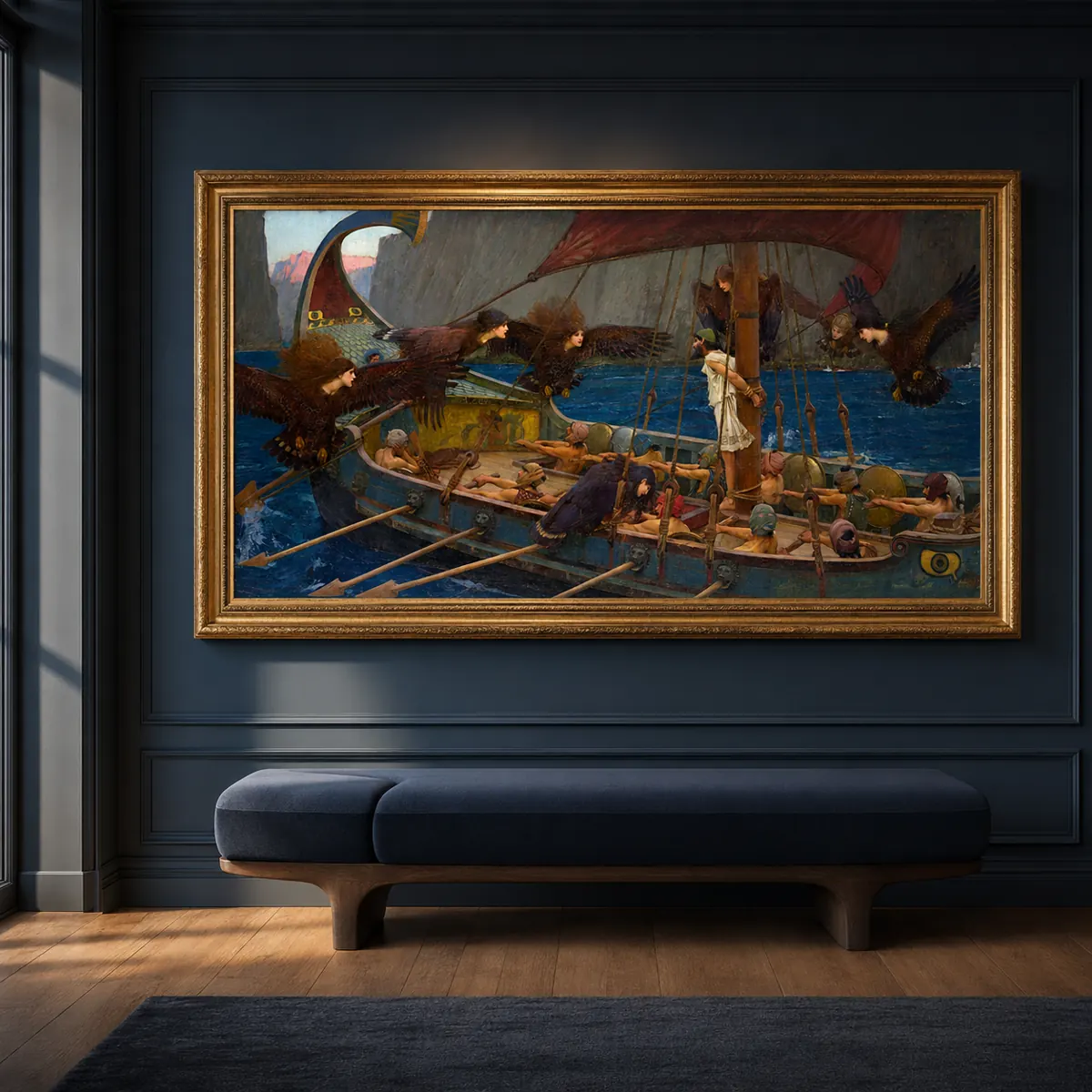
You do not have to repaint the whole room. Painting a single feature wall, or just the panelled section behind the art, in a deep colour taken from the painting frames it like a museum wall. Navy, deep green and oxblood are the classic museum colours for a reason: almost every old painting looks richer against them.
Here, a navy wall picks up the sea in Waterhouse's painting of Ulysses tied to the mast. A long, low bench or console underneath keeps the arrangement simple and lets the painting dominate.
Read the full story of Ulysses and the Sirens · hand-painted reproduction
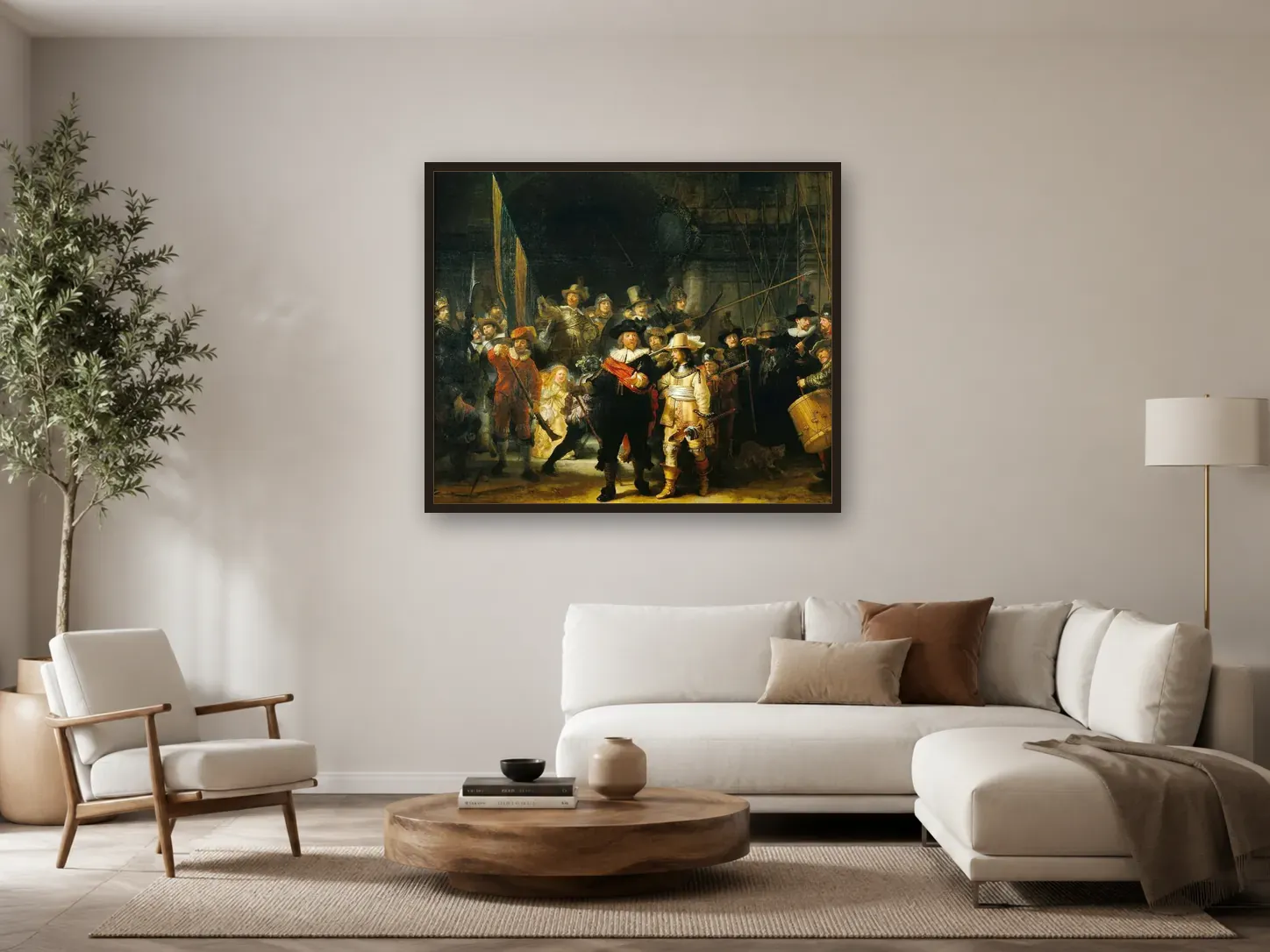
A big empty wall is not a problem to solve with lots of small things. It is a chance for one statement piece. Large wall decor works best when it is bold: one big painting, centred, with plenty of plain wall around it. On a wall over three metres wide, think of a painting at least 120 to 150 cm across.
Old masters look especially striking in modern rooms. A crowded, dramatic painting like The Night Watch, whose original is more than four metres wide, gives a white minimal living room instant depth and history.
Read the full story of The Night Watch · hand-painted reproduction
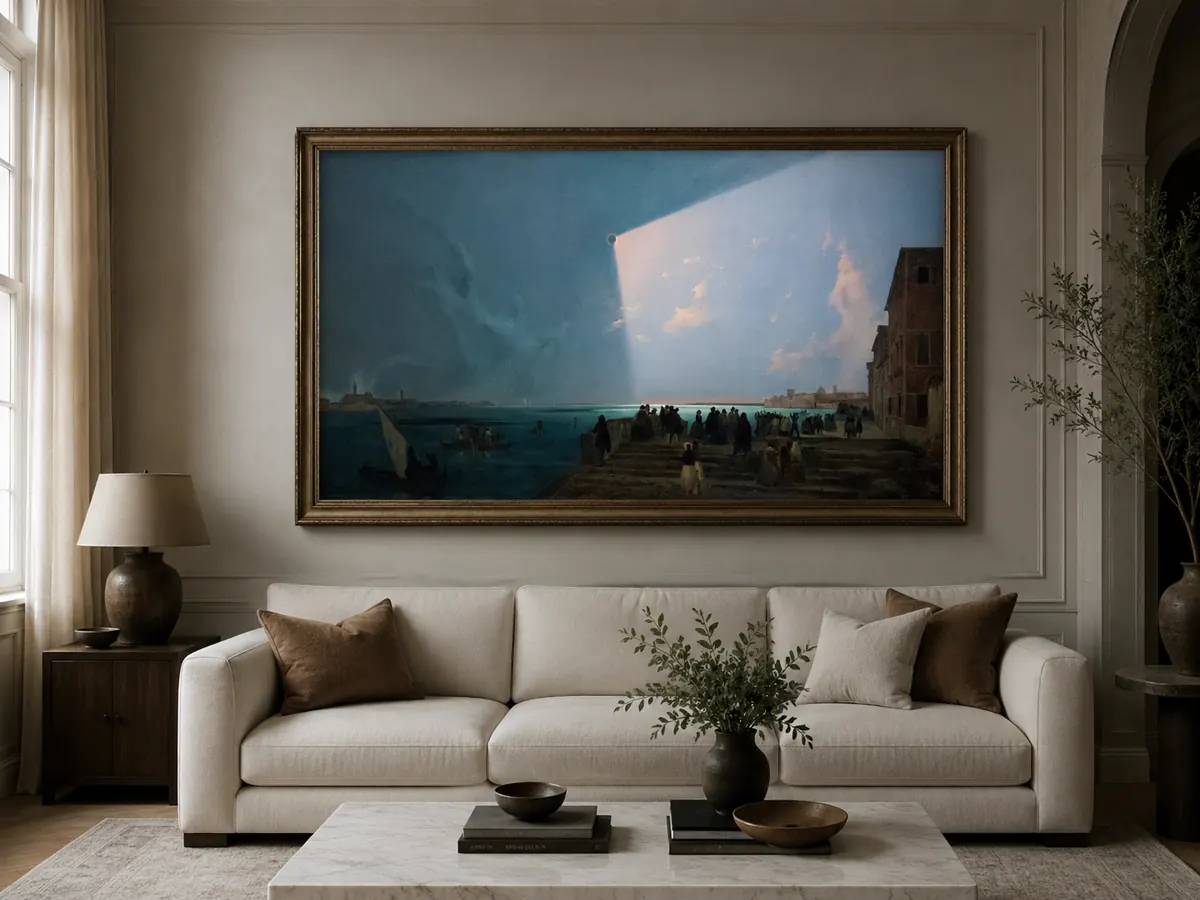
If you want your living room to feel restful, choose a painting with a horizon. Landscapes and seascapes, with open skies and water, work almost like a window: they make a room feel larger and quieter, which is why they suit small apartments and rooms without a view.
Wide, horizontal paintings belong over long sofas and low sideboards. Soft blues, greys and sandy tones are the easiest to live with every day.
See The Solar Eclipse in Venice as a hand-painted reproduction
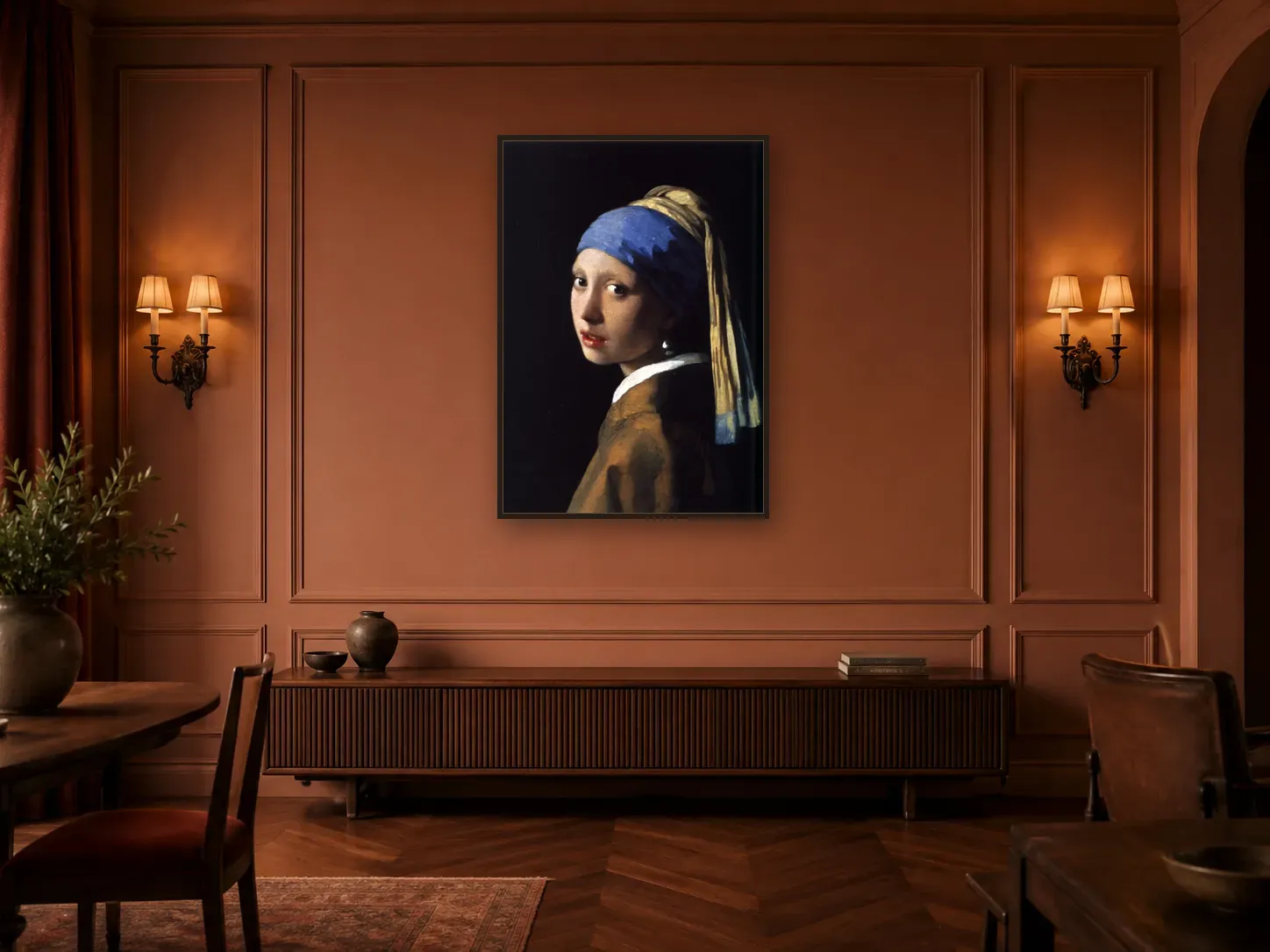
A portrait does something no landscape can: it looks back at you. One famous face, hung at eye level, turns a corner of the living room into a place people stop and look. It is perfect for a reading corner, the wall beside a fireplace, or a narrow wall where a wide painting will not fit.
Warm wall colours like terracotta, ochre and rust flatter portraits, and a pair of wall lights on either side makes the arrangement feel deliberate.
Read the full story of Girl with a Pearl Earring · hand-painted reproduction
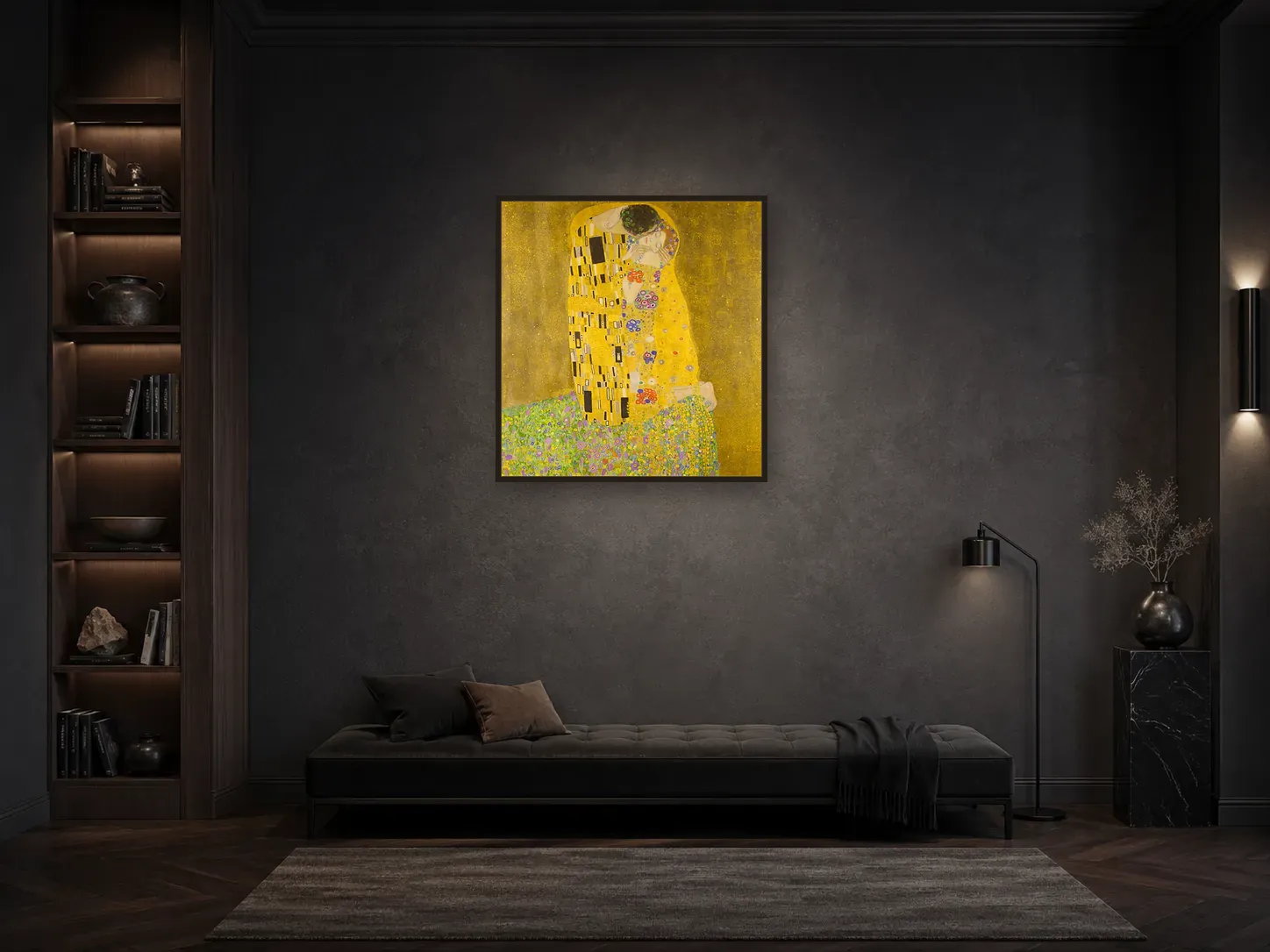
In a dark, modern lounge, one golden painting can replace a lamp. Klimt's The Kiss is the obvious example: on a charcoal or black wall its gold patterns seem to glow. The same works with any painting that has a lot of gold, yellow or warm light in it.
Keep everything else low and simple, a daybed or low sofa, a few books, one plant, so the painting has the wall to itself.
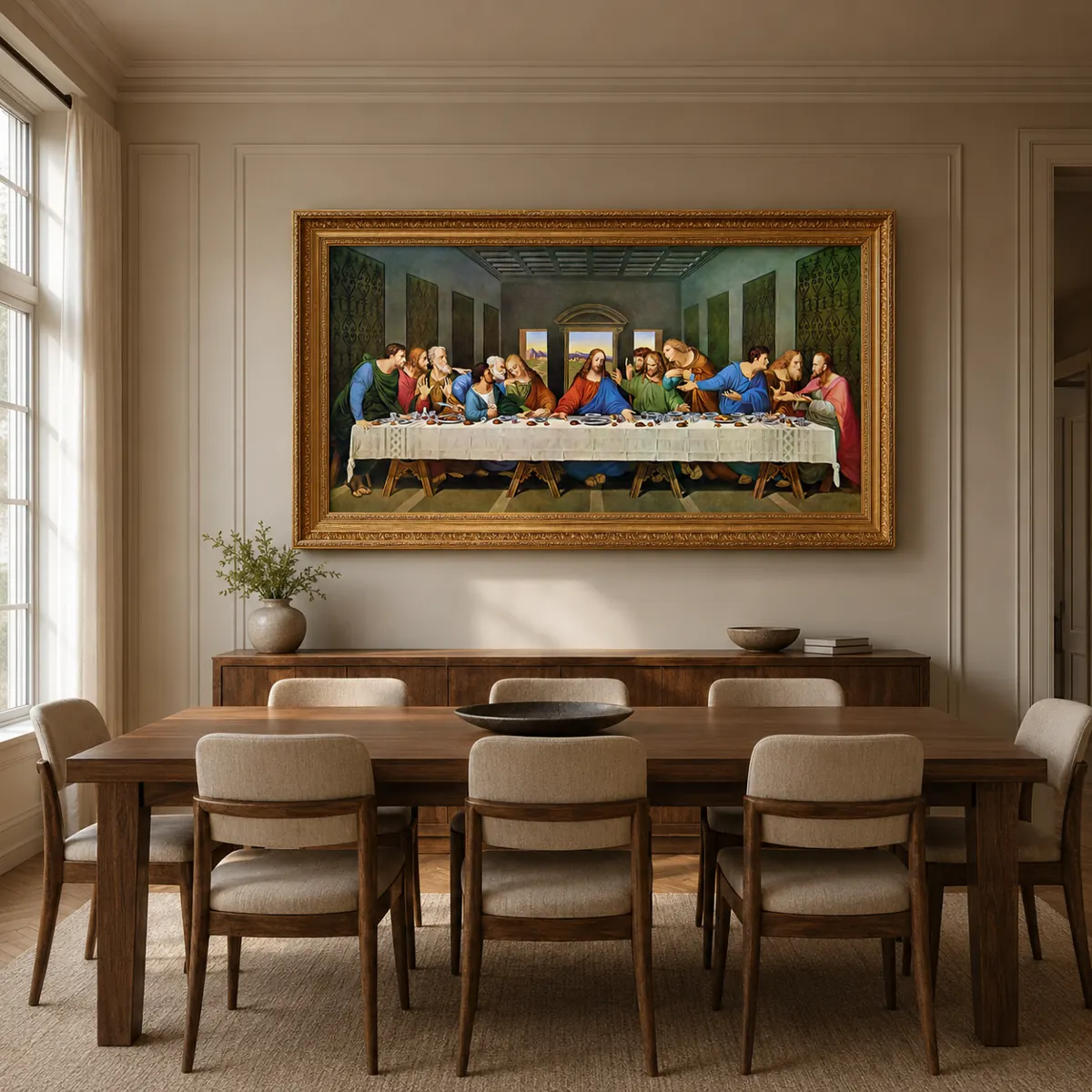
In an open-plan living and dining room, the art should connect the two zones. Choose paintings from the same period or with the same frame colour for both walls, and the space reads as one room instead of two.
Above a dining table or sideboard, horizontal paintings work best, roughly two-thirds the length of the sideboard. And if you want a painting that makes guests smile, there is no better choice for a dining wall than Leonardo's Last Supper.
Read the full story of The Last Supper · hand-painted reproduction
A gallery wall groups several paintings into one arrangement. It suits people who love more than one style, and it can grow over time. The key is to treat the whole group as one large picture.
Start with the biggest painting slightly off centre, at the usual hanging height, and build outwards. Keep the gaps between frames the same, about 5 to 8 cm (2 to 3 inches). Repeat one thing to hold it together: the same frame colour, a shared palette, or the same period of art. Before you put a single nail in the wall, cut paper templates of each frame and tape them up to test the layout.
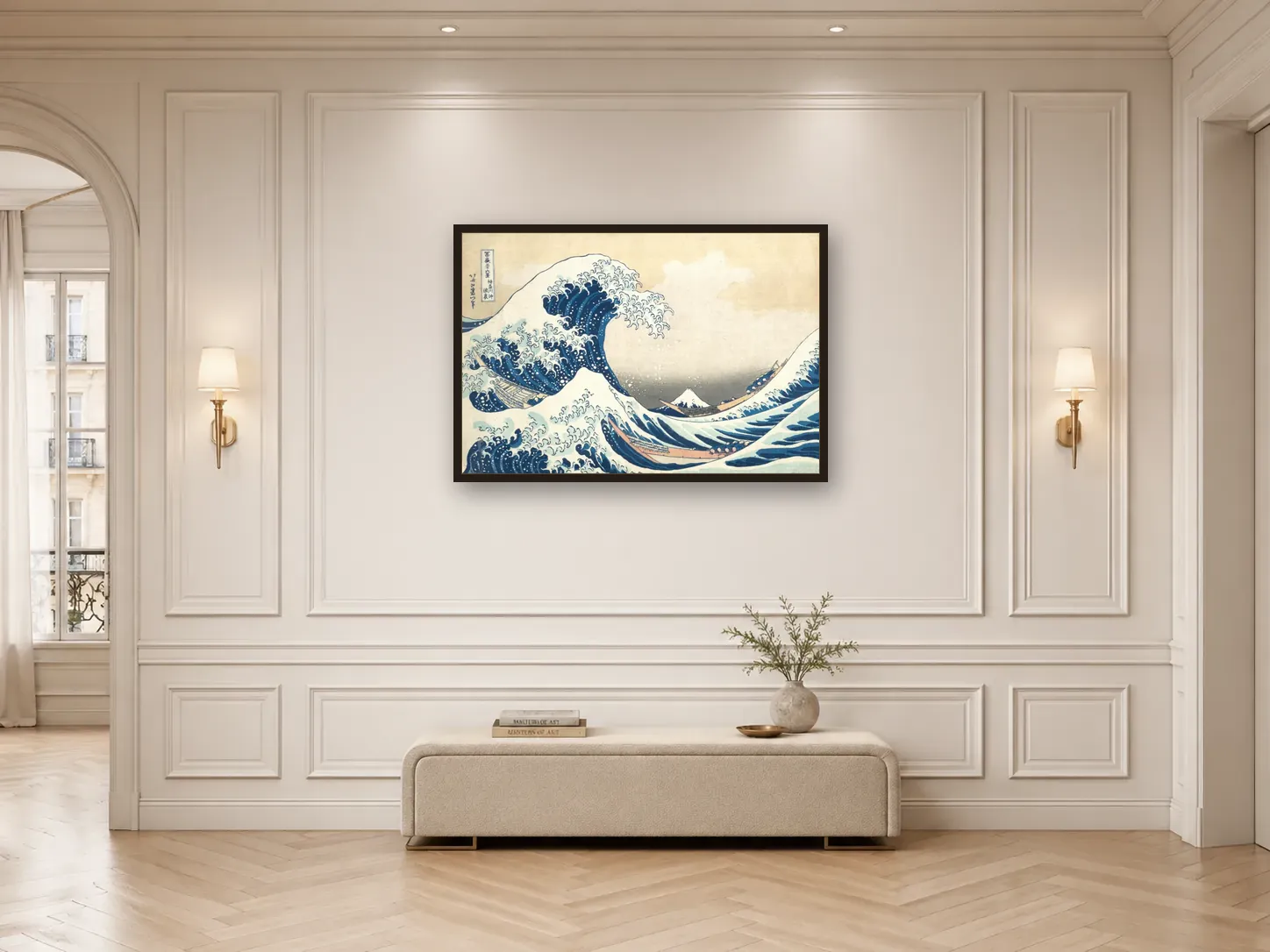
A painting that sits in shadow all evening might as well not be there. You do not need museum lighting: a picture light above the frame, a pair of wall sconces either side, or a lamp angled towards the wall all work. Use warm white bulbs, which flatter oil paint, and avoid strong sunlight falling directly on the canvas.
Lighting also changes how big a room feels. Light on the walls, rather than only from the ceiling, makes a living room look larger and more welcoming at night.
Read the full story of The Great Wave · hand-painted reproduction
The standard used by galleries and interior designers is simple: the centre of the painting should be about 145 to 152 cm (57 to 60 inches) from the floor. That is roughly the eye level of a standing adult, and it keeps all the art in a room at a consistent height.
Furniture changes the rule. Above a sofa, sideboard or console, hang the painting so its bottom edge is 20 to 25 cm (8 to 10 inches) above the furniture, so the two read as one group. Above a fireplace, leave about 10 to 20 cm (4 to 8 inches) above the mantel. The most common mistake is hanging art too high, floating near the ceiling. When in doubt, go lower.
Use these simple proportions as a wall art size guide:
If a painting looks too small, it usually is. A larger painting almost always looks better than a smaller one in a living room.
What is the best wall art for a living room? One large painting with a colour that repeats somewhere else in the room. Landscapes and seascapes make a room feel calm, portraits make it feel personal, and dramatic old masters make it feel grand.
How do you decorate a big living room wall? With one big statement painting, centred, rather than many small pieces. If you prefer several pieces, group them into a gallery wall with equal gaps so they read as one shape.
Should art above the couch be the same width as the couch? No. About two-thirds of the width looks best. A painting as wide as the sofa looks heavy, and one less than half its width looks lost.
Can you hang art above the TV? You can, but keep it smaller than the TV area and leave a clear gap, or the two compete. Many people prefer to put the TV on another wall and give the best wall to the art.
What colours of art work in a lounge? Pick one colour from your sofa, rug or curtains and find it in the painting. Blue and green paintings feel calm, red and gold paintings feel warm and dramatic, and black-and-white works almost anywhere.
Enjoyed this story?
Save articles to your collection
Log in or create a free account, and this article will be waiting in your Private Collection.
Log in or sign upRoom images show ByMuseum hand-painted reproductions in styled interiors. Sizes are given in centimetres and inches; adjust them to your own furniture.

Man Writing a Letter
Gabriel Metsu, c. 1664
The gallery list
Every painting is already 50% off. Join the list and we will send you an extra $15 code, plus first access to new collections.
No spam. Unsubscribe anytime. · Privacy Policy
Welcome
Your $15 code is on its way. Explore the gallery while you wait.