Loading cart…
No products in the cart.

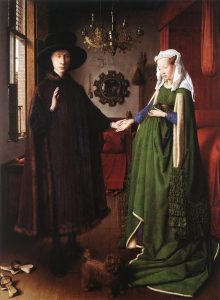
Imagine standing before a full-length portrait of a man and a woman, rendered in a dim interior room lit by a chandelier holding a single burning candle. The textures are almost impossible to believe: the deep green pile of a…
Save articles to your collection
Log in or create a free account, and this article will be waiting in your Private Collection.
Log in or sign upImagine standing before a full-length portrait of a man and a woman, rendered in a dim interior room lit by a chandelier holding a single burning candle. The textures are almost impossible to believe: the deep green pile of a velvet gown, the crisp white linen of a headpiece, the warm gleam of brass, the soft fur trim along a sleeve, and in the convex mirror on the back wall, a tiny reflection of the entire room showing two additional figures standing at the door. This is The Arnolfini Portrait, completed in 1434, and it is one of the most analyzed and debated paintings in the entire history of Western art. The detail is so precise, the surfaces so convincingly material, that generations of scholars have wrestled with its meaning, its symbolism, and the identity of the figures within it. What you are looking at is the work of Jan van Eyck, a Flemish painter working in the early fifteenth century who transformed the way European artists understood what paint on a wooden panel could actually do. Jan van Eyck was born around 1390 in Maaseik, a small town in what is now northeastern Belgium, and he rose to become one of the most celebrated painters of his era. He served as court painter to Philip the Good, Duke of Burgundy, a position that gave him financial stability, diplomatic prestige, and access to the finest pigments and materials available in Europe. Although he did not invent oil painting as was once popularly believed, he developed and refined oil-based techniques to a degree that no artist of his generation could match. Working with translucent glazes built up in thin, luminous layers, he achieved a depth of color and a precision of surface texture that fundamentally altered the ambitions of Northern European painting. His influence spread rapidly through Flanders, the Netherlands, and eventually across the Alps into Italy, where Italian painters studied his methods with close attention. He died in Bruges in 1441, leaving behind a small but extraordinarily concentrated body of work that continues to draw scholars, collectors, and admirers from around the world. The paintings of Jan van Eyck do not merely depict the world. They seem to contain it.
The technical foundation of the work produced by Jan van Eyck rests on his extraordinary command of oil as a medium. Unlike the egg tempera that dominated Italian panel painting of the same period, oil paint allowed for slow drying times and the possibility of blending, layering, and glazing in ways that tempera simply could not support. Van Eyck exploited this fully. He built his images from the ground up, beginning with a carefully prepared wooden panel coated in multiple layers of gesso, then laying in underdrawing before applying thin, transparent veils of oil-based color one over another. Each layer modified the one beneath it in subtle ways, creating a luminosity that appears to come from within the surface rather than from light reflecting off the top. This is why the reds in his paintings seem to glow, why his blacks have genuine depth, and why his whites carry a soft, convincing warmth. The brushwork is almost invisible at close range, which was a deliberate achievement rather than an accident. Visually, the world of Jan van Eyck is one of intense physical specificity combined with a profound stillness. He was drawn to surfaces of every kind: polished metal, rough wool, smooth marble, carved wood, translucent glass, and human skin. Each material is rendered with its own distinct logic of light and shadow. His interiors are carefully organized, often small and intimate, filled with symbolic objects whose meanings scholars continue to interpret and debate. His portraits carry a particular intensity, with sitters rendered in three-quarter view against dark or neutral grounds, their faces studied with a clinical but sympathetic attention to the individuality of each person. There is no idealization in the faces of Jan van Eyck. There is only close, patient, and deeply skilled observation of the world as it actually appears.
Each card links to its own article with full analysis and reproduction details.
 #1
#1
 #11
#11
 #2
#2
 #5
#5
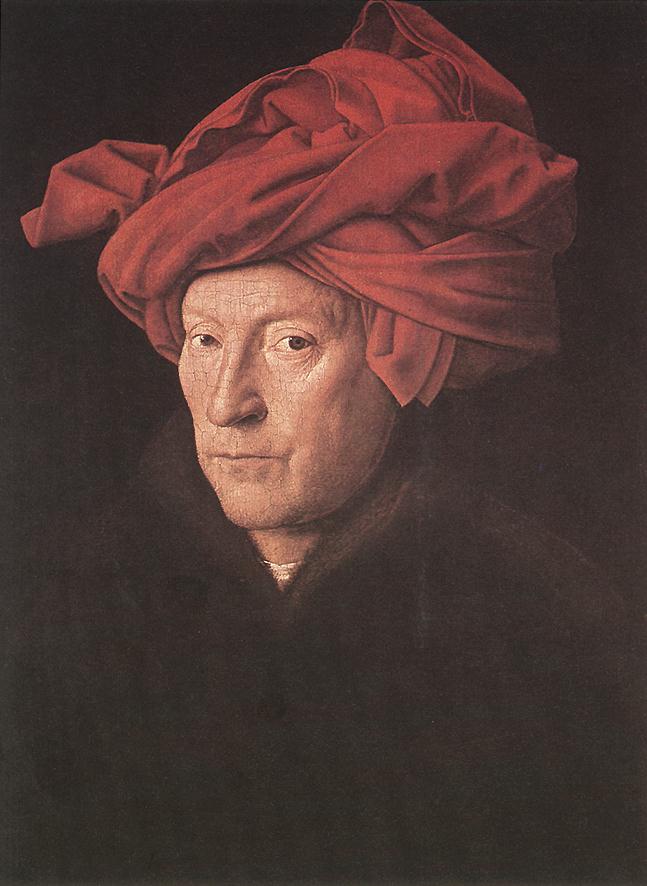 #4
#4
 #5
#5
 #6
#6
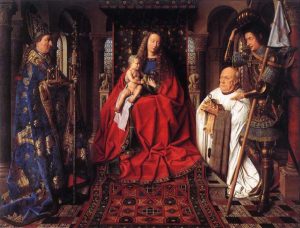 #7
#7
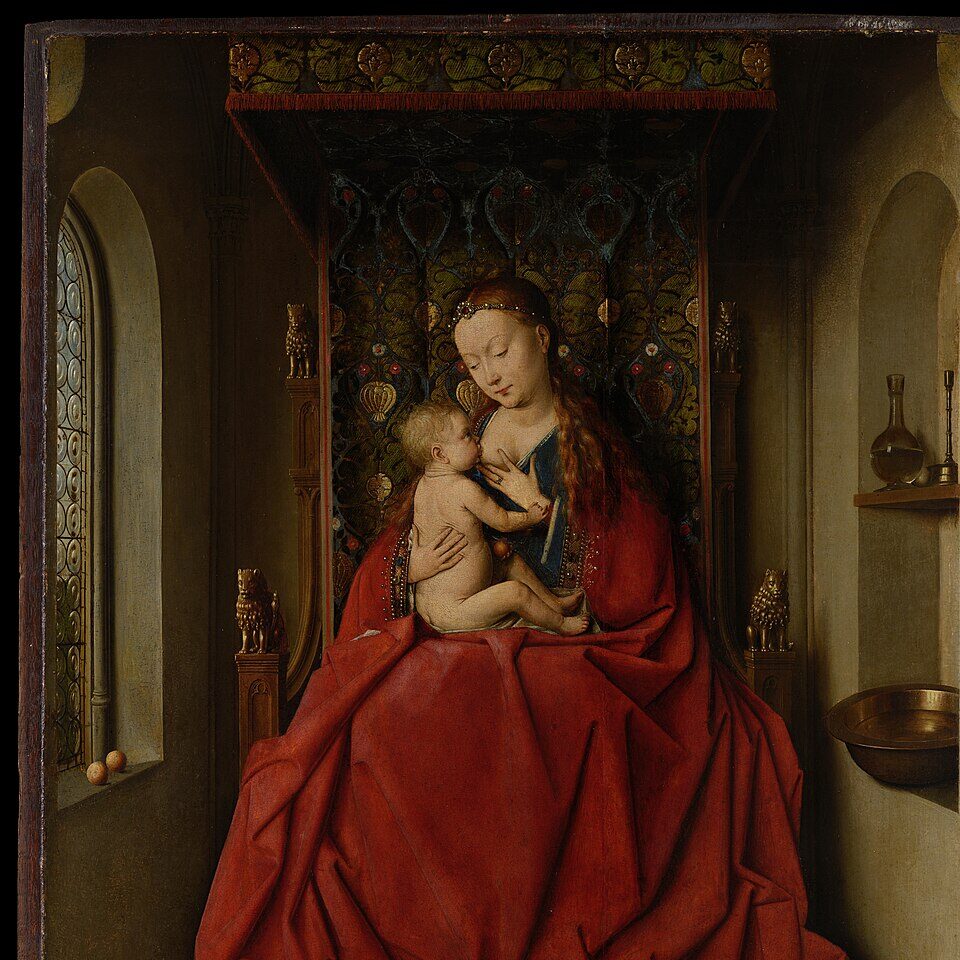 #8
#8
 #9
#9
A print can reproduce colors. What it cannot reproduce is texture, depth, and the physical presence of oil paint on canvas. Jan van Eyck technique depends on these.
At ByMuseum, every reproduction is painted by hand using oil on canvas. There is no inkjet, no digital print. The brushwork is real. The result looks like a painting because it is one.
Enjoyed this story?
Save articles to your collection
Log in or create a free account, and this article will be waiting in your Private Collection.
Log in or sign up