Loading cart…
No products in the cart.

Save articles to your collection
Log in or create a free account, and this article will be waiting in your Private Collection.
Log in or sign upPlan a Getty Center visit with free timed tickets, current hours, parking prices and ten paintings from the Getty Museum collection.

At the Getty Center in Los Angeles, a painting visit unfolds alongside architecture, gardens and long views across the city. The collection moves from Renaissance portraiture to Dutch interiors and nineteenth-century colour, with Van Gogh's Irises among its best-known works.
This guide concerns the Getty Center, not the Getty Villa Museum. It brings together practical visit information and ten public-domain paintings from the museum's collection. It is a guide to works worth knowing, not a promise that all ten are currently hanging. That distinction is especially important while galleries are being renovated.
The Getty Center requires a free timed-entry reservation. The Getty Villa Museum is a separate destination with a different collection, address and visiting arrangements. Choose the Center when planning around the European paintings in this guide. Official Getty Center visit information and reservations.
Museum admission and parking are separate. Current parking is $25, dropping to $15 after 3 pm and $10 after 6 pm; Saturday parking after 6 pm is free. Parking is cashless. Visitors arriving by bicycle, public transport or a drop-off arrangement should consult the transport information for their route rather than assuming a parking charge applies to every visitor.
Metro bus 761 stops at Getty Center Drive and Sepulveda Boulevard. Drivers should follow Getty's directions to the public entrance, since the postal address alone can produce an unsuitable navigation route.
As checked on 5 November 2026, Getty lists closures in the South Pavilion, East Pavilion plaza-level galleries and North Pavilion galleries. Its Irises record says the painting is not currently on view. Consult the live visit notices and individual collection records before making a journey around one work.
Getty has also announced a temporary Center closure beginning in March 2027. Plans for that period need a fresh check of the official announcement and current visit page.
We suggest allowing half a day if you want time for paintings, a garden walk and a break. On a shorter visit, choose two or three painting priorities and check that their galleries are open. A large list is useful for discovery, but it need not become a task to complete.
The Getty Center FAQ explains reservation and visitor arrangements. Keep the collection list below separate from a current on-view itinerary: loans, conservation and building work can change the latter.

These ten public-domain paintings are selected for their visual interest and the different experiences they offer. This is an editorial collection guide, not an official ranking or a live display checklist.
Vincent van Gogh · 1889
 Vincent van Gogh collection
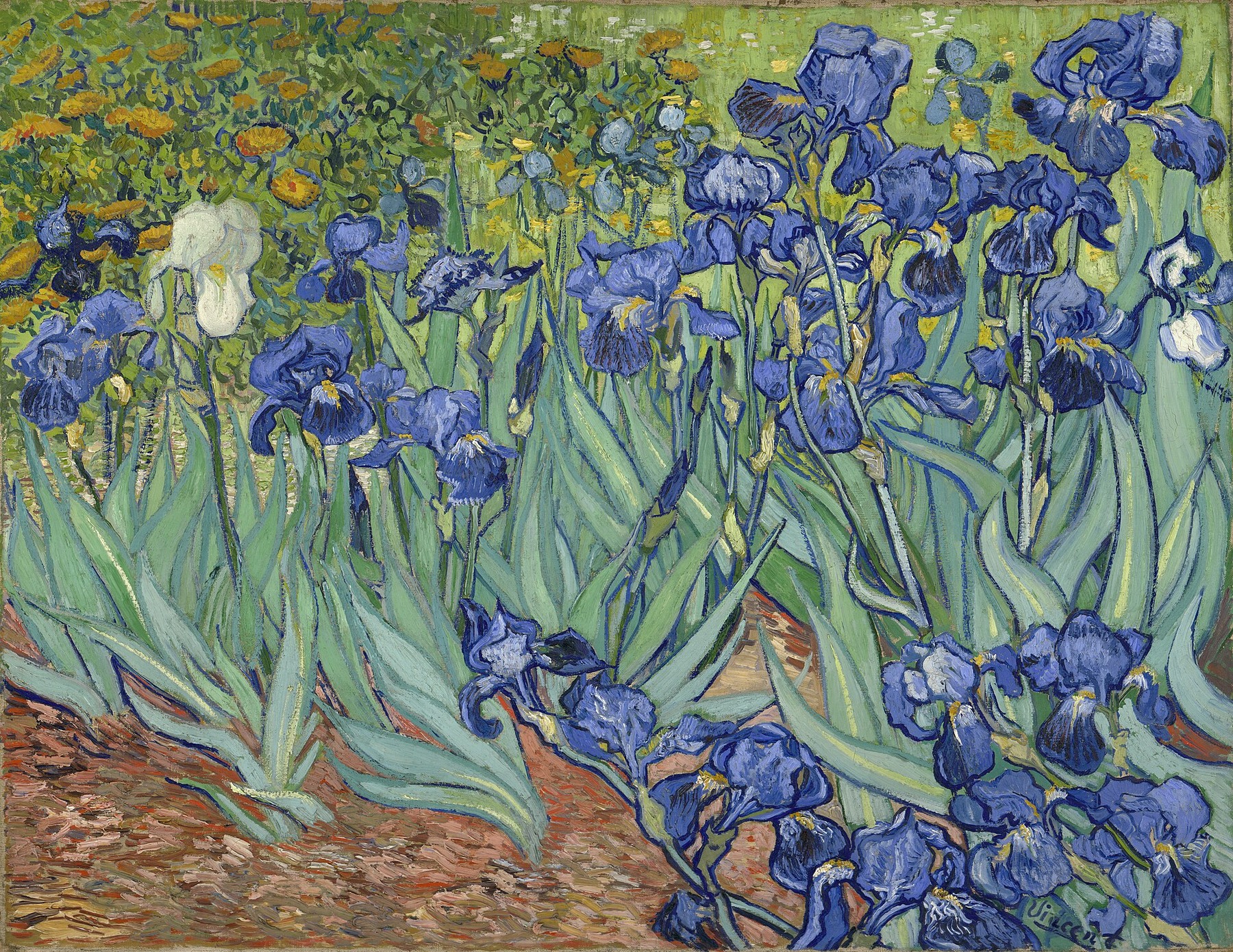
Van Gogh makes the irises distinct through curling outlines and changes of colour. The flowers overlap so insistently that a viewer can begin by seeing a patterned field, then discover how individually each bloom has been observed.
The Getty identifies the garden at Saint-Rémy as the setting in which he began the painting in 1889. Look at the white iris against the surrounding blue-violet forms and the different rhythms of the leaves. This is the Getty canvas, rather than another work with irises in its title. Its display status should be checked separately.
Rembrandt van Rijn · about 1628
 Rembrandt van Rijn collection
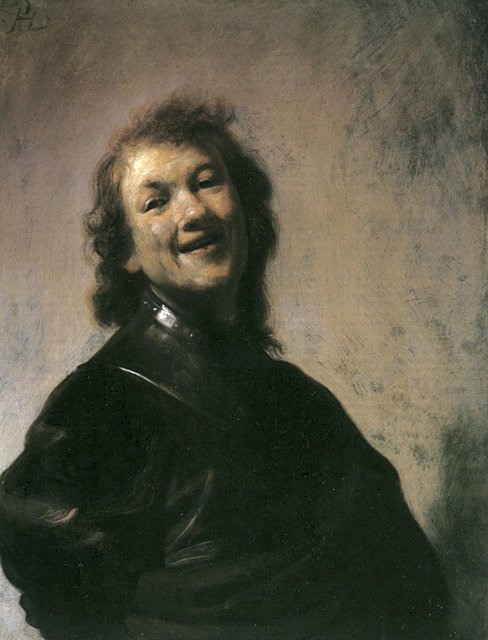
Rembrandt catches himself in a broad laugh rather than a settled formal pose. The tilted head, open mouth and bright metal at the neck make the figure feel caught in a brief exchange.
Painted about 1628 on copper, the work is small. Its impact depends on the handling of the face and the changing light across the costume, not on monumental scale. Compare it with the quieter self-portraits associated with Rembrandt's later career: the same subject can become a very different investigation of expression and presence.
Rembrandt van Rijn · 1632
Rembrandt van Rijn collection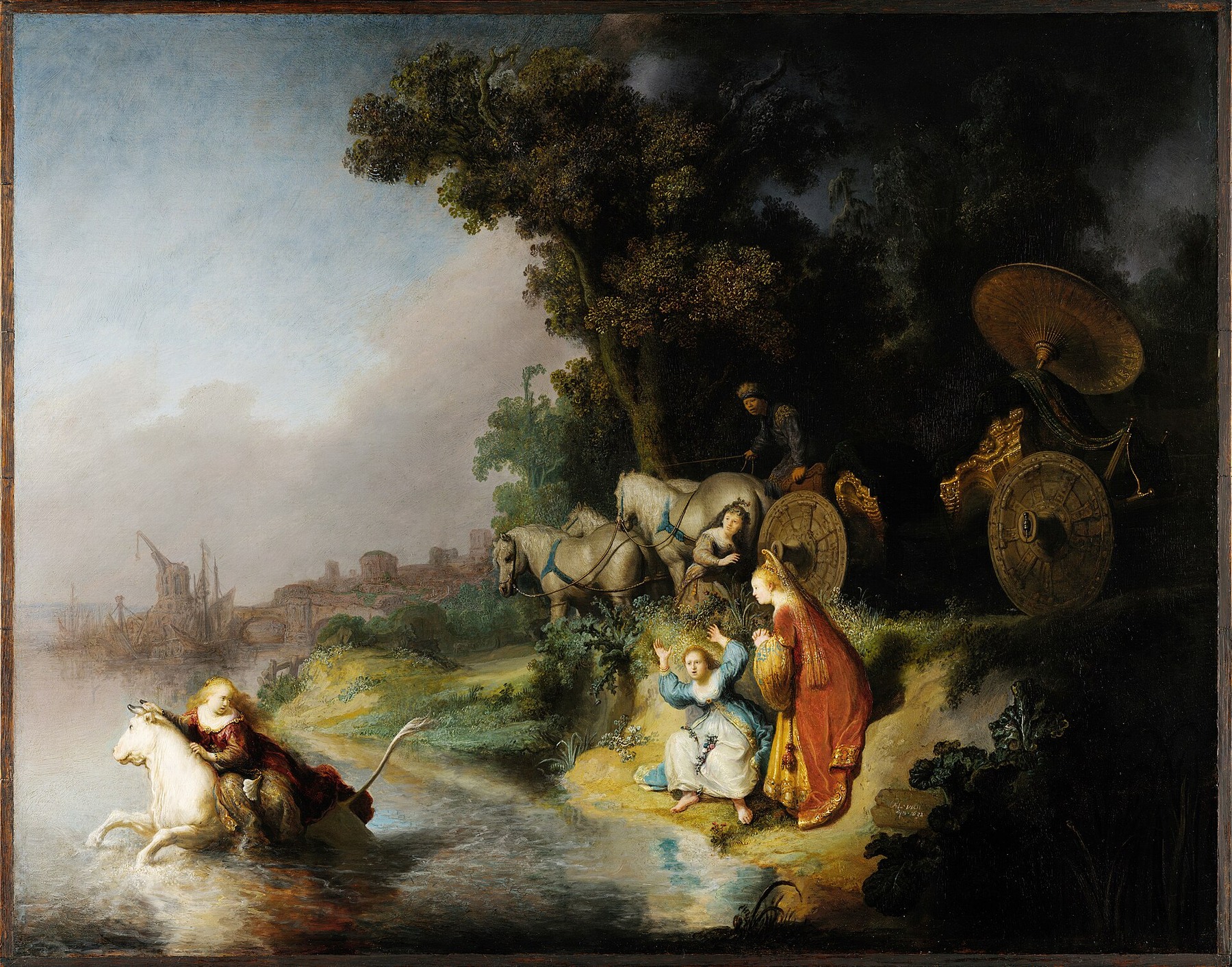
The white bull moves into the water with Europa on its back, while her companions respond from the shore. The story concerns Jupiter's abduction of the princess in the form of a bull. Rembrandt makes the separation legible through bodies turning and arms reaching across a widening interval.
Look at the different responses among those left behind. Their gestures are not identical, which keeps the group from becoming a single sign of alarm. Light links the shore and the moving figures, even as the water begins to separate them.
Pontormo · 1528 to 1530
 Pontormo collection
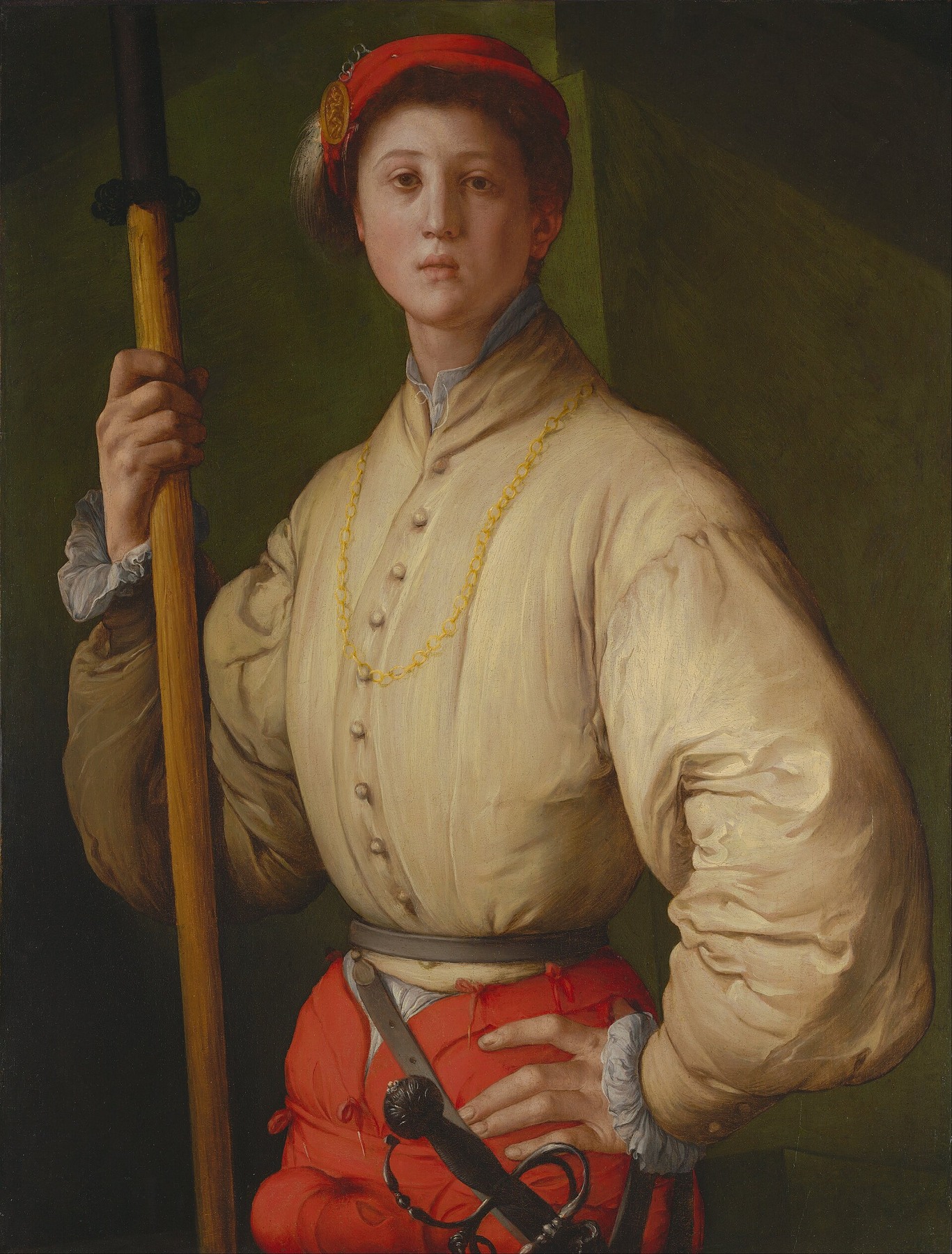
The young man's stance is direct, with one hand placed at the hip and the long weapon extending the figure's vertical presence. Clothing and posture give the portrait confidence, but the expression remains more difficult to settle.
Pontormo's picture is dated to the turbulent late 1520s in Florence. The sitter's identity has been debated, so the safest point of entry is the visible image rather than a definite personal biography. Follow the relation between the cap, sleeves, hand and weapon: the portrait's force is built from those connected shapes.
Edouard Manet · 1881
 Edouard Manet collection
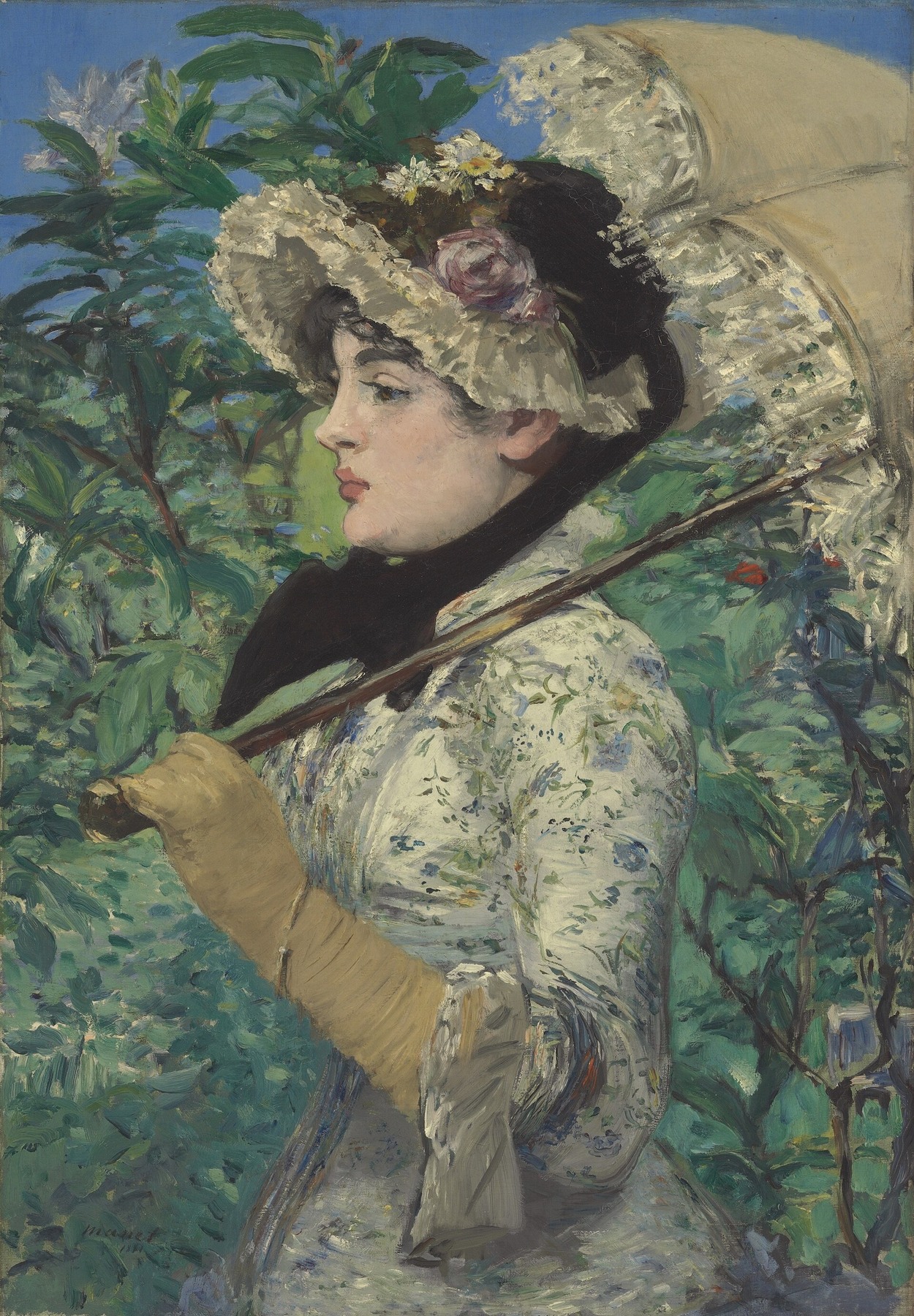
The flowered dress, bonnet and parasol create a carefully articulated image of fashionable modern life. Manet varies the paint from small floral touches to broader areas of foliage, allowing the costume to read as both material and pattern.
The Getty dates the painting to 1881. Rather than treating the figure simply as a person standing in a garden, look at the construction of the profile and the shape of the parasol above it. The picture's seasonal title becomes visible through colour, clothing and setting.
J. M. W. Turner · 1839
 J. M. W. Turner collection
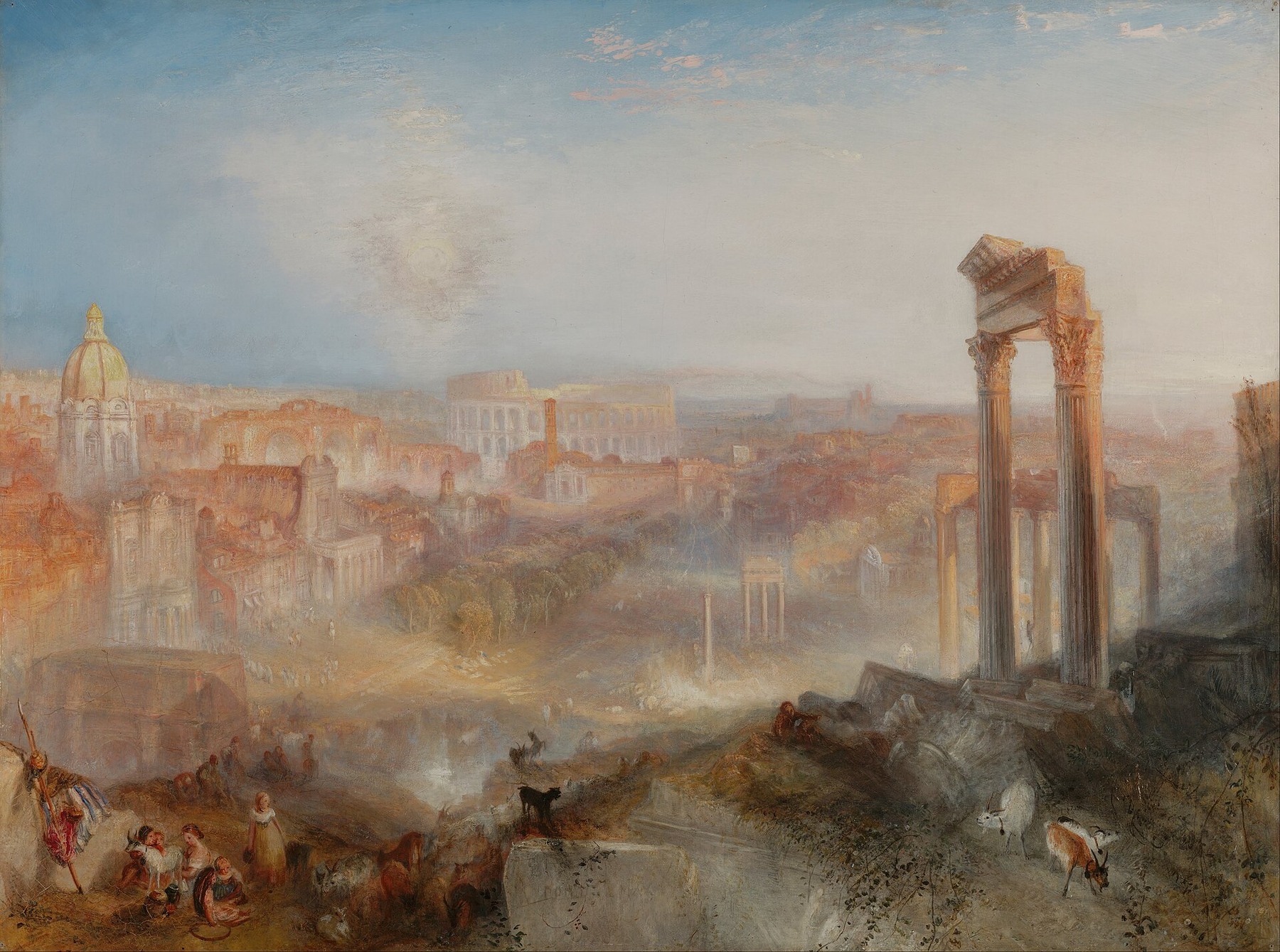
Turner's Rome is not presented as a clean inventory of monuments. Buildings and ruins seem to emerge through luminous air, while small figures continue ordinary activities in the foreground.
The Getty describes the painting as a vision shaped by memory after Turner's travels. Follow the movement from the closest details towards the dissolving distance. That shift makes the city feel both materially inhabited and difficult to grasp in full. Its light is part of the subject, rather than a neutral condition under which the architecture is recorded.
Canaletto · about 1738
 Canaletto collection
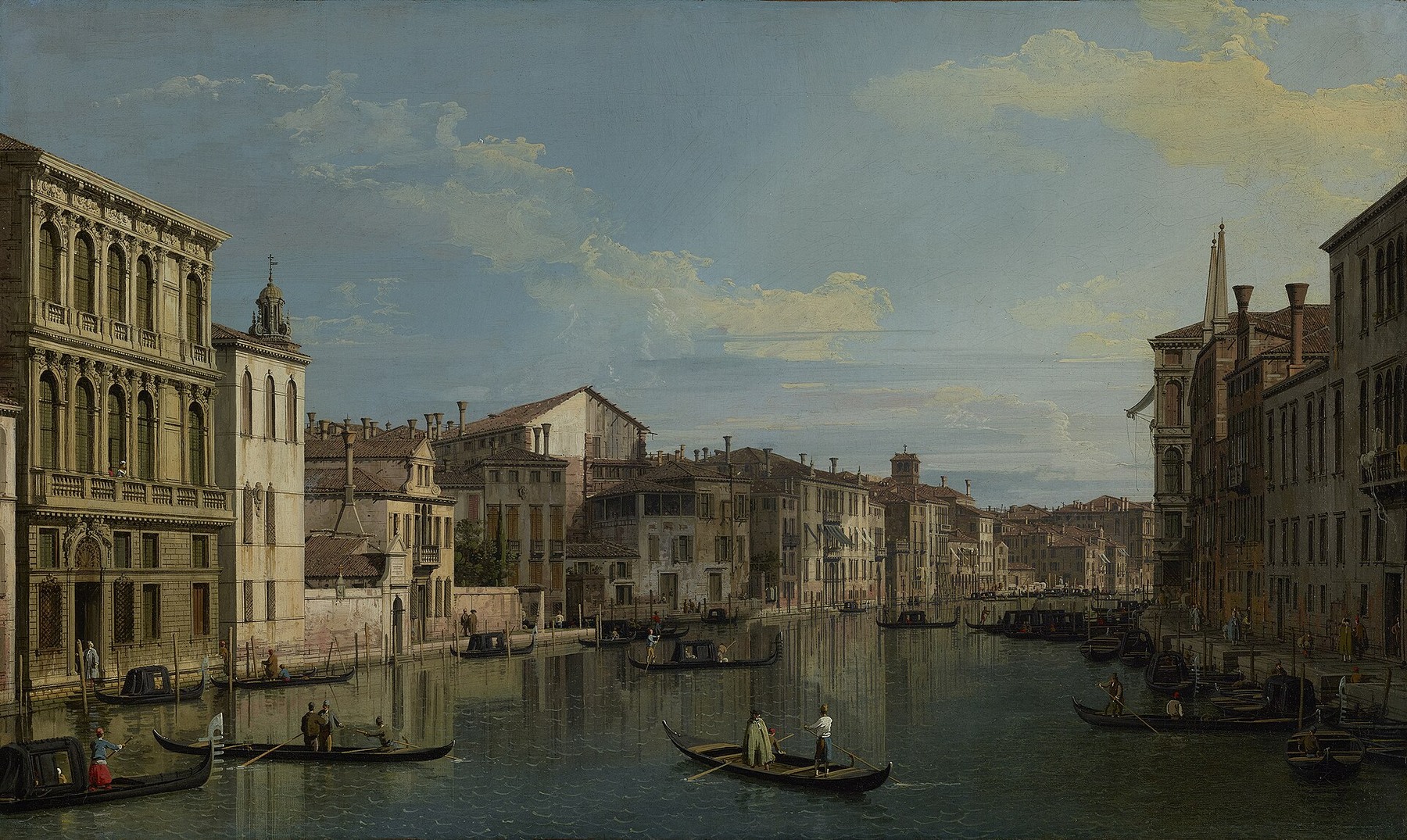
The canal opens a path through the centre of the picture, but the boats keep that space active. Canaletto gives the architecture strong order while allowing small movements on the water to complicate the view.
Compare the nearer façades with the increasingly fine description farther along the canal. The painting makes distance feel measurable without becoming empty. Its full title identifies the view from Palazzo Flangini towards Campo San Marcuola, a useful distinction among the many Venetian scenes associated with the artist.
Jacques-Louis David · 1818
 Jacques-Louis David collection
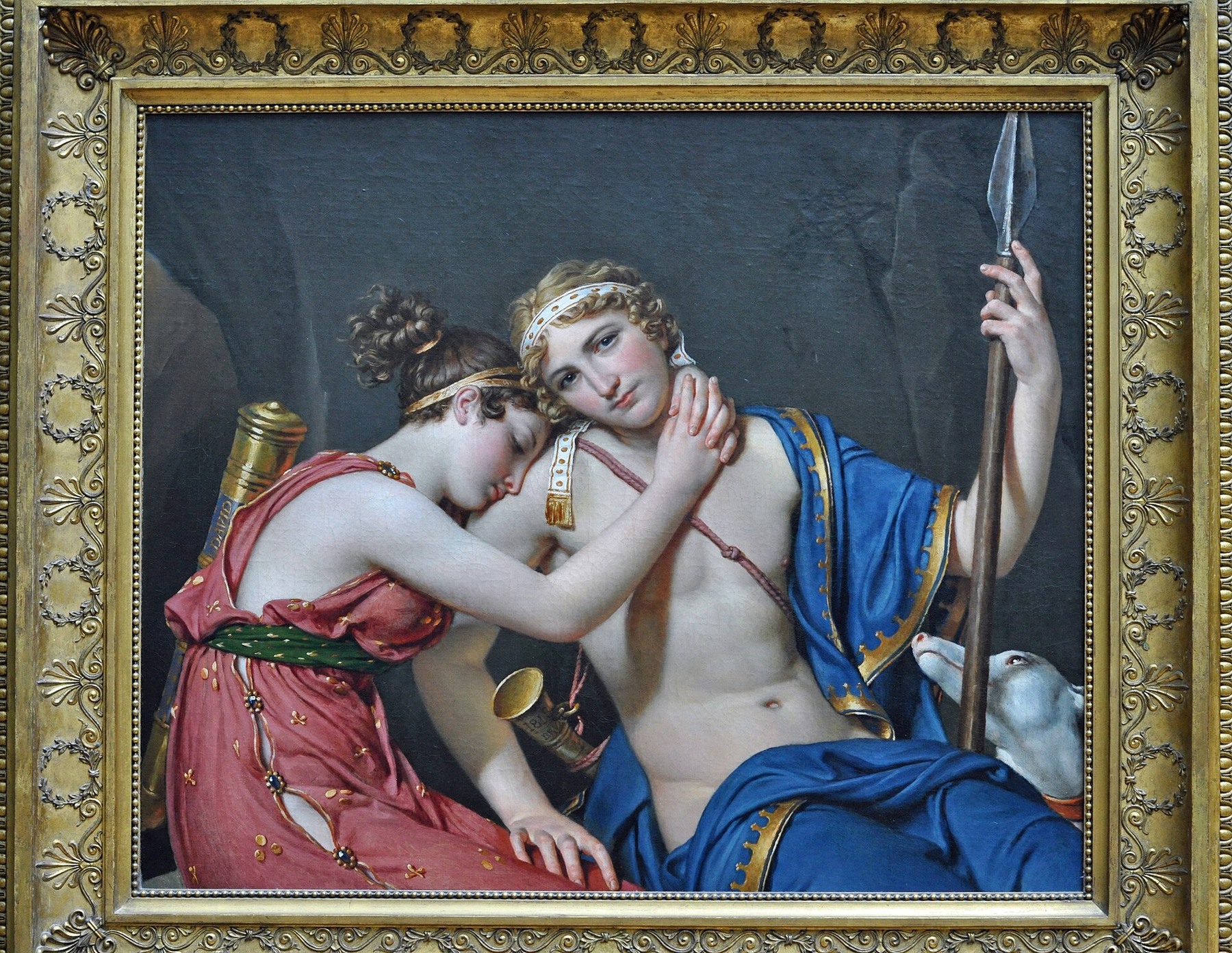
Eucharis leans against Telemachus, bringing the bodies close even as the title announces separation. His upright spear adds a firm vertical to a scene otherwise shaped by touch, weight and the turn of the heads.
David painted the work in 1818 during his exile in Brussels. The subject comes through Fénelon's Adventures of Telemachus, which reworks figures connected to the Odyssey. Look at how the saturated clothing frames exposed flesh and how the two figures direct their attention differently. Their closeness does not resolve the impending departure.
Lawrence Alma-Tadema · 1894
 Lawrence Alma-Tadema collection
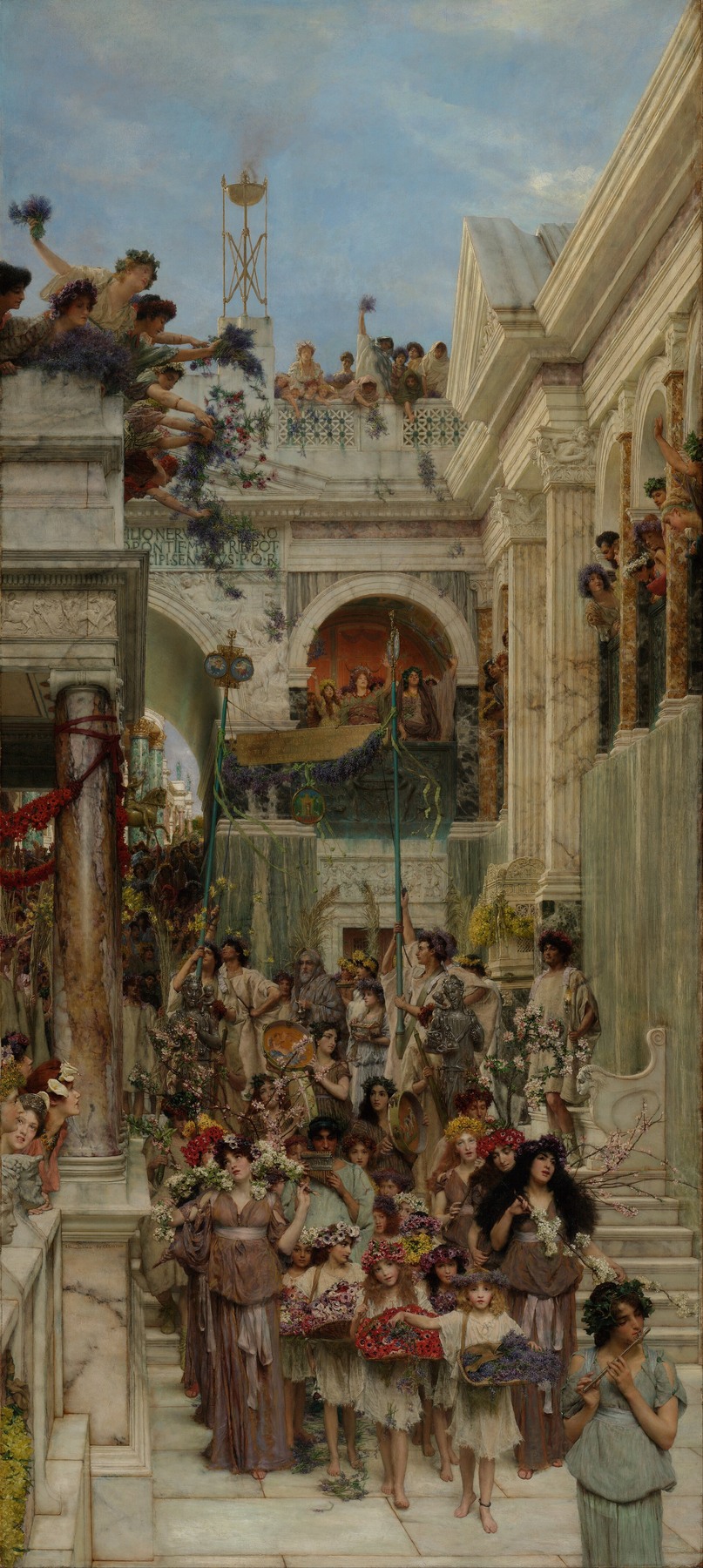
Flowers, instruments and spectators fill a procession through an imagined ancient city. Alma-Tadema makes the architecture part of the spectacle: figures lean from high places while others move through the narrow vertical composition below.
The Getty cautions that the exact festival is uncertain. It is more useful to follow the painting's references to spring, fertility and public celebration than to insist on one definite ancient event. Look for the way repeated flowers and bright accents connect figures who occupy quite different levels of the scene.
William-Adolphe Bouguereau · about 1880
 William-Adolphe Bouguereau collection
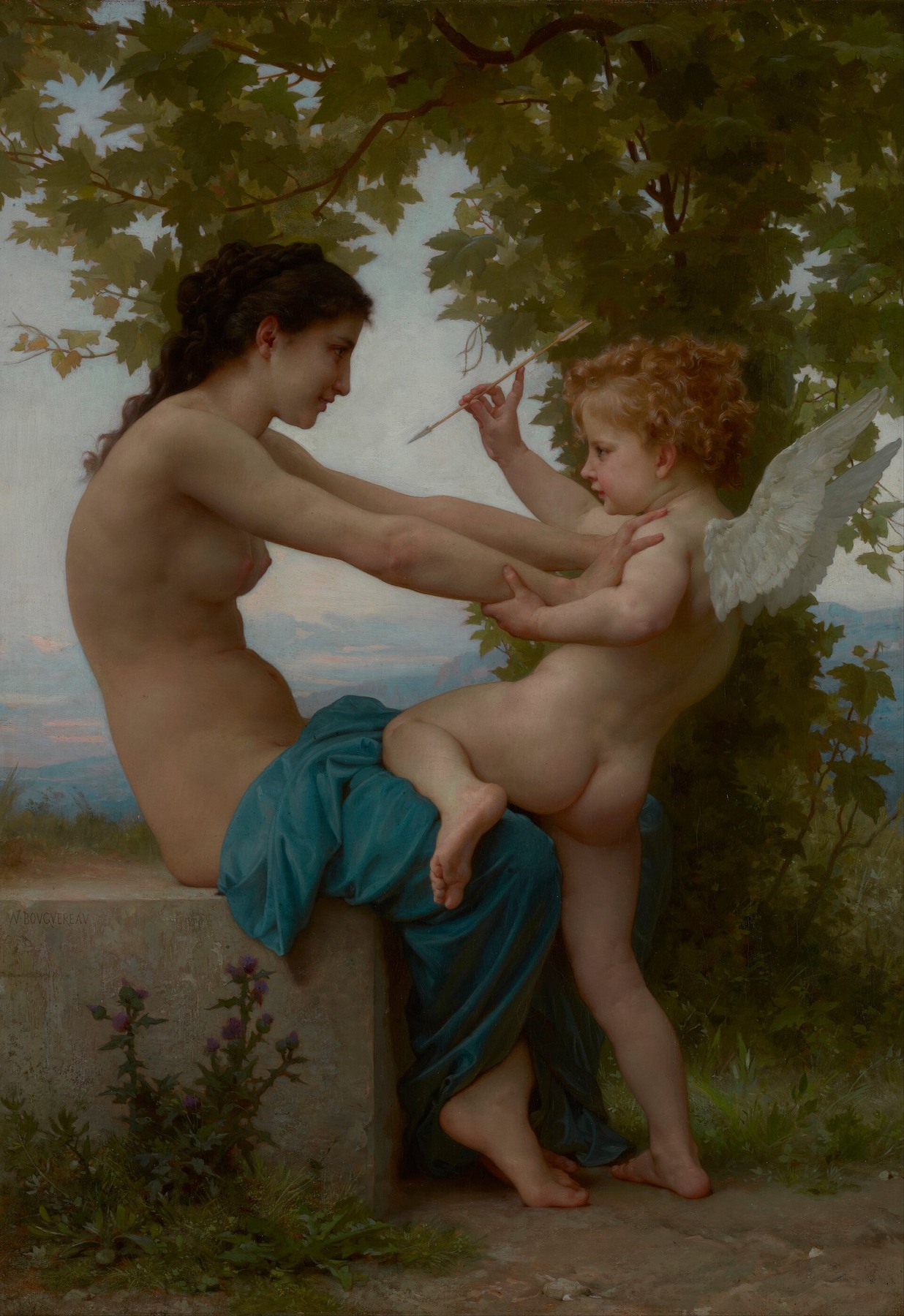
The outstretched arms suggest resistance, but the woman's expression makes the encounter less simple than an image of physical struggle. Cupid's small body and arrow provide the mythological frame, while the landscape gives the pair an apparently sheltered setting.
The Getty dates this smaller repetition of a successful Bouguereau composition to about 1880. The work is also known through the title A Young Girl Defending Herself against Eros. Notice the contrasts between carefully modelled skin, fabric and foliage, rather than treating the polished surface as uniform throughout.
Admission to the Getty Center is free with a timed-entry reservation. Parking normally has a separate charge.
No. They are separate sites. The European paintings discussed here belong to the Getty Center collection.
The museum record checked on 5 November 2026 says it is not currently on view. Check that record again before planning your visit around the painting.
Explore another collection in our Louvre Museum guide.
Enjoyed this story?
Save articles to your collection
Log in or create a free account, and this article will be waiting in your Private Collection.
Log in or sign up
Man Writing a Letter
Gabriel Metsu, c. 1664
The gallery list
Every painting is already 50% off. Join the list and we will send you an extra $15 code, plus first access to new collections.
No spam. Unsubscribe anytime. · Privacy Policy
Welcome
Your $15 code is on its way. Explore the gallery while you wait.