Loading cart…
No products in the cart.

Save articles to your collection
Log in or create a free account, and this article will be waiting in your Private Collection.
Log in or sign upPlan a Louvre visit with current admission prices, opening hours, official booking links and ten paintings, from the Mona Lisa to Vermeer.
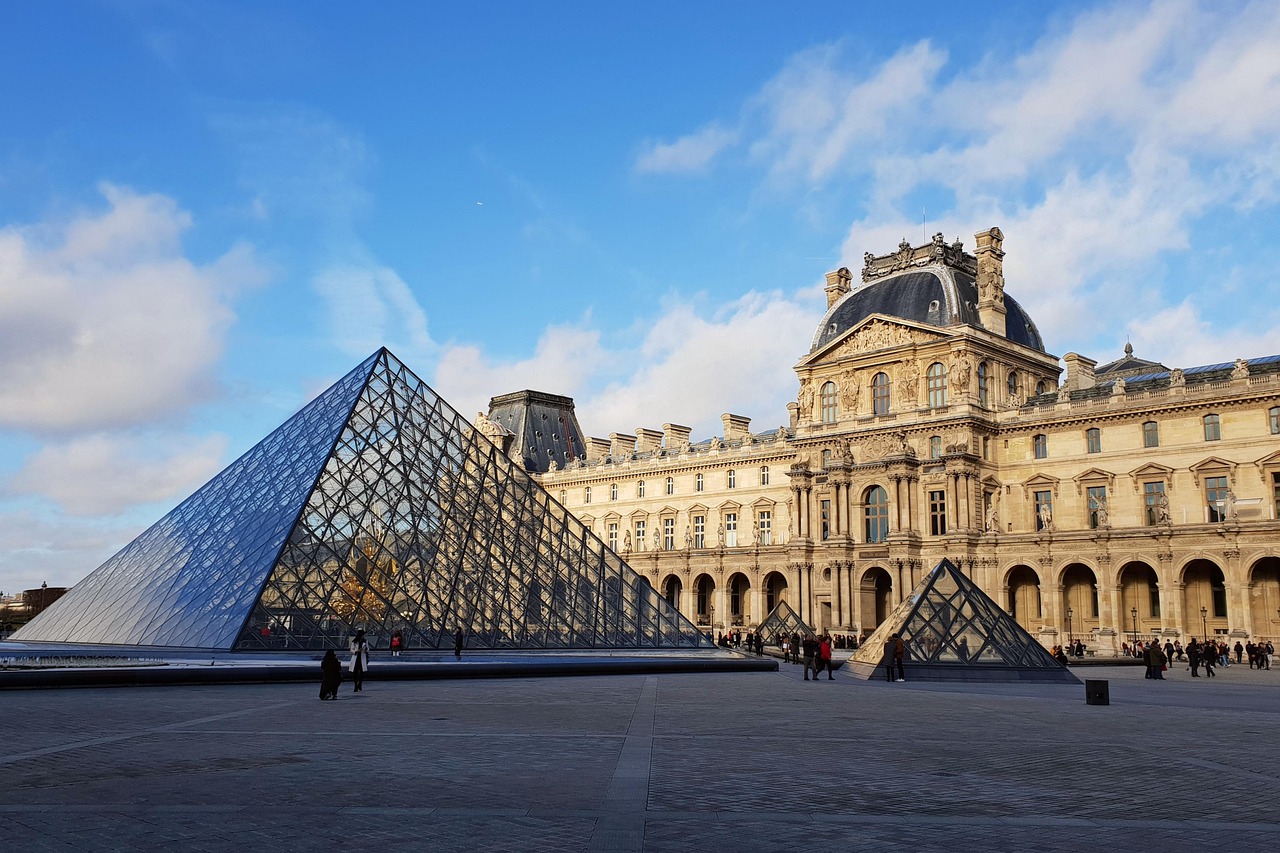
The Louvre Museum in Paris brings together Leonardo da Vinci's Mona Lisa, Veronese's immense Wedding at Cana and French paintings that turn revolution, disaster and imperial ceremony into scenes on a monumental scale. A visit can move from the noise of a crowded banquet to the near silence of a scholar studying a globe.
This guide covers Louvre opening hours, ticket prices and ten paintings to know before you go. The selection combines famous works with smaller pictures that reward close looking. It is an editorial choice from the collection, rather than an official ranking or a promise that every work will be accessible on your visit.
Plan your visit · Explore the ten paintings · Visitor questions
The Louvre currently has two adult admission categories: €22 for citizens or residents of the European Economic Area, and €32 for people who are neither citizens nor residents of the EEA. These are museum admission prices in euros, rather than guided-tour or reseller-package prices. Check which category applies to you before booking.
Admission is free for all under-18s and for EEA citizens or residents under 26, with the required proof. Other eligibility categories include disabled visitors and their accompanying person. The official page also lists free entry for everyone on the first Friday of the month after 6 pm, except July and August, and on 14 July. Read the full conditions and reserve a time slot even if your admission is free. Official prices and eligibility.
The standard ticket includes the permanent collections and temporary exhibitions; certain exhibition visits require a specific time slot. Online booking does not remove security checks. The museum advises advance reservations, while tickets sold on site depend on availability. Read the Louvre's ticket FAQ.
Regular hours are 9 am to 6 pm on Monday, Thursday, Saturday and Sunday, with late openings until 9 pm on Wednesday and Friday. Tuesday is the weekly closing day. The museum is also closed on 1 January, 1 May and 25 December. Last entry is an hour before closing, and room clearing starts half an hour before closing. All times are local to Paris. Official visit information.
Gallery access, checked 5 November 2026: the Louvre's published schedule for 2 to 10 November lists Northern European paintings from 1600 to 1850 as closed. This affects planning for the Vermeer galleries discussed below. The museum also issued a same-day strike warning for 5 November. Consult the current room-opening schedule and visitor notices for your date.
Palais-Royal / Musée du Louvre is served by Métro lines 1 and 7; Pyramides is served by line 14. The Pyramid is the principal entrance. Access conditions differ at the Carrousel, Porte des Lions and Passage Richelieu, so choose your entrance using the official entrance map. A ticket alone does not make every entrance available to every visitor.
For a first visit centred on paintings, we suggest allowing three to four hours and choosing a manageable route. That is a planning suggestion, not a museum requirement or a claim that the entire collection fits into half a day. The Louvre's own masterpieces trail offers a shorter, approximately 90-minute introduction spanning several kinds of art. Add time for entry, a break and any queue for the Mona Lisa.
Begin with the Denon paintings if your priorities are Leonardo, Veronese and the large French canvases. Add the Richelieu galleries for van Eyck and Vermeer when those rooms are open. The numbering below introduces the pictures; it is not a turn-by-turn walking route.
The Louvre offers accessibility equipment, including wheelchairs and folding stools, in exchange for identification. Disabled visitors and their accompanying person can receive free admission and priority access under the museum's conditions. Ask staff to help plan a route that suits your needs. Bags exceeding 55 × 35 × 20 cm are not permitted. See the official accessibility information before you travel.
The Louvre began as a fortress in 1190 during the reign of Philippe Auguste and became a royal residence in 1364. Successive building projects turned the site into a palace. The public museum opened in 1793, during the French Revolution; I. M. Pei's Pyramid was inaugurated in 1989. Those changes explain why a visit is also an encounter with the building itself: defensive remains, palace rooms and modern circulation spaces belong to different chapters of its history. Louvre historical overview.


The following ten paintings offer a way into the collection, from Renaissance portraits and religious imagery to Dutch interiors and French history painting. They are collection highlights; temporary loans, room closures and conservation work can affect what is accessible.
Leonardo da Vinci · 1503 to 1519
 Leonardo da Vinci collection
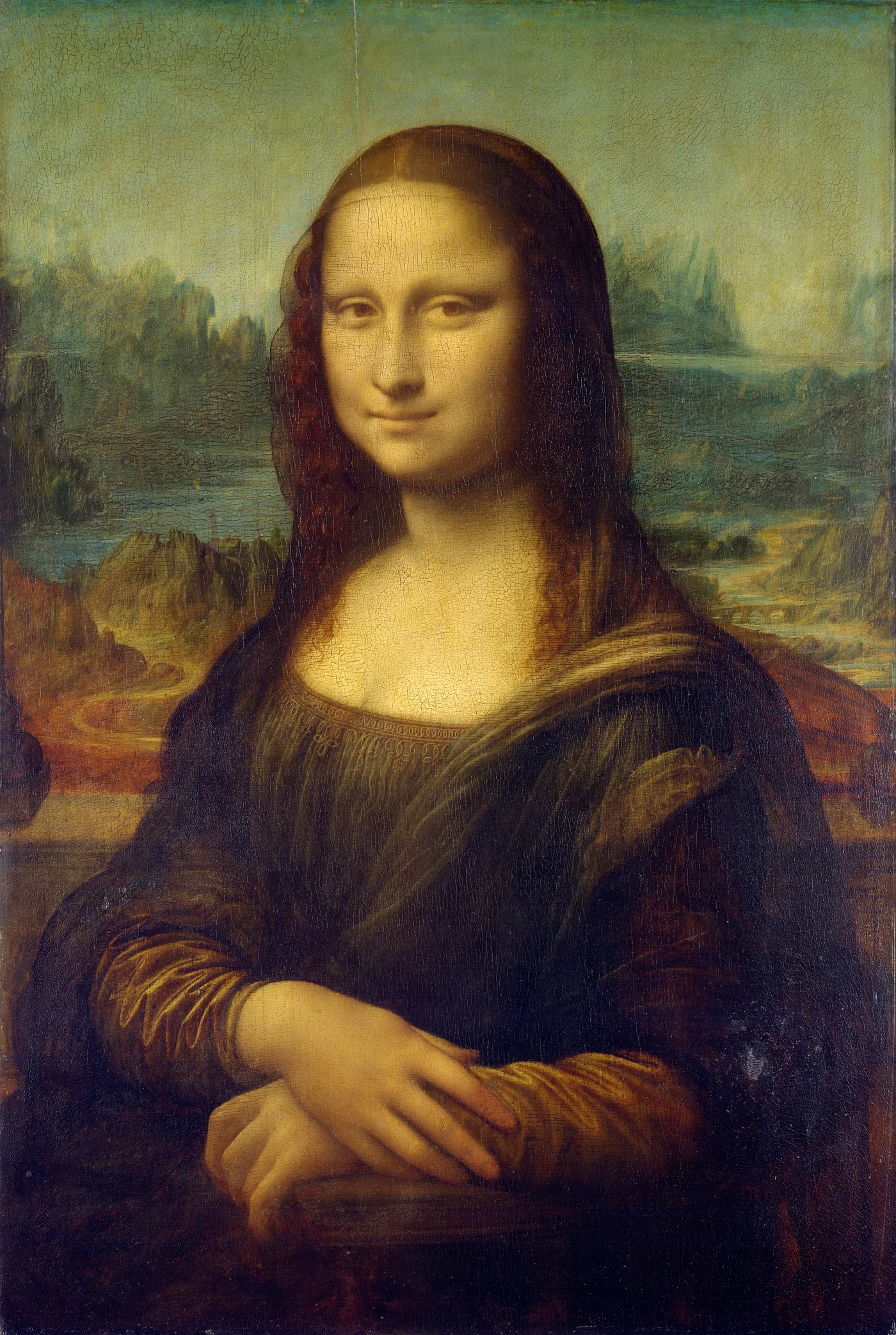
The Mona Lisa is a portrait of Lisa Gherardini, wife of Francesco del Giocondo. Its familiarity can obscure the painting itself. Look at the folded hands before returning to the face: their stillness anchors a figure who seems to turn towards the viewer. Beyond her, roads and water disappear into a landscape that becomes less distinct with distance.
Leonardo's sfumato, the soft transitions between tones, keeps the features from resolving into hard outlines. The Louvre's protective case also serves conservation needs, since the portrait is painted on a wooden panel. Expect a shared viewing space rather than a private encounter. The Salle des États guide explains the display and the other paintings in the room.
Paolo Veronese · 1562 to 1563
 Paolo Veronese collection
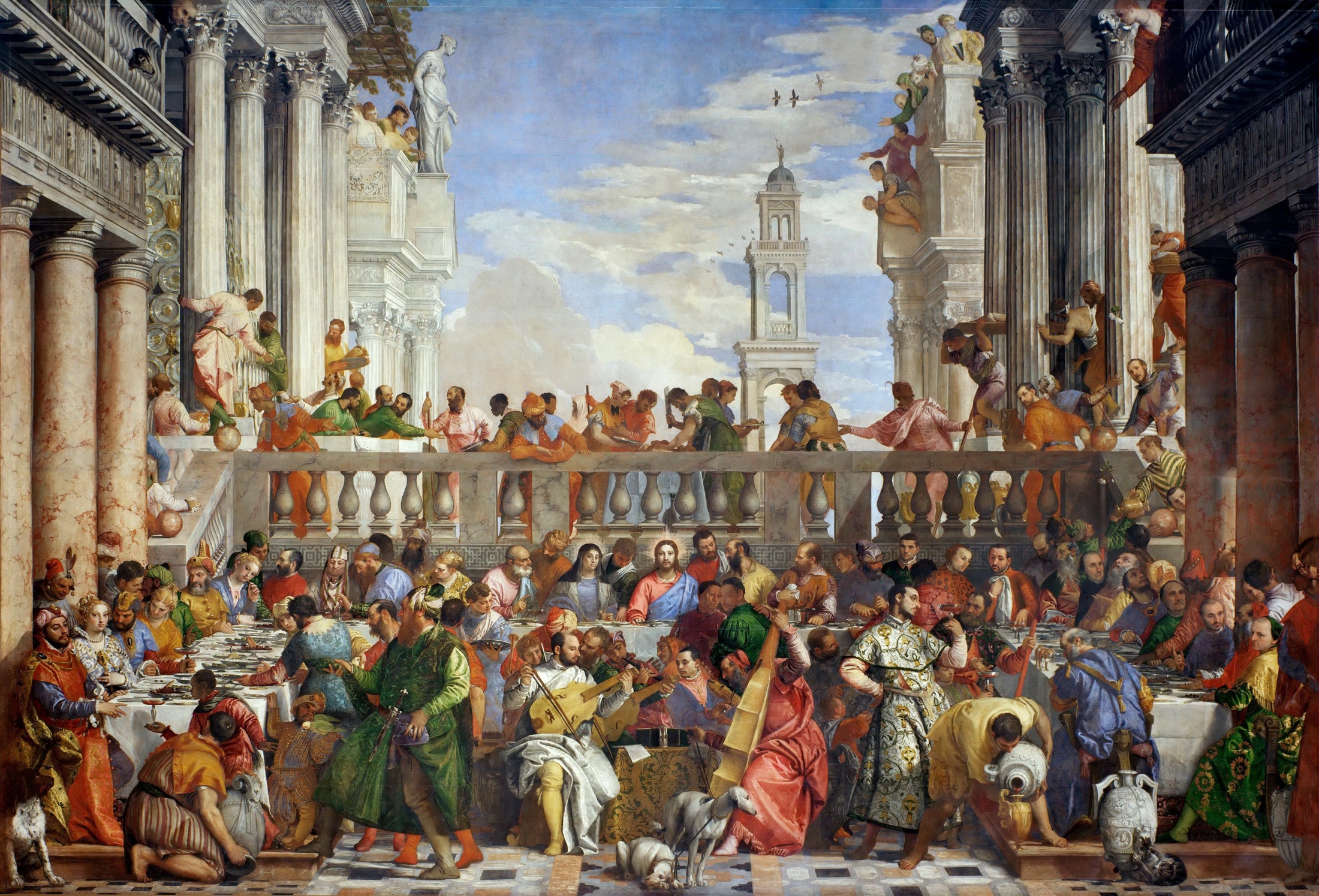
Veronese turns the biblical wedding at Cana into an expansive banquet, with musicians, servants, guests and architecture competing for attention. Christ sits at the centre, but the miracle is embedded in a busy social world. Follow the people handling vessels and serving the meal; the story is carried through their work as much as through the principal figures.
At approximately 6.77 by 9.94 metres, this is a painting to see at two distances: first for the breadth of the gathering, then for gestures and objects. It was made for the Benedictine refectory of San Giorgio Maggiore in Venice and brought to the Louvre after its removal during the French military campaigns in Italy. In the Salle des États, it faces the much smaller Mona Lisa.
Eugène Delacroix · 1830
 Eugène Delacroix collection
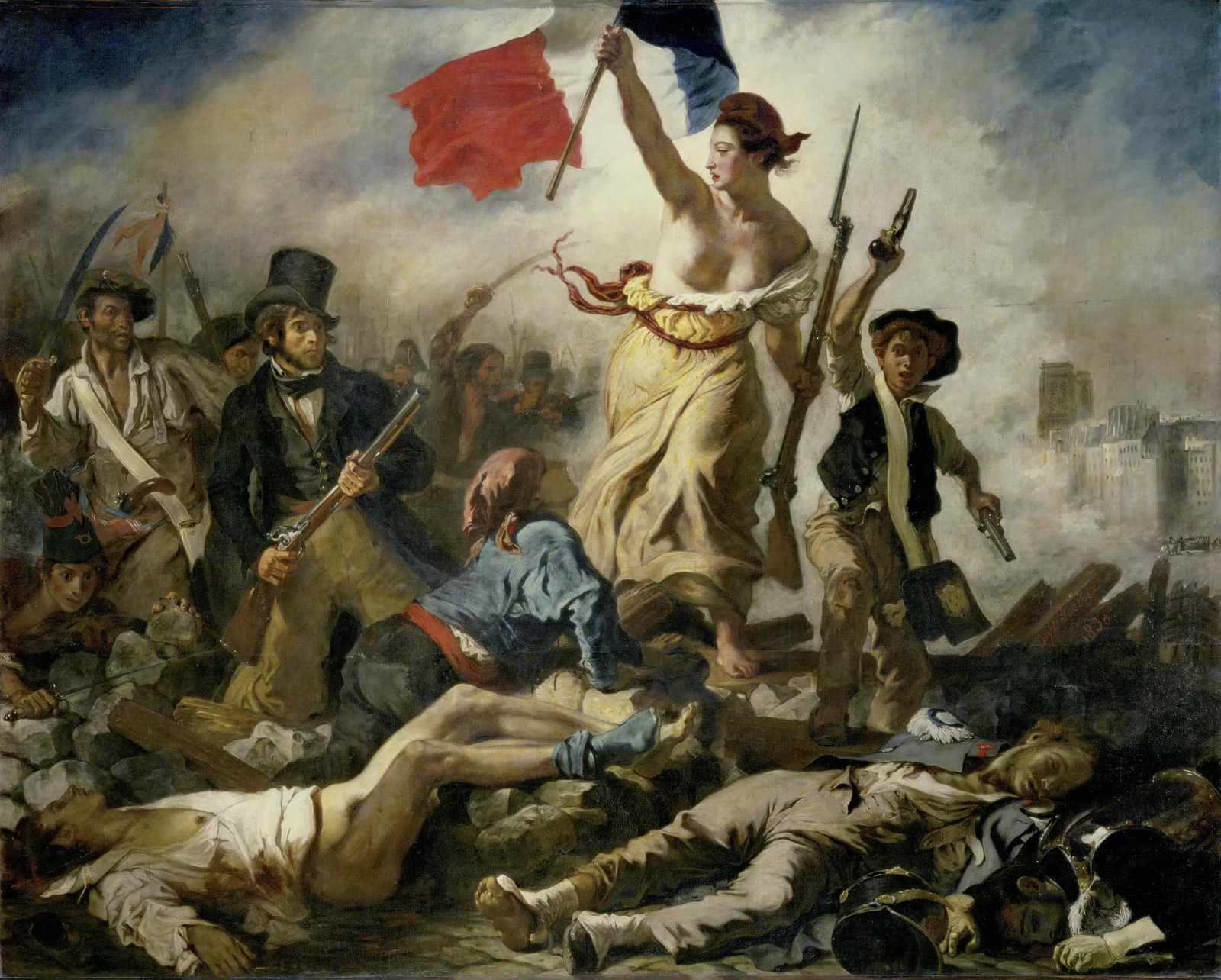
The raised tricolour identifies the painting immediately, but the bodies across the foreground give that upward movement its cost. Delacroix painted the work in response to the July Revolution of 1830. The central woman is Liberty personified, bringing an allegorical figure into the smoke and physical danger of a street uprising.
Look at how different figures join the advance: the boy with pistols, the man in a top hat and the people emerging through the haze. Their clothes and positions create a crowd rather than a uniform army. The composition rises towards the flag, while the fallen figures keep pulling the eye back down. It brings celebration and violence into the same field of view.
Théodore Géricault · 1818 to 1819
 Théodore Géricault collection
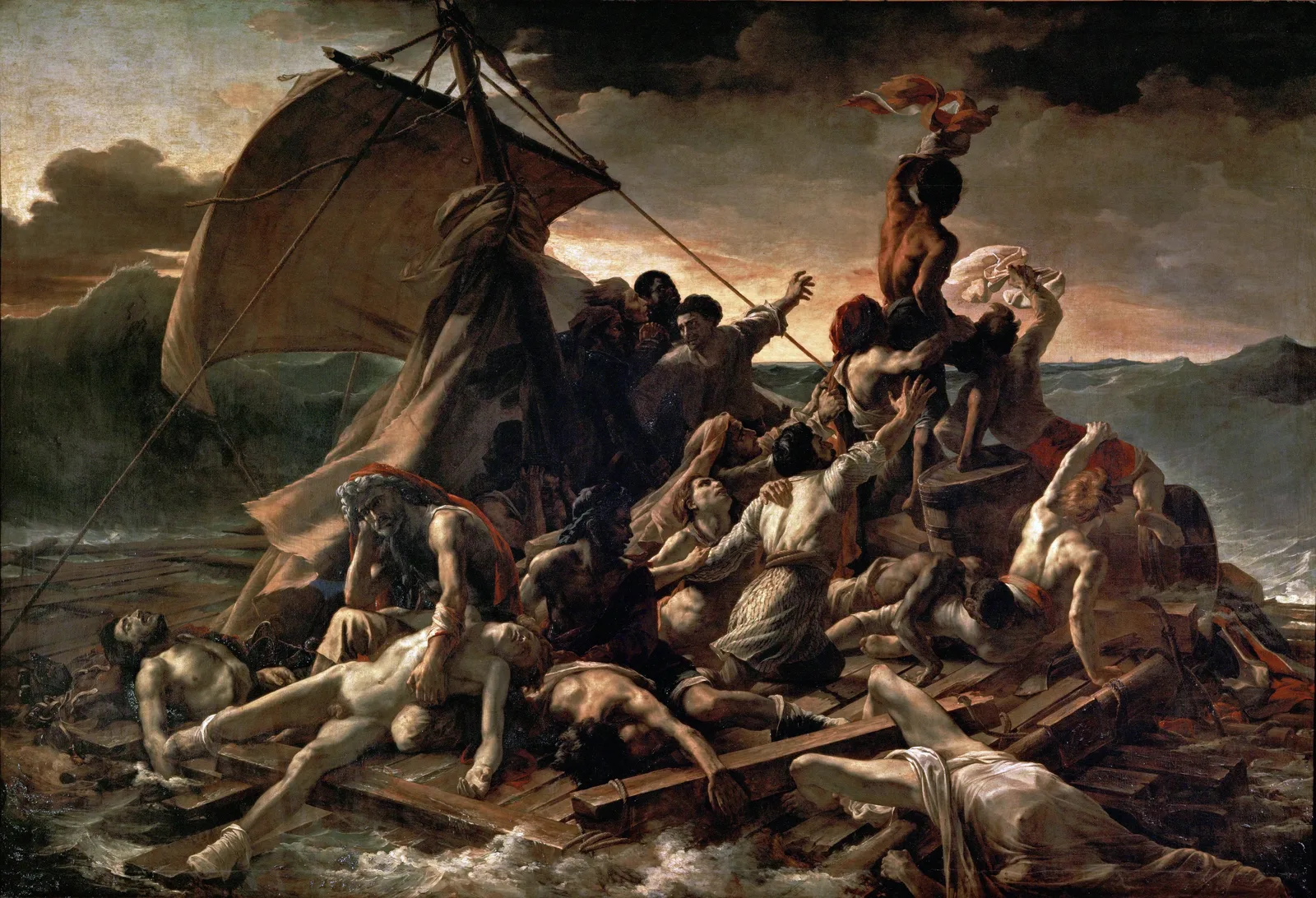
Géricault's painting responds to the wreck of the French frigate Méduse in 1816. The makeshift raft holds people at different limits of endurance: some lie motionless, others turn or climb, and a group at the far right signals towards a tiny vessel on the horizon.
Stand back to see how the figures build into a rising structure. Then follow the change from the heavy, slumped bodies at the front to the man waving cloth above the others. The distant ship is small enough to miss, which makes the separation between the survivors and possible rescue feel painfully large. The picture makes a contemporary disaster occupy the space and scale associated with grand historical subjects.
Jacques-Louis David · 1805 to 1807, with later retouching
 Jacques-Louis David collection
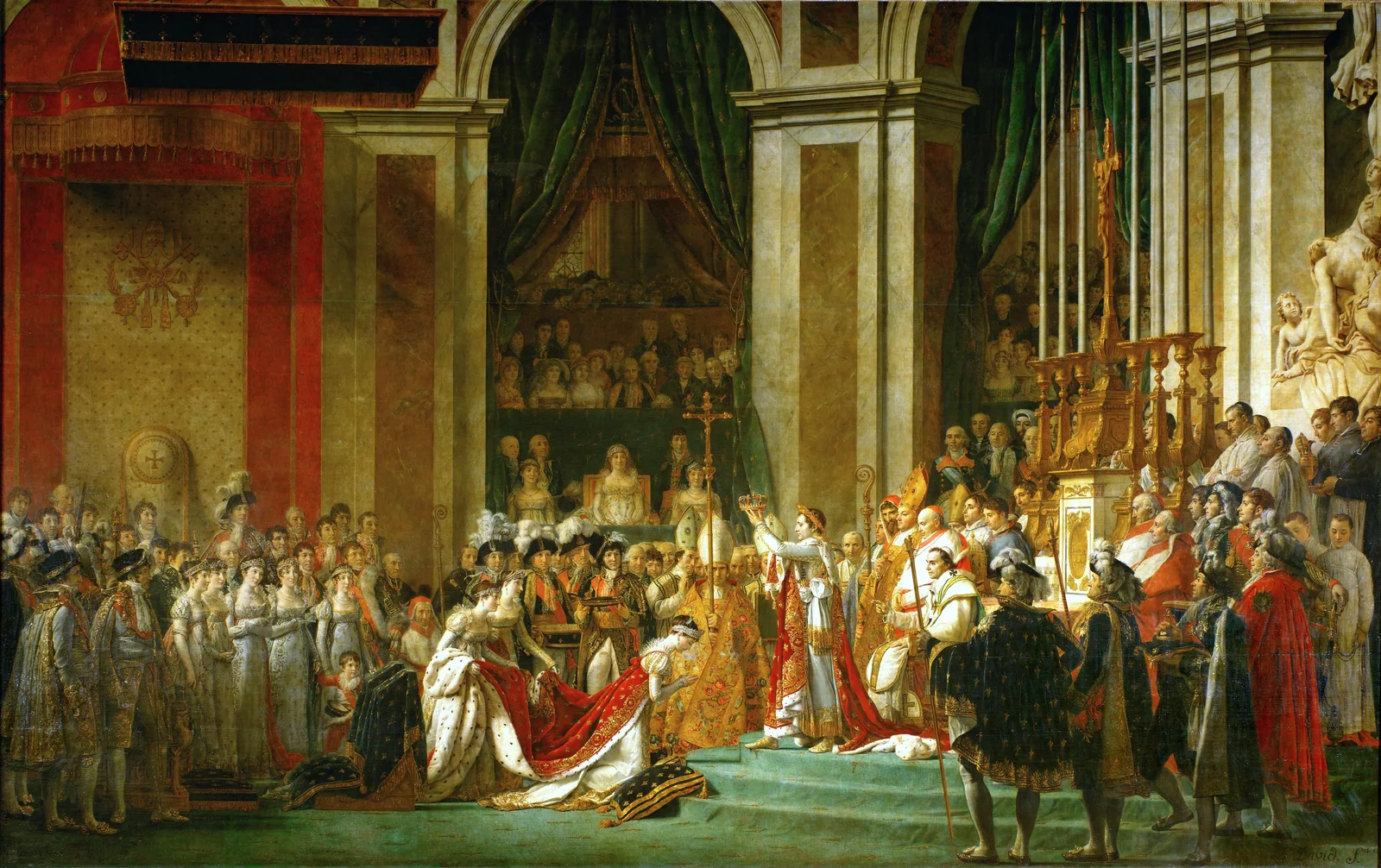
The ceremony took place at Notre-Dame in Paris on 2 December 1804; David worked on this monumental canvas afterwards. Despite the familiar title, the central action shows Napoleon holding the crown over the kneeling Joséphine. Watching that gesture makes the scene easier to read than trying to identify every face at once.
From there, follow the horizontal gathering of dignitaries, the pope seated behind Napoleon and the architecture that encloses them. Rich fabrics and repeated verticals turn a crowded occasion into an ordered public image. This is a carefully constructed imperial representation, rather than an unmediated view of the ceremony. David's Louvre canvas should also be distinguished from versions and copies held elsewhere.
Jacques-Louis David · Dated 1784; completed in 1785
Jacques-Louis David collection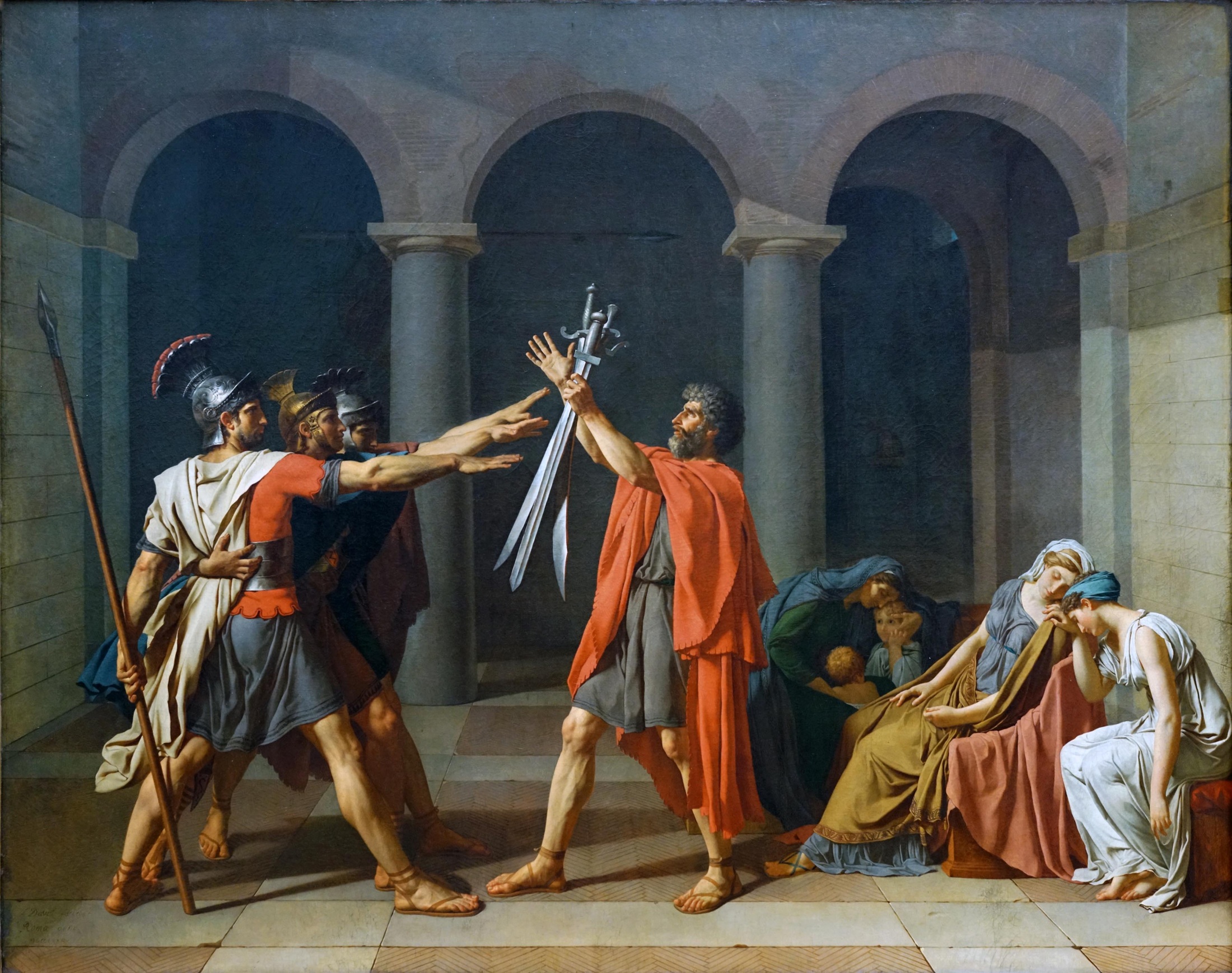
Three brothers reach towards the swords held by their father. To the right, seated women fold into one another, their curved bodies answering the men's straight arms and legs. The contrast makes the demands of public duty and the pain of family separation visible before the ancient Roman story is explained.
Notice how the three arches divide the figures into groups, and how the swords concentrate attention near the middle. The painting is signed with the date 1784, although the Louvre records its execution and completion in Rome in 1785. Keeping that distinction is more useful than forcing the work into a single uncomplicated date.
Leonardo da Vinci · About 1483 to 1494
Leonardo da Vinci collection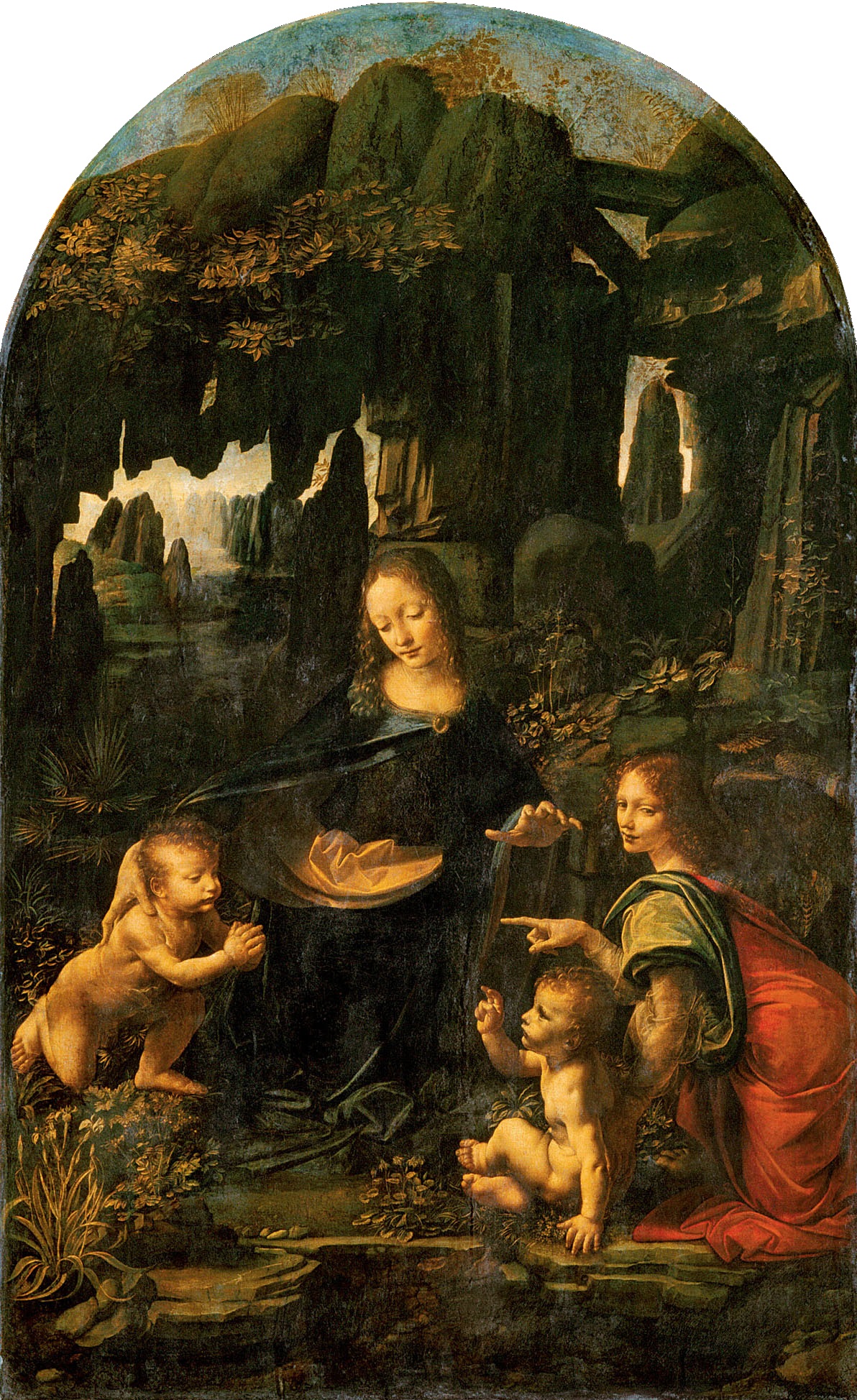
The Louvre's Virgin of the Rocks gathers Mary, the infant Christ, the young John the Baptist and an angel inside a rocky landscape. Hands connect the group: Mary's protective reach, the child's blessing and the angel's pointing gesture create relationships across the space. The opening beyond the figures draws the eye into a cooler, more distant world.
This is the Louvre version, dated by the museum to about 1483 to 1494. Another version is held by the National Gallery in London. They should not be treated as interchangeable illustrations of the same museum object. Our Virgin of the Rocks story examines the London version and offers a useful comparison.
Jan van Eyck · About 1430 to 1435
 Jan van Eyck collection
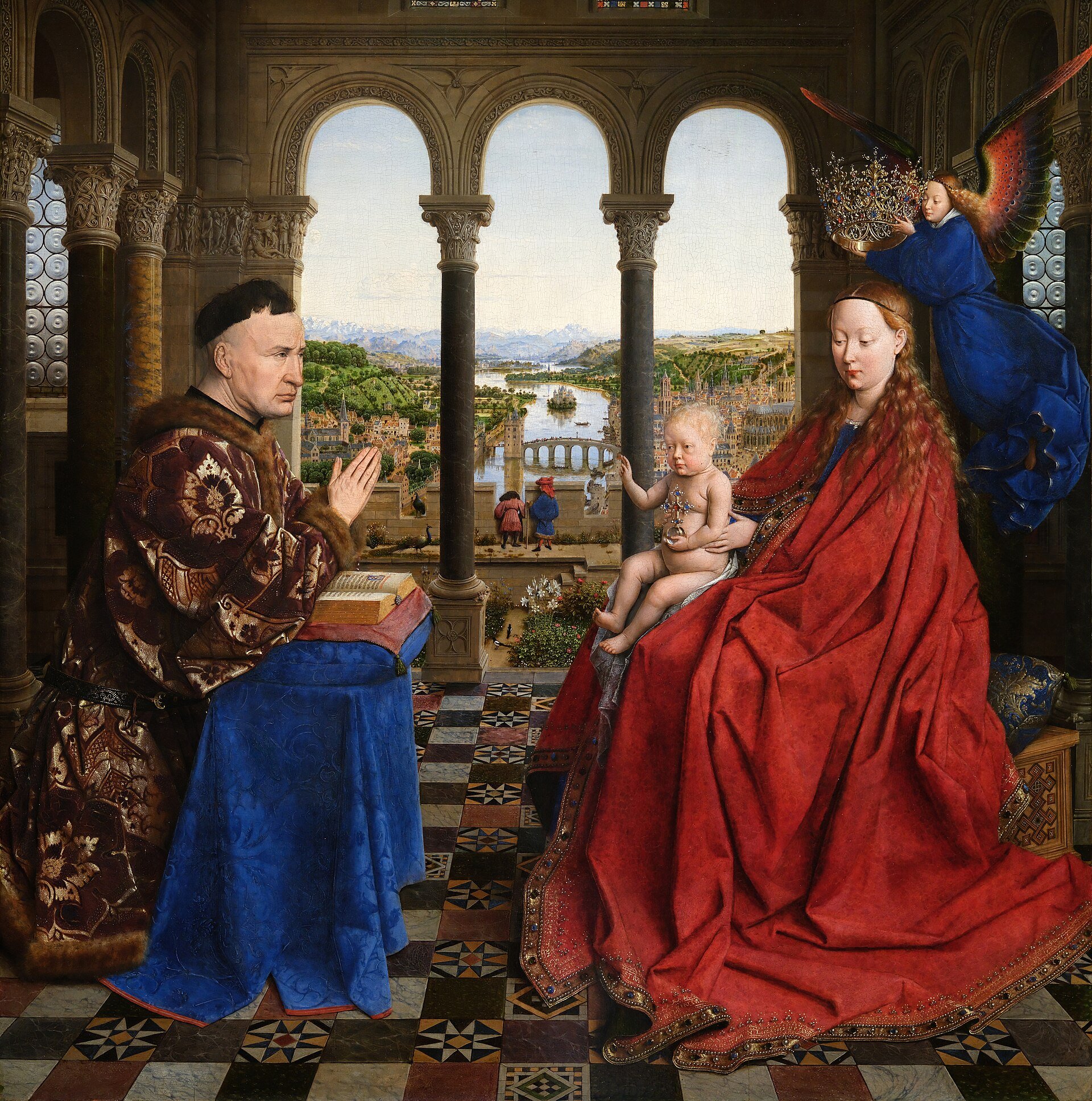
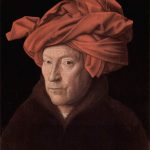
Nicolas Rolin kneels opposite the Virgin and Child in a room that opens onto an extraordinarily detailed landscape. An angel holds a crown above Mary, while columns frame the meeting. The picture sets a recognisable individual within a sacred encounter without abandoning the textures of brocade, stone, tile and skin.
Let the eye move beyond the main figures. A garden leads to a river, a bridge and buildings that grow smaller towards distant mountains. The Louvre notes that the town has not been securely identified with a real place. Its precision is therefore not a licence to give the landscape a definite modern name. This is one of the works in the selection that repays a slower second look.
Johannes Vermeer · 1668
 Johannes Vermeer collection
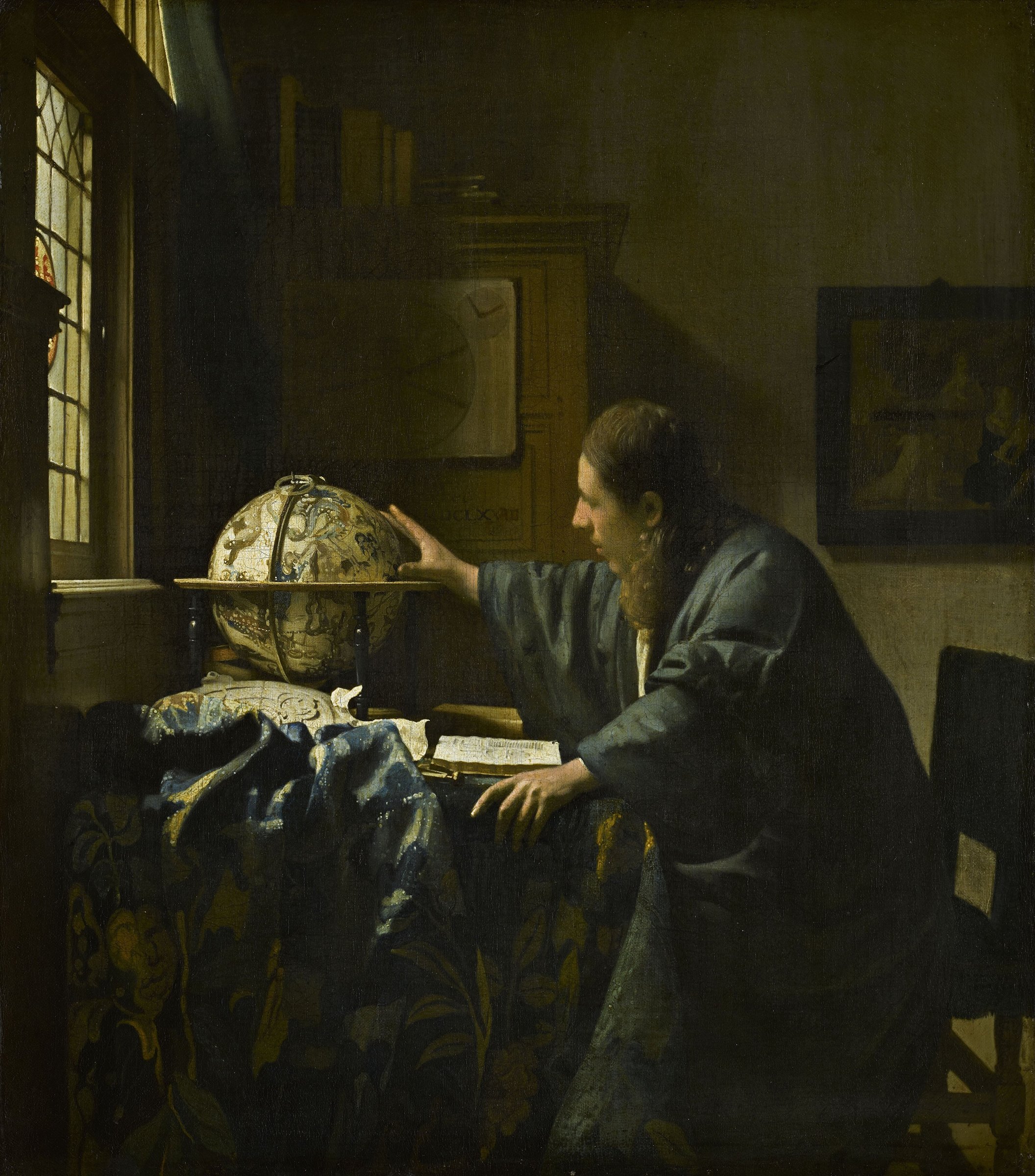
A scholar leans forward to touch a celestial globe, with an open book on the table and daylight entering from the left. Vermeer builds the scene from attention rather than action. The reach of the hand, the face turned towards the globe and the folds of the sleeve make a small movement feel consequential.
The Louvre identifies the globe as a model by Jodocus Hondius and the book as an astronomy manual by Adriaan Metius. Those objects give the activity specificity; the man's identity is less secure. The suggestion that he is Antoni van Leeuwenhoek is not proven. The museum's current gallery schedule should be consulted before planning to see this work in person.
Johannes Vermeer · About 1669 to 1670
Johannes Vermeer collection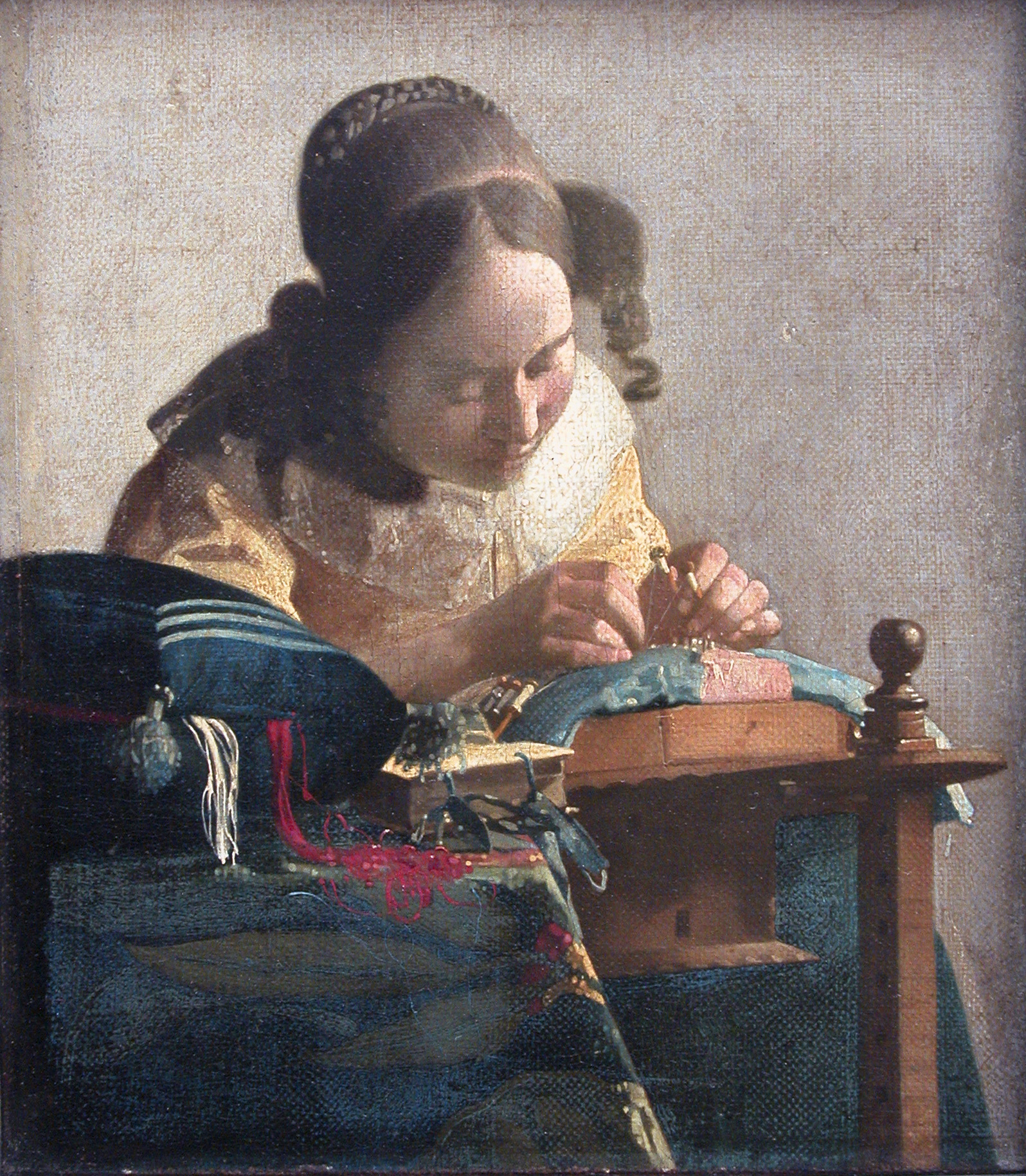
After the monumental French canvases, The Lacemaker asks for a different kind of looking. A young woman bends over work held close to her hands. Her concentration directs the whole scene, while loose red and pale threads in the foreground become patches of colour rather than equally sharp descriptions.
Compare those foreground threads with the delicate activity near her fingers. Vermeer varies what the eye can resolve, making attention part of the painting's subject. The Louvre cautions against identifying the woman as the artist's wife without evidence, or simply assuming she is a professional lacemaker. As with The Astronomer, check the current availability of the Dutch galleries.
No. It is normally closed on Tuesdays, as well as 1 January, 1 May and 25 December. Check the official hours for exceptional changes.
Yes. The Louvre advises eligible free-entry visitors to reserve a time-stamped ticket and bring proof of eligibility. Use the official ticket website.
That depends on room openings, loans, your route and available time. Check the current gallery schedule, especially for the Dutch paintings, and choose priorities rather than treating this selection as a guaranteed checklist.
No. Vincent van Gogh's The Starry Night is in the Museum of Modern Art in New York. See MoMA's collection record and our Starry Night painting story.
No. Vermeer's Girl with a Pearl Earring belongs to the Mauritshuis in The Hague. The Louvre's Vermeers discussed here are The Astronomer and The Lacemaker. Consult the Mauritshuis collection record.
The Winged Victory of Samothrace and Venus de Milo show why a Louvre visit can extend well beyond painting. If time allows, choose one additional area rather than trying to cover every department. The official masterpieces trail is a useful starting point.
Enjoyed this story?
Save articles to your collection
Log in or create a free account, and this article will be waiting in your Private Collection.
Log in or sign up
Man Writing a Letter
Gabriel Metsu, c. 1664
The gallery list
Every painting is already 50% off. Join the list and we will send you an extra $15 code, plus first access to new collections.
No spam. Unsubscribe anytime. · Privacy Policy
Welcome
Your $15 code is on its way. Explore the gallery while you wait.