ByMuseum.com

USD
  • USD
  • EUR
Artist
Claude Monet
Paintings
11 deep-dives
Artist profile
All paintings
Claude Monet Paintings: Famous Works as Hand-Painted Oil Reproductions
French Impressionist · 1840 to 1926

Claude Monet

Born1840
MovementImpressionism
Known forLight, water, and the series painting method
2500paintings
Artist guide · 11 most famous paintings

Claude Monet Paintings: His Most Famous Works as Hand-Painted Oil Reproductions

Claude Monet was born in Paris on November 14, 1840, and grew up in Normandy, where the Atlantic coast and the changing quality of northern light would shape his vision for the rest of his life. He showed drawing talent…

Who was Claude Monet?

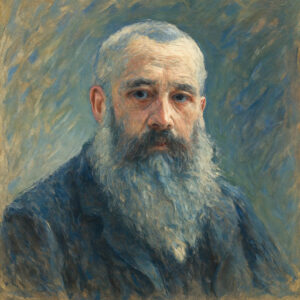
Claude Monet was born in Paris on November 14, 1840, and grew up in Normandy, where the Atlantic coast and the changing quality of northern light would shape his vision for the rest of his life. He showed drawing talent early and began selling caricatures as a teenager before Eugene Boudin introduced him to painting outdoors. That encounter changed the direction of his work entirely. Monet moved to Paris in 1859 and studied at the Academie Suisse, where he met Camille Pissarro. He fought in the Franco-Prussian War, traveled to London, and returned to France to settle eventually at Argenteuil, then Vetheuil, and finally Giverny in 1883, where he would spend the remaining 43 years of his life. Throughout his career he faced financial difficulty, personal loss, and critical rejection before achieving recognition as the central figure of the Impressionist movement.nnMonet dedicated his career to capturing the transient effects of light on landscape and water. He developed the practice of painting the same subject repeatedly under different conditions of light and atmosphere, producing celebrated series including the Haystacks, the Rouen Cathedral, the Poplars, the Thames paintings, and ultimately the Water Lilies. Each series is less about the subject than about time itself, about how light and atmosphere transform a place from one hour to the next. The impasto texture of his paint surfaces is inseparable from the effect. The raised brushstrokes catch light differently at different angles, and this physical quality is why hand-painted oil reproductions preserve what other formats cannot replicate.

What defines Claude Monet style

Monet worked with a broken brushstroke technique that he developed over decades into a highly personal language. Rather than blending colors smoothly, he placed strokes of contrasting hues side by side, allowing the eye to mix them optically at a distance. His palette was built around the effects of natural light, with violet shadows, gold highlights, and reflections that shift from warm to cool depending on the time of day. Water was his central subject and greatest technical challenge, requiring him to capture movement, transparency, and reflection simultaneously. In his later Water Lilies panels, painted while his eyesight was failing, the brushwork became broader and more abstract, with the surface of the pond becoming a field of color rather than a representation of a specific place. His compositions eliminated the horizon line, pulling the viewer into the surface of the water rather than looking across a landscape. The physicality of the paint itself became part of the meaning of the work, which is why hand-painted oil reproductions of his paintings carry a dimension of authenticity that no other format can approach.

Hand-painted · Not printed
Own a Claude Monet. The real way.
Every reproduction is painted by hand in oil on canvas. The brushstrokes are real. That is the difference.
Browse Claude Monet paintings

Claude Monet most famous paintings

Each card links to its own article with full analysis and reproduction details.
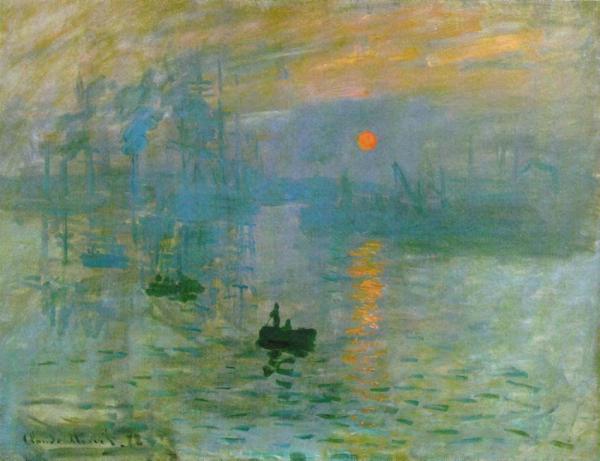
Impression, Sunrise #1
Impression, Sunrise
1872 · Musee Marmottan Monet, Paris, France
Painted in the harbor of Le Havre, this work gave the Impressionist movement its name and established Monet as its defining voice.
Analysis and reproduction
Water Lilies #2
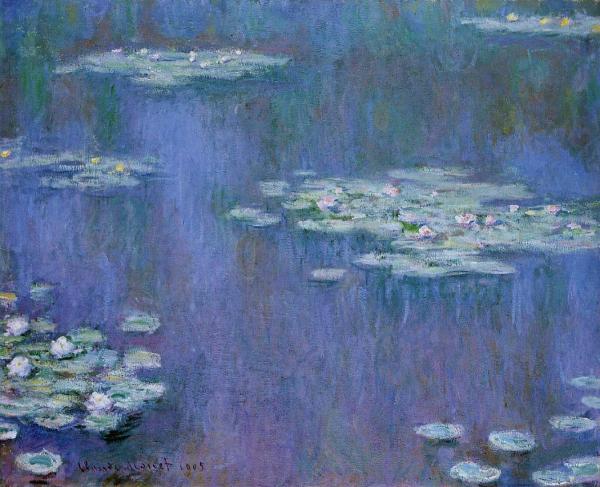
Water Lilies
1906 · Art Institute of Chicago, Chicago, United States
One of the most celebrated works from the Water Lilies series, this canvas reduces the world to the surface of a pond and the sky reflected within it.
Analysis and reproduction
Haystacks, End of Summer by Claude Monet - hand-painted oil reproduction #3
Haystacks, End of Summer
1891 · Art Institute of Chicago, Chicago, United States
From the series that defined the concept of serial painting, this canvas captures the haystacks of Giverny in the warm light of late summer.
Analysis and reproduction
Water Lilies and Japanese Bridge by Claude Monet - hand-painted oil reproduction #4
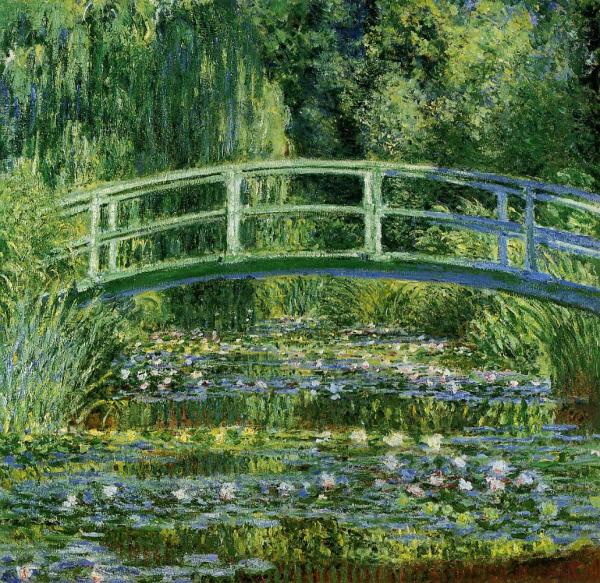
Water Lilies and Japanese Bridge
1899 · National Gallery of Art, Washington D.C., United States
Painted from the bank of the lily pond at Giverny, this canvas presents the arched wooden bridge that Monet had constructed as a central element of his garden design.
Analysis and reproduction
Rouen Cathedral, Full Sunlight by Claude Monet - hand-painted oil reproduction #5
Rouen Cathedral, Full Sunlight
1894 · Musee d'Orsay, Paris, France
Painted from a rented room opposite the cathedral facade, this canvas from the Rouen Cathedral series records the stone surface transformed by afternoon light.
Analysis and reproduction
Woman with a Parasol by Monet #1
Woman with a Parasol
1875 · National Gallery of Art, Washington, DC
Woman with a Parasol, Madame Monet and Her Son, shows Camille Monet and the couple's son Jean on a windy hill above Argenteuil, seen from below against a sky of fast clouds. Painted in a few hours in the summer of 1875 and shown at the second Impressionist exhibition as The Walk, it is the picture that defines Impressionism.
Analysis and reproduction
Women in the Garden by Claude Monet - hand-painted oil reproduction #7
Women in the Garden
1866 · Musee d'Orsay, Paris, France
An ambitious early work painted entirely outdoors, this large canvas presented the challenge of rendering figures in natural light at monumental scale.
Analysis and reproduction
La Grenouillere by Claude Monet - hand-painted oil reproduction #8
La Grenouillere
1869 · Metropolitan Museum of Art, New York, United States
Painted alongside Renoir at a popular bathing spot on the Seine, this canvas is among the earliest works to fully demonstrate the Impressionist method.
Analysis and reproduction
Poplars on the Epte #9
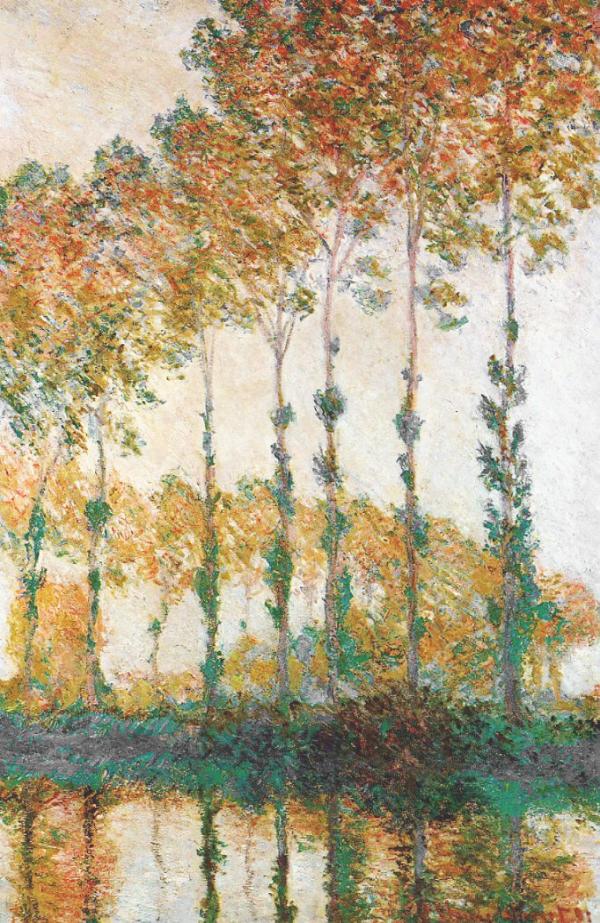
Poplars on the Epte
1891 · Philadelphia Museum of Art, Philadelphia, United States
From the Poplars series painted along the Epte river, this canvas exploits the vertical rhythm of the trees and their reflections to create a composition of striking formal elegance.
Analysis and reproduction
The Seine at Argenteuil by Claude Monet - hand-painted oil reproduction #10
The Seine at Argenteuil
1873 · Musee d'Orsay, Paris, France
Painted during the productive years at Argenteuil, this canvas captures the Seine with the confidence and directness that defined Monet work in the early 1870s.
Analysis and reproduction
The Magpie by Claude Monet - hand-painted oil reproduction #11
The Magpie
1869 · Musee d'Orsay, Paris, France
Widely regarded as the finest snow scene in the Impressionist tradition, this canvas captures the quality of winter light with a subtlety and range of color that challenged every assumption about painting snow.
Analysis and reproduction

Why hand-painted, not printed

A print can reproduce colors. What it cannot reproduce is texture, depth, and the physical presence of oil paint on canvas. Claude Monet technique depends on these.

At ByMuseum, every reproduction is painted by hand using oil on canvas. There is no inkjet, no digital print. The brushwork is real. The result looks like a painting because it is one.

Read: how our hand-painted reproductions are made

ByMuseum Editorial
Art history desk · ByMuseum

Written and fact-checked by the ByMuseum editorial team: art historians and painters who research each work from museum records and catalogues raisonnés, then explain how it is recreated by hand in oil on canvas.

Enjoyed this story?