Loading cart…
No products in the cart.

Art Guides · Impressionism
Save articles to your collection
Log in or create a free account, and this article will be waiting in your Private Collection.
Log in or sign upFamous Impressionist paintings make modern life and changing light worth sustained attention. This guide brings together ten influential works, from Monet’s water garden and Le Havre harbour to Renoir’s boating party and Caillebotte’s rainy Paris street.
The selection also includes Manet, a close colleague whose work helped prepare the way for Impressionism, although he never joined its eight group exhibitions. Each entry links to a full painting story with detail crops and museum references.
 Explore the artistClaude Monet →
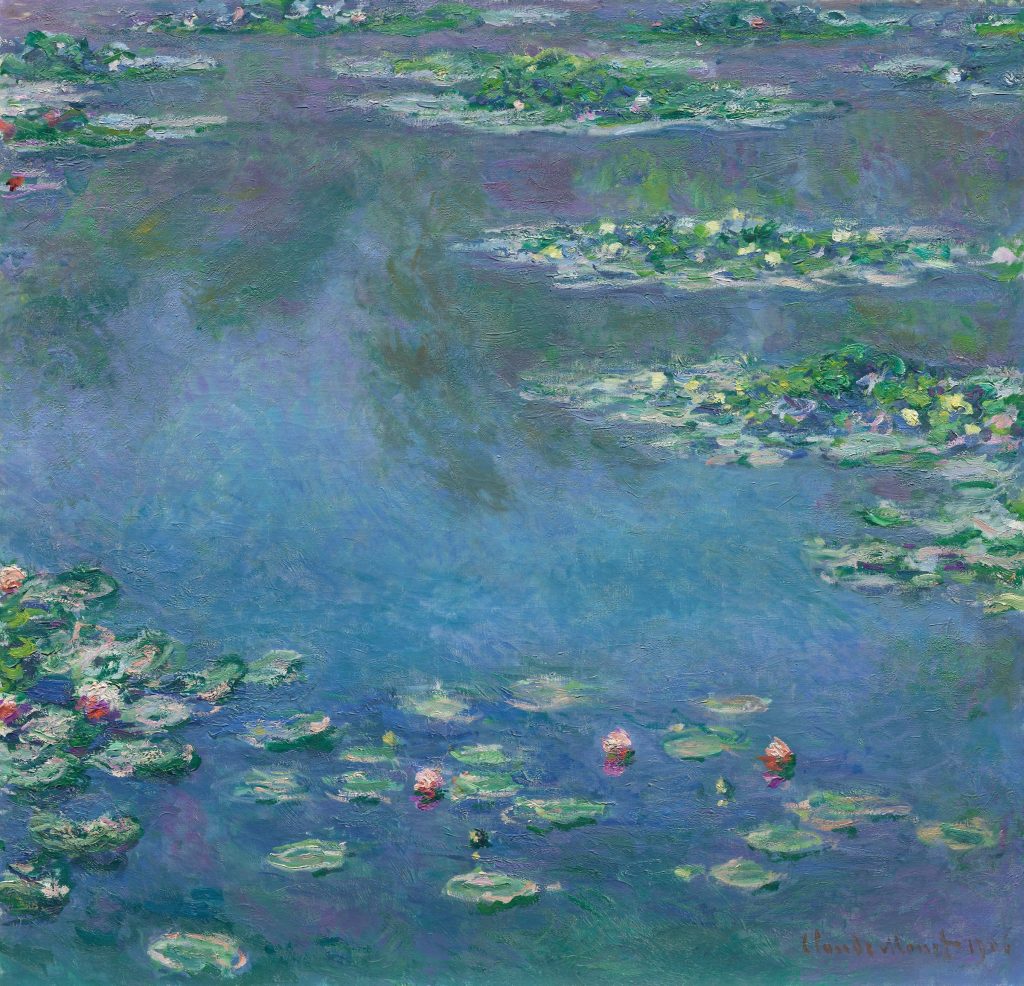
Monet’s Water Lilies names a series rather than one canvas. The painting shown here is the nearly square 1906 work in the Art Institute of Chicago. Flowers and lily pads hold the water’s surface in view, while reflections of trees suggest another space beneath it.
There is no distant shore or strip of sky. The scene continues beyond the edges, and the eye moves between recognisable plants and visible paint. Our full article examines this exact canvas with four detail crops and distinguishes it from the later Orangerie decorations. The related reproduction below shows a different blue Water Lilies composition signed 1905.
Collection reference: Art Institute of Chicago, Water Lilies, 1906.
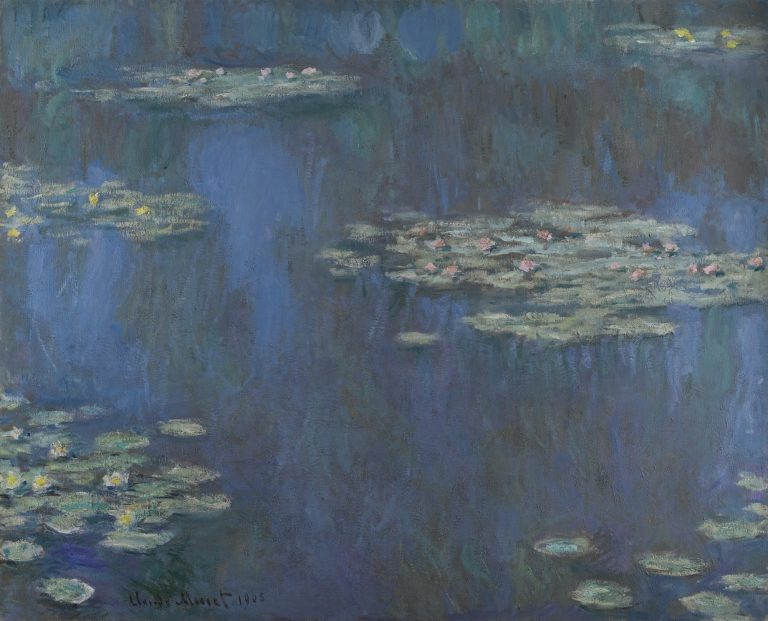
Claude Monet · oil on canvas, made to order
Explore the artistClaude Monet →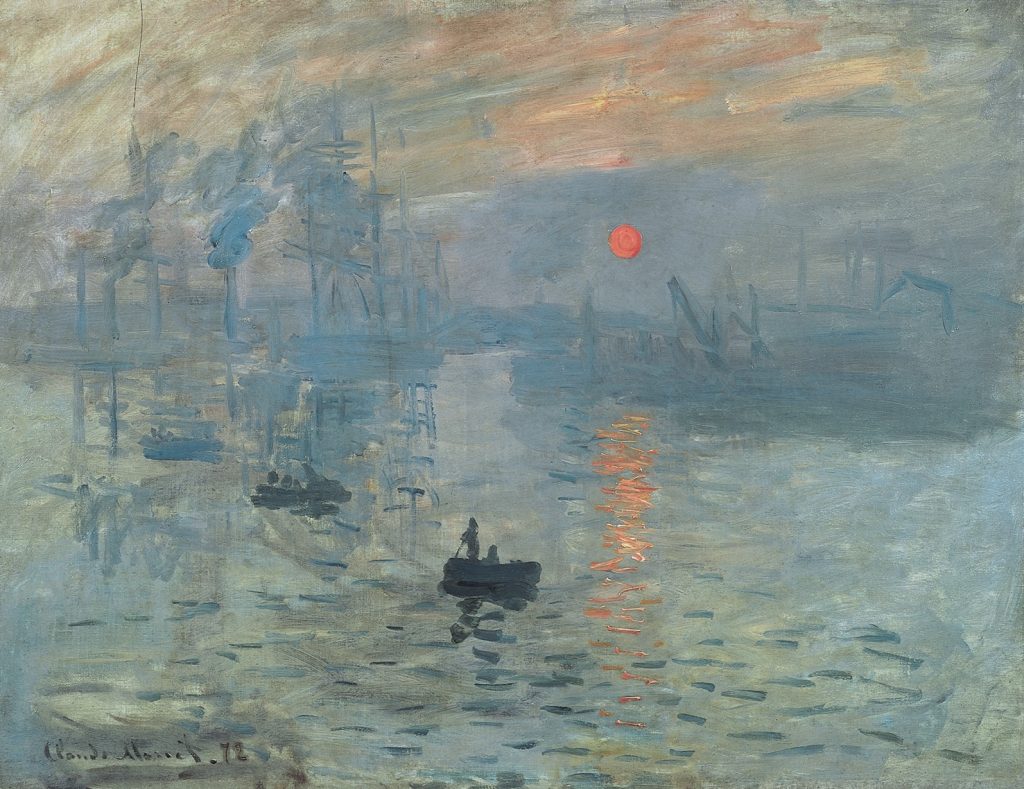
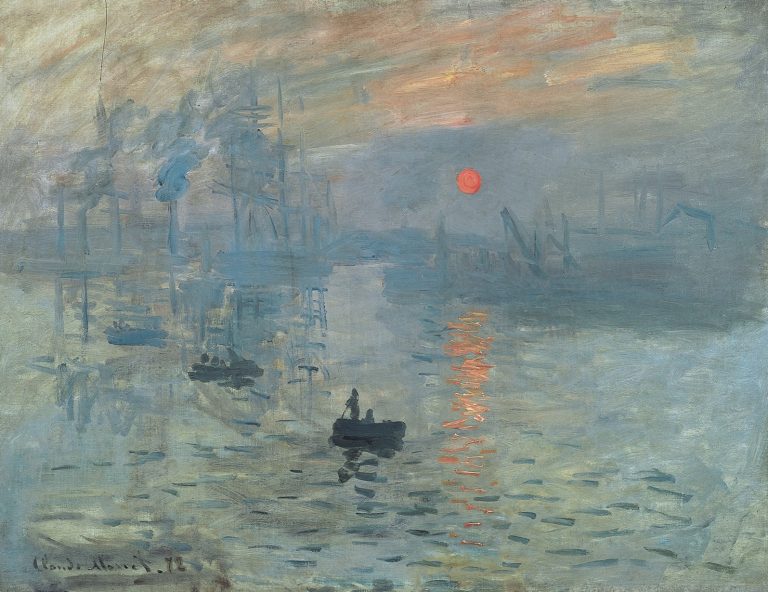
An orange sun and its broken reflection punctuate the cool haze of Le Havre harbour. Dark boats approach through water whose surface is described with short strokes; masts, cranes and chimneys dissolve into the distance. Monet painted the view from a hotel window around November 1872.
At the 1874 exhibition, its title helped give Impressionism its name through Louis Leroy’s satirical review and the wider critical debate. The full article also compares The Scarlet Sunset and Calais Sands by Turner with Jongkind’s Sunrise at Overschie, showing different ways of painting reflected light.
Collection reference: Musée Marmottan Monet, Paris.
Claude Monet · oil on canvas, made to order
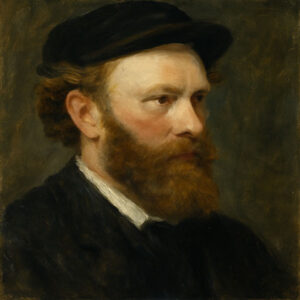 Explore the artistÉdouard Manet →
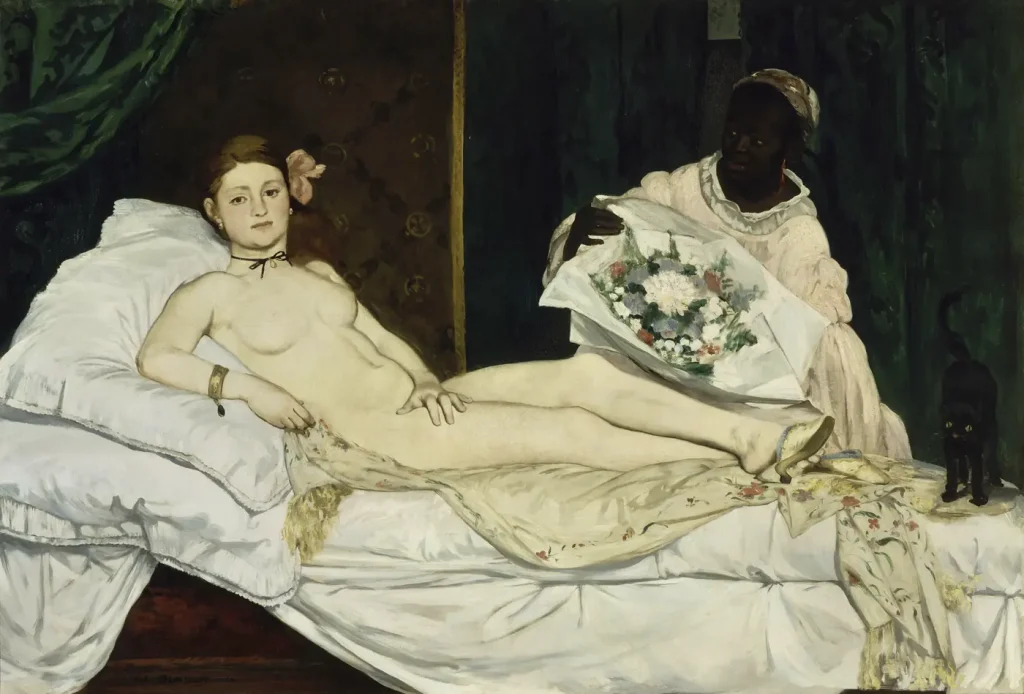
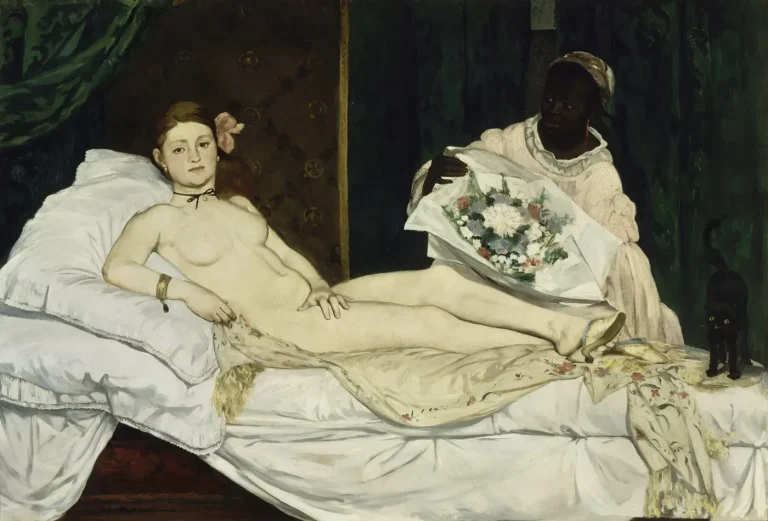
A reclining woman looks directly outward while Laure, the standing woman beside her, holds a delivered bouquet. A black cat lifts its tail at the end of the bed. Manet draws on the reclining nude of older art while placing the encounter in a contemporary social world.
The painting’s Salon appearance in 1865 provoked controversy around both its modern courtesan and its abrupt light-dark contrasts. The full story distinguishes the models Victorine Meurent and Laure from their painted roles, and explores the gaze, hand, flowers and cat.
Collection reference: Musée d’Orsay, Paris.
Edouard Manet · oil on canvas, made to order
 Explore the artistPierre-Auguste Renoir →
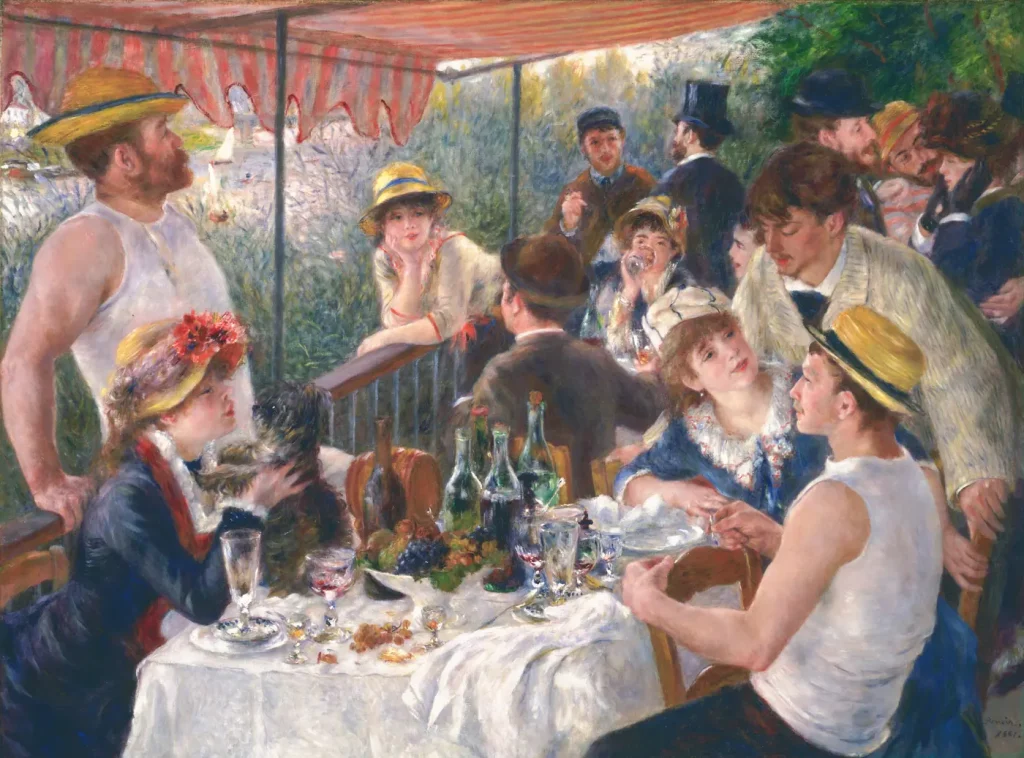
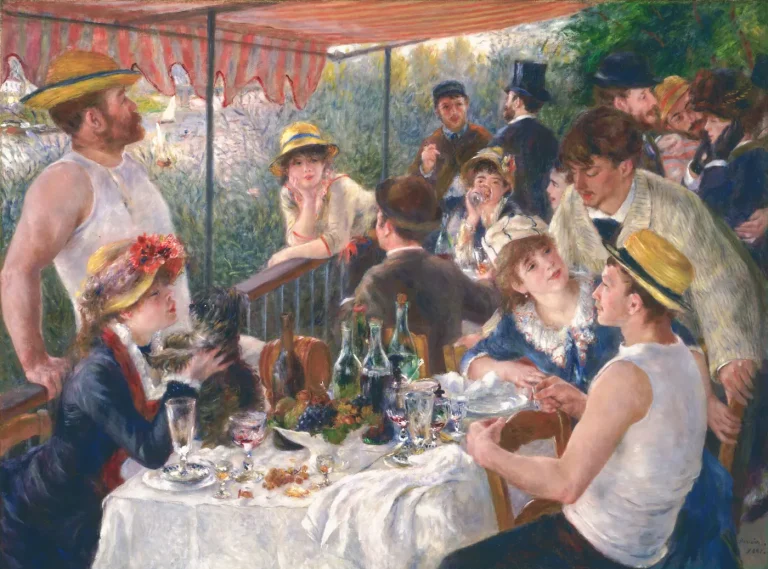
On a terrace at the Maison Fournaise in Chatou, people lean, converse and look in different directions around a table of glasses and fruit. Aline Charigot holds a small dog at the left; Gustave Caillebotte sits in a straw hat at the right.
Renoir makes sociability feel unforced through a carefully constructed arrangement. The painting is more than a record of everyone occupying the same place at a single instant. Our full article follows the sitters, still life and revisions that help create its apparent ease.
Collection reference: The Phillips Collection, Washington.
Pierre Auguste Renoir · oil on canvas, made to order
Explore the artistClaude Monet →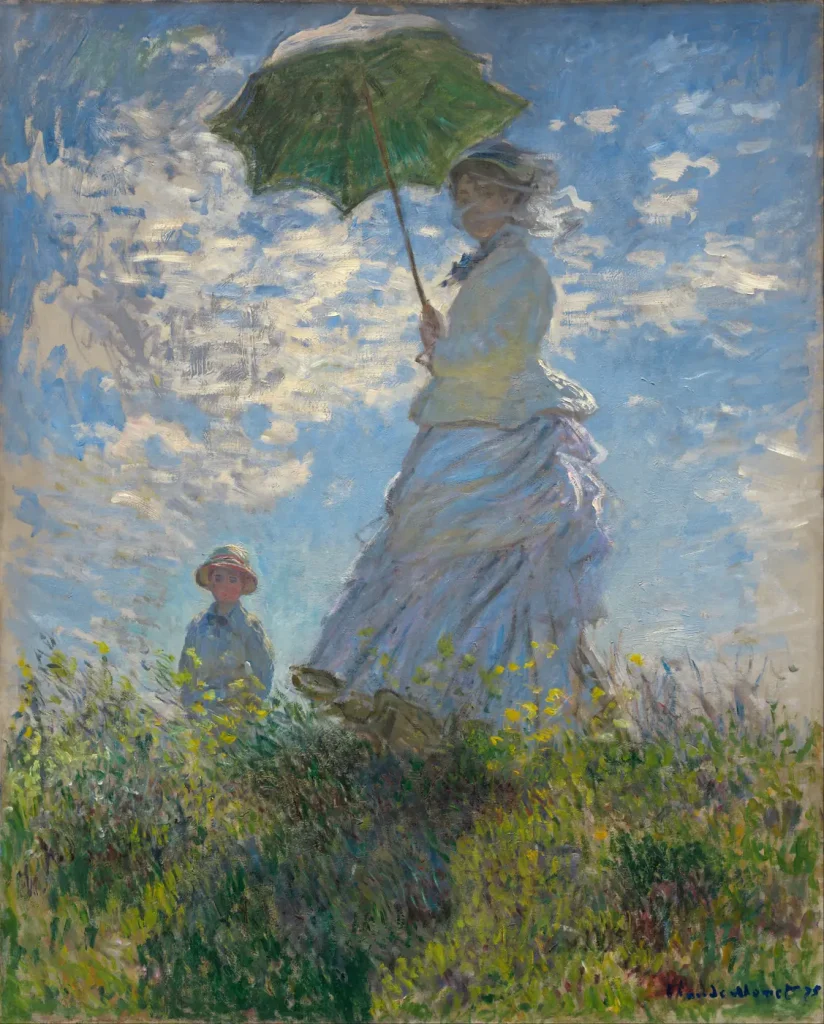
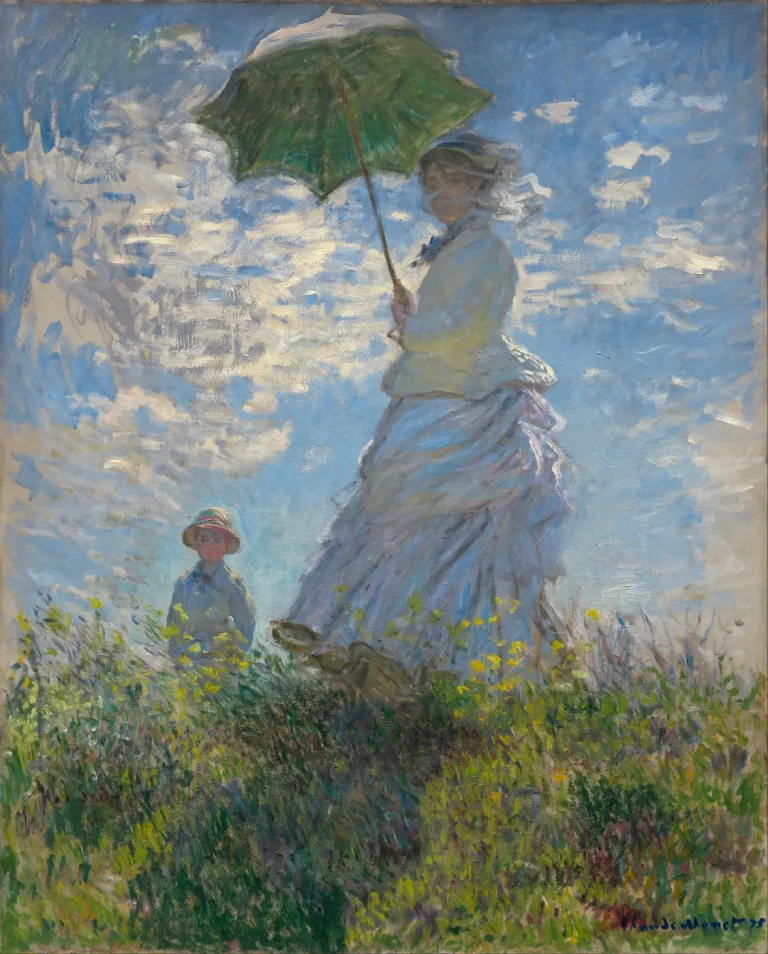
Camille Monet and her son Jean stand on a grassy rise beneath an open sky. A low viewpoint gives the woman’s dress and tilted green parasol unusual prominence. Jean’s partly hidden body establishes the slope’s depth.
White fabric divides into blue, violet and cream strokes, while the veil and clouds convey the impression of wind. The full story looks closely at these colour relationships without inventing the family’s thoughts or a hidden biographical narrative.
Collection reference: National Gallery of Art, Washington.
Claude Monet · oil on canvas, made to order
Explore the artistClaude Monet →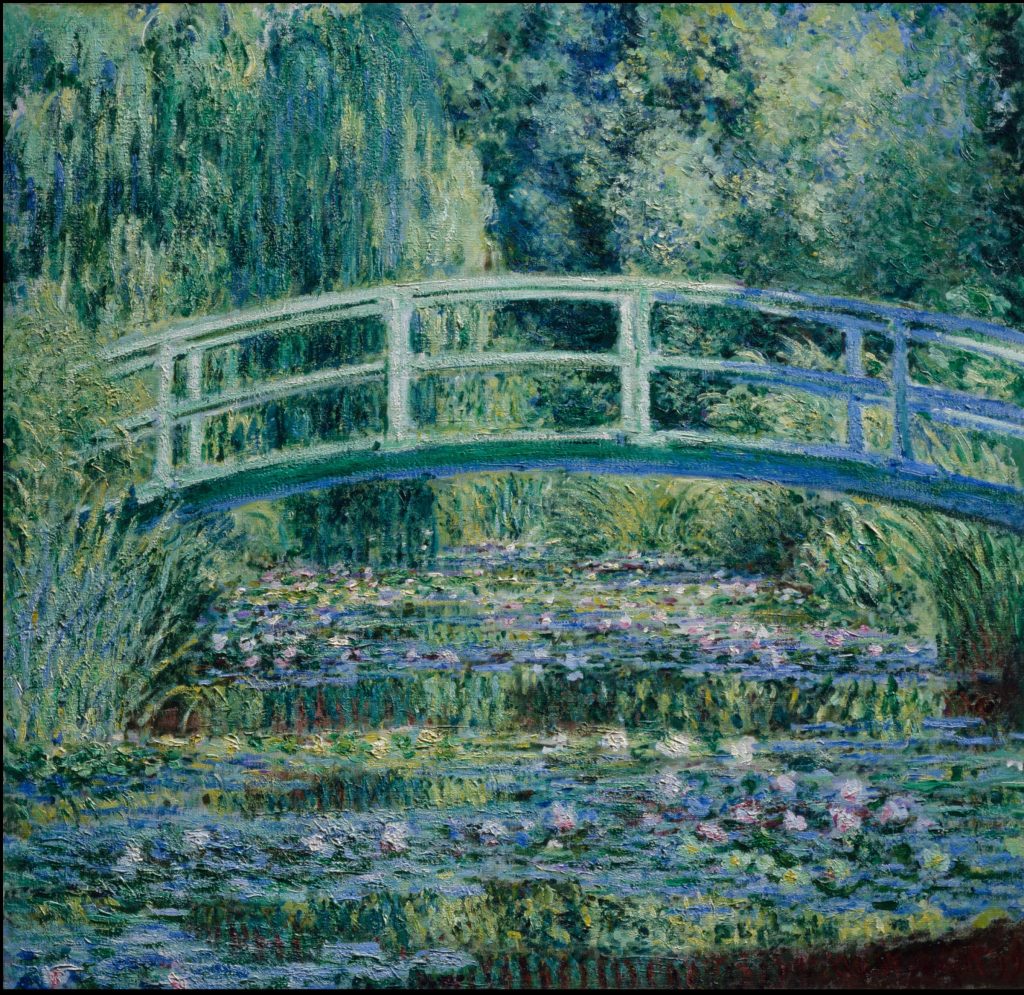
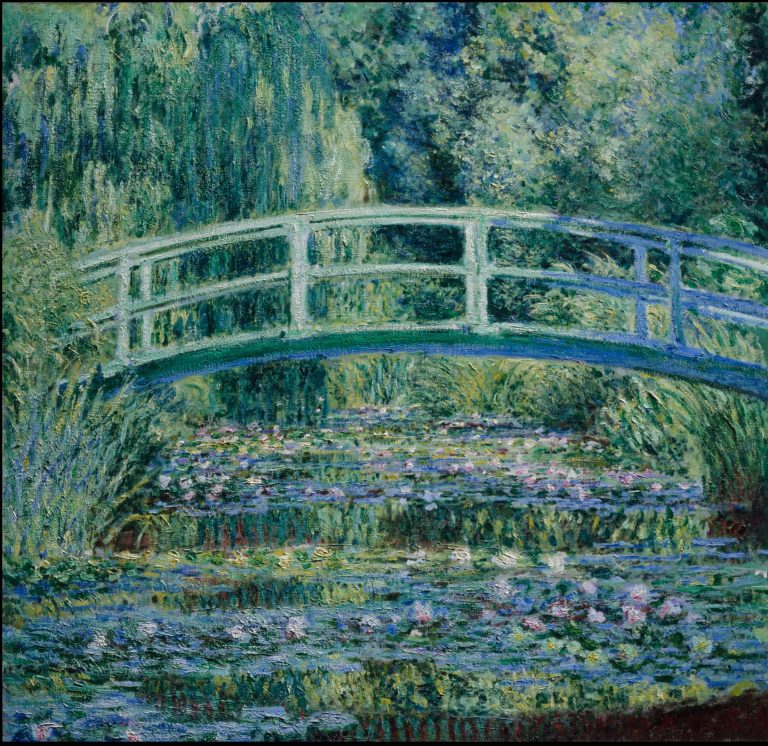
A green bridge arches above a pond filled with water lilies and reflected foliage. Its railings provide a stable framework, while the water makes depth harder to settle. Monet developed this cultivated setting in his garden at Giverny.
This is Princeton’s nearly square 1899 Water Lilies and Japanese Bridge. Related bridge canvases in other museums are different works. Our full article identifies the Princeton painting and explores its railings, flowers and shifting reflections through three detail crops.
Collection reference: Princeton University Art Museum.
Claude Monet · oil on canvas, made to order
Explore the artistClaude Monet →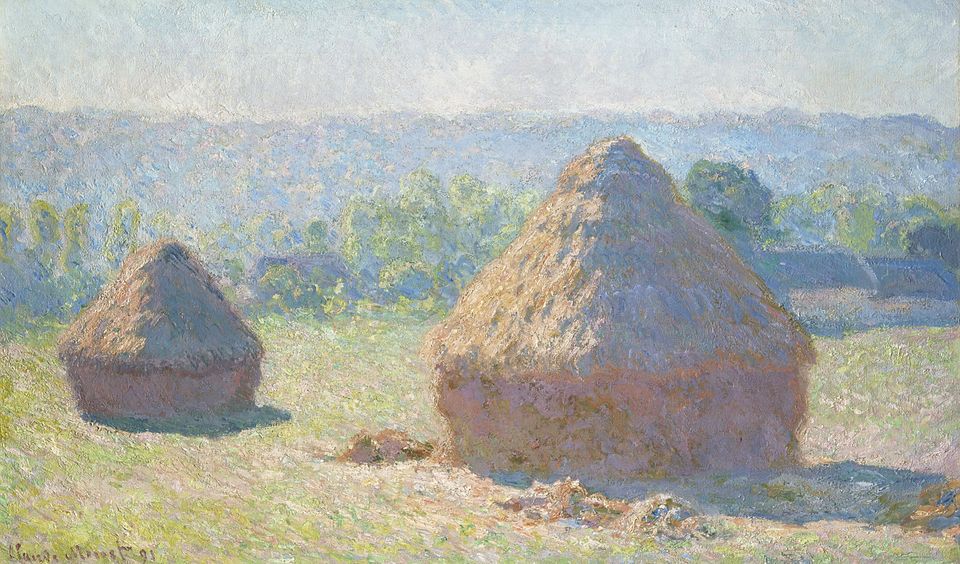
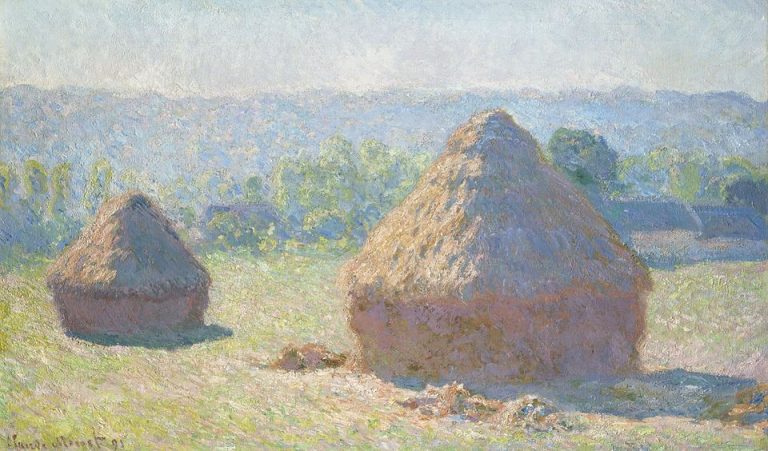
Two harvested grainstacks give Monet stable forms through which to explore changing light. Warm and cool strokes turn their surfaces, while blue-violet shadows spread over the field. The familiar English title Haystacks should not obscure their agricultural function.
The particular canvas shown here is the Musée d’Orsay’s Haystacks, End of Summer, dated 1891. Other grainstack paintings belong to different collections. The full story explains the series through the larger stack, smaller stack and coloured ground of this exact composition.
Collection reference: Musée d’Orsay, Haystacks, End of Summer.
Claude Monet · oil on canvas, made to order
Explore the artistÉdouard Manet →
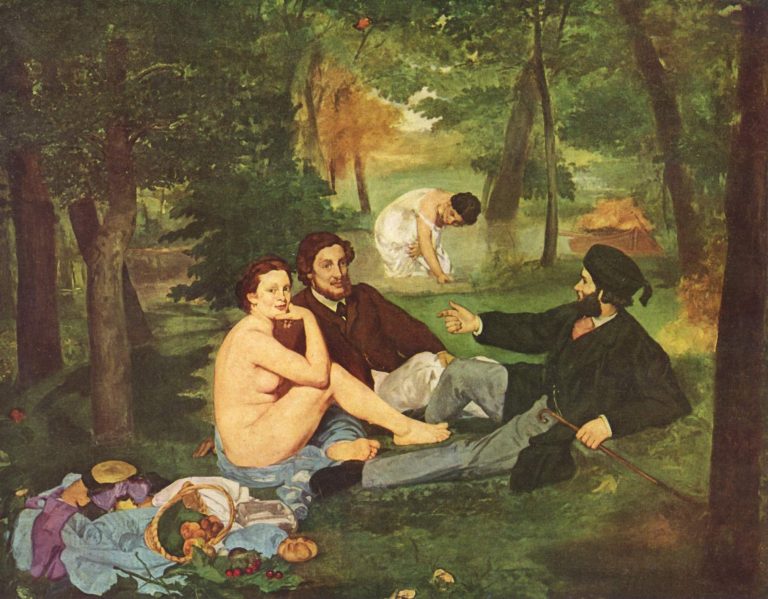
Two clothed men sit beside a nude woman who looks outward, while another woman bends near the water. Fruit, a tipped basket and discarded fabric make the foreground tangible. The group’s relation to older art remains visible, but its modern setting withholds an easy mythological explanation.
Rejected by the Salon and shown at the Salon des Refusés in 1863, Manet’s canvas unsettled expectations of subject, finish and pictorial space. The full article examines those tensions and distinguishes this work from Monet’s later painting with a related title.
Collection reference: Musée d’Orsay, Paris.
Edouard Manet · oil on canvas, made to order
Explore the artistÉdouard Manet →
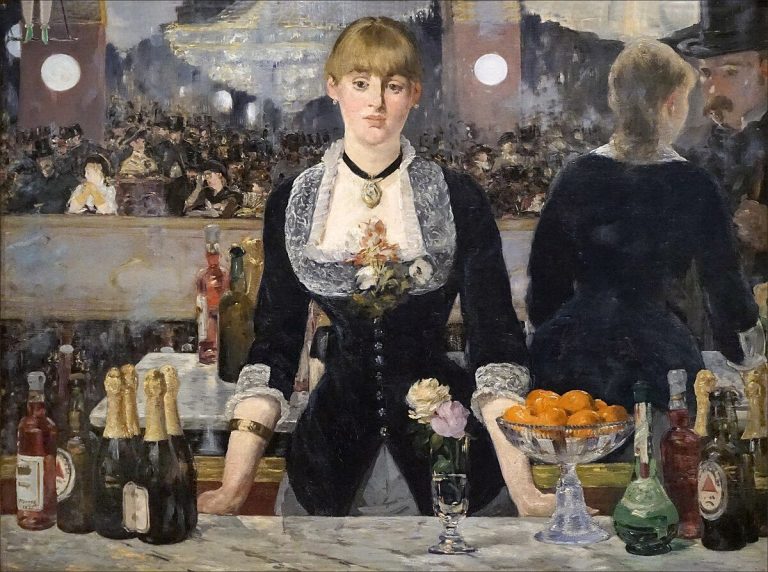
Suzon stands behind a counter of bottles, flowers and oranges. Behind her, a mirror reflects a crowded entertainment hall and a man in a top hat. Her reflected back is displaced to the right, making a straightforward account of the viewer’s position difficult.
Manet constructed the composition with studio sittings as well as knowledge of the venue. The full article explores the mirror, the woman’s working space and the cropped trapeze performer without claiming that one disputed explanation settles every inconsistency.
Collection reference: The Courtauld, London.
Edouard Manet · oil on canvas, made to order
 Explore the artistGustave Caillebotte →
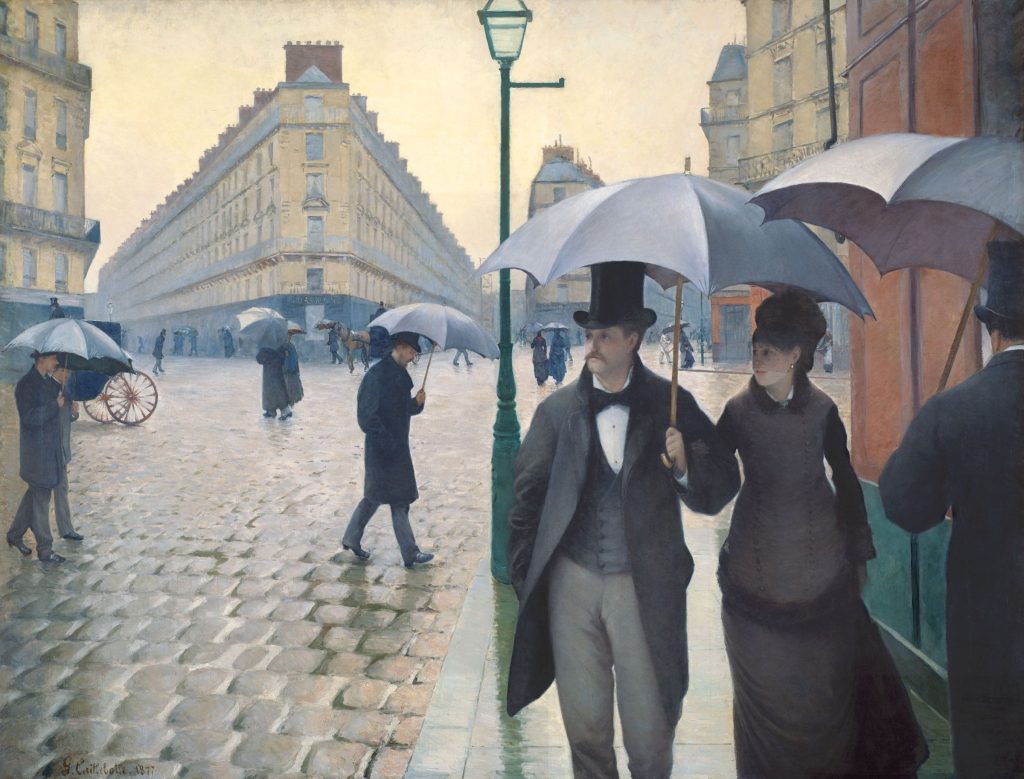
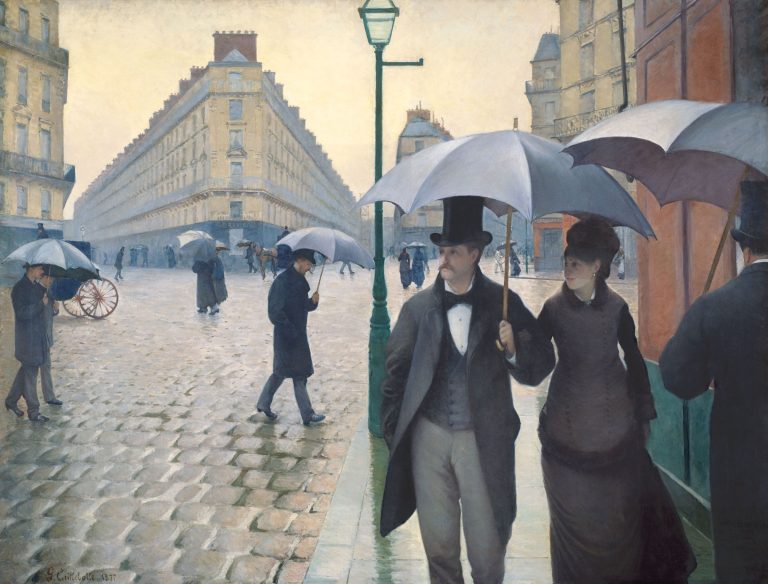
A couple approaches beneath an umbrella while another passer-by enters from the edge. Wet paving stones spread across a wide junction near the Gare Saint-Lazare. A green lamppost and strongly receding streets organise the rebuilt city around its separate pedestrians.
Caillebotte showed the canvas at the third Impressionist exhibition in 1877. Its controlled perspective demonstrates how varied the group’s painting could be. The full story examines its photographic effect, preparatory planning and the uncertain social connections of a shared public space.
Collection reference: Art Institute of Chicago.
Gustave Caillebotte · oil on canvas, made to order
Monet’s Water Lilies and Impression, Sunrise are among the best-known examples. Fame has no single objective ranking; this guide selects ten influential works and explains the specific painting shown in each entry.
Because of Monet's Impression, Sunrise. When the group showed it in 1874, the critic Louis Leroy called them "Impressionists" to mock them, and the name stuck.
Common interests include changing light, visible brushwork, landscape and modern life. The artists differed in their use of colour, finish and perspective, and their work could combine observation outdoors with revision in the studio.
Not officially. He never showed at their eight exhibitions, but he was their hero and friend, and his bold modern subjects opened the way for them, which is why three of his paintings are on this list.
Monet, Renoir, Degas, Pissarro, Sisley, Morisot, Cassatt and Caillebotte, with Manet beside them. You can meet them all in our ten famous Impressionist artists.
The selected canvases belong to the Art Institute of Chicago, Musée Marmottan Monet, Musée d’Orsay, The Phillips Collection, National Gallery of Art, Princeton University Art Museum and The Courtauld. Use the linked museum records for current display information.
Explore more works in our Impressionist collection. Museum and catalogue records are linked beside each painting above.
Enjoyed this story?
Save articles to your collection
Log in or create a free account, and this article will be waiting in your Private Collection.
Log in or sign upThis is an editorial selection, ordered for reading rather than presented as a verified measurement of search demand. Dates, dimensions and collections refer to the particular canvases pictured.
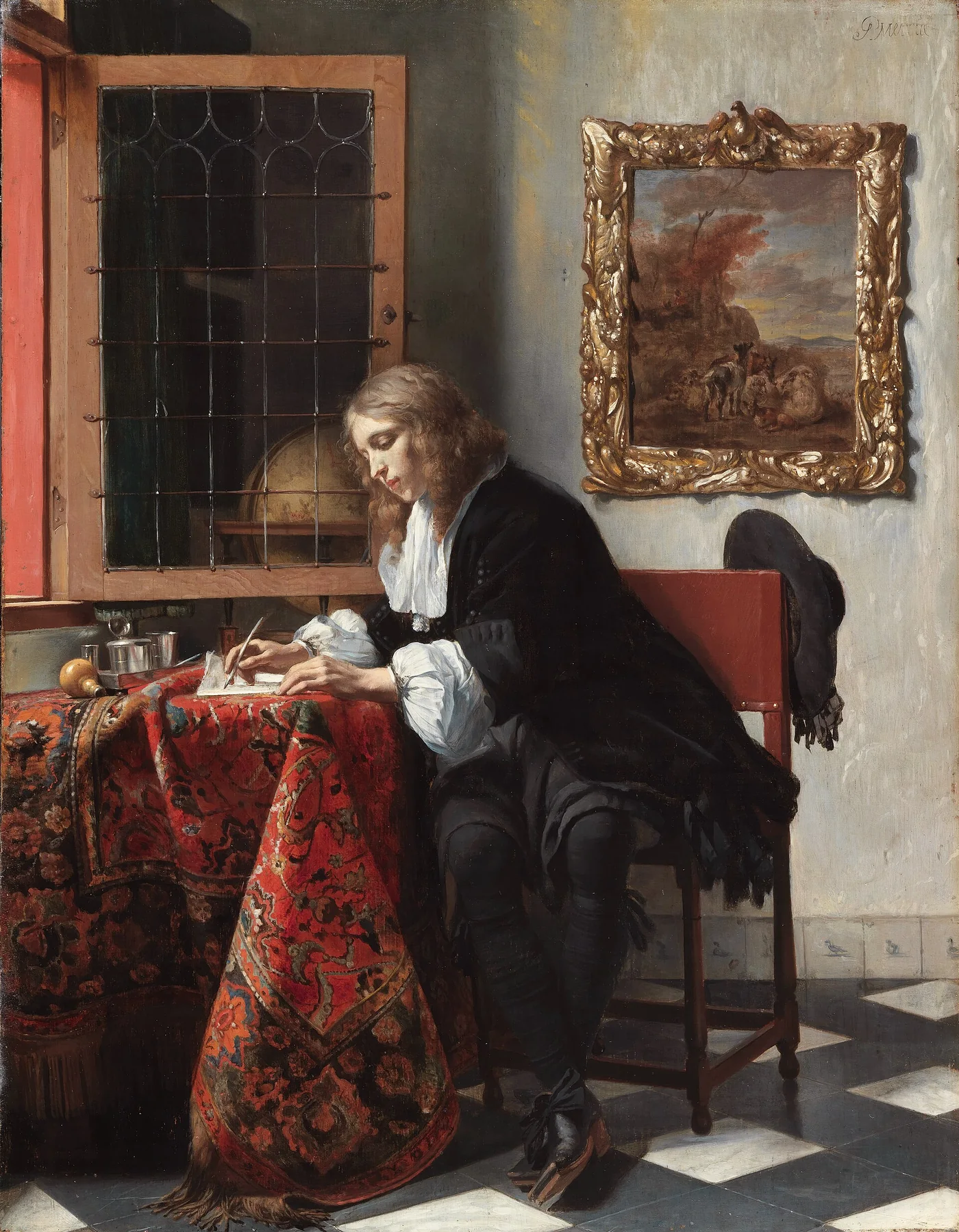
Man Writing a Letter
Gabriel Metsu, c. 1664
The gallery list
Every painting is already 50% off. Join the list and we will send you an extra $15 code, plus first access to new collections.
No spam. Unsubscribe anytime. · Privacy Policy
Welcome
Your $15 code is on its way. Explore the gallery while you wait.