Loading cart…
No products in the cart.

Save articles to your collection
Log in or create a free account, and this article will be waiting in your Private Collection.
Log in or sign upExplore the striking similarities and key differences between Monet and Renoir, two founding giants of the French Impressionist movement.
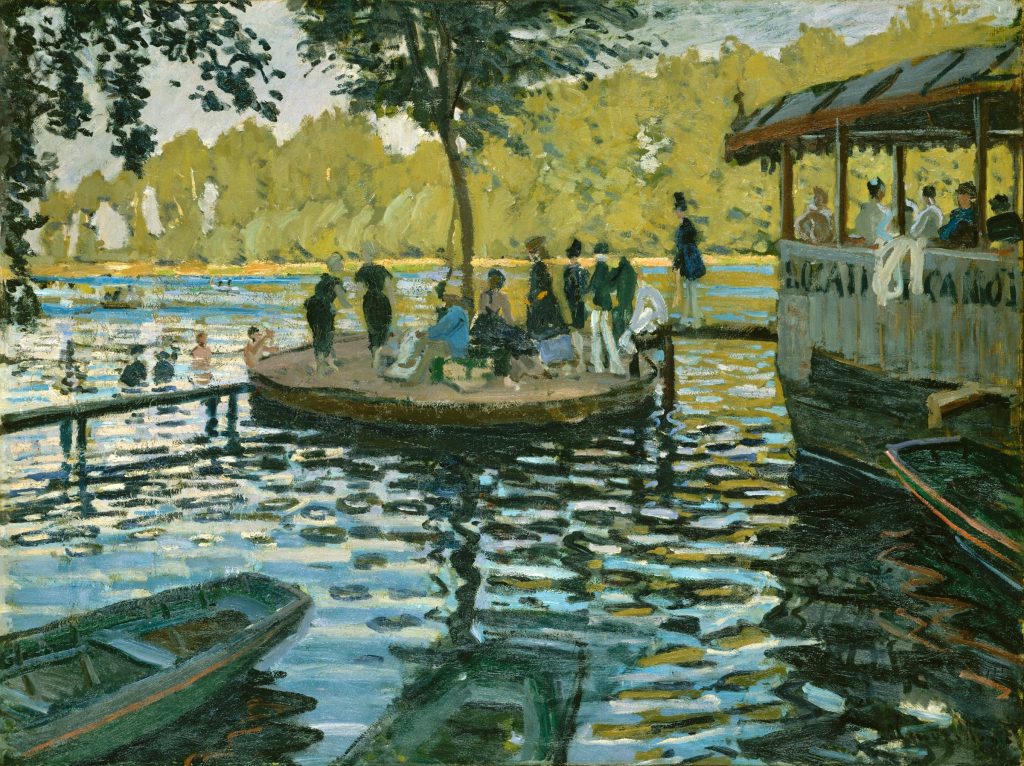
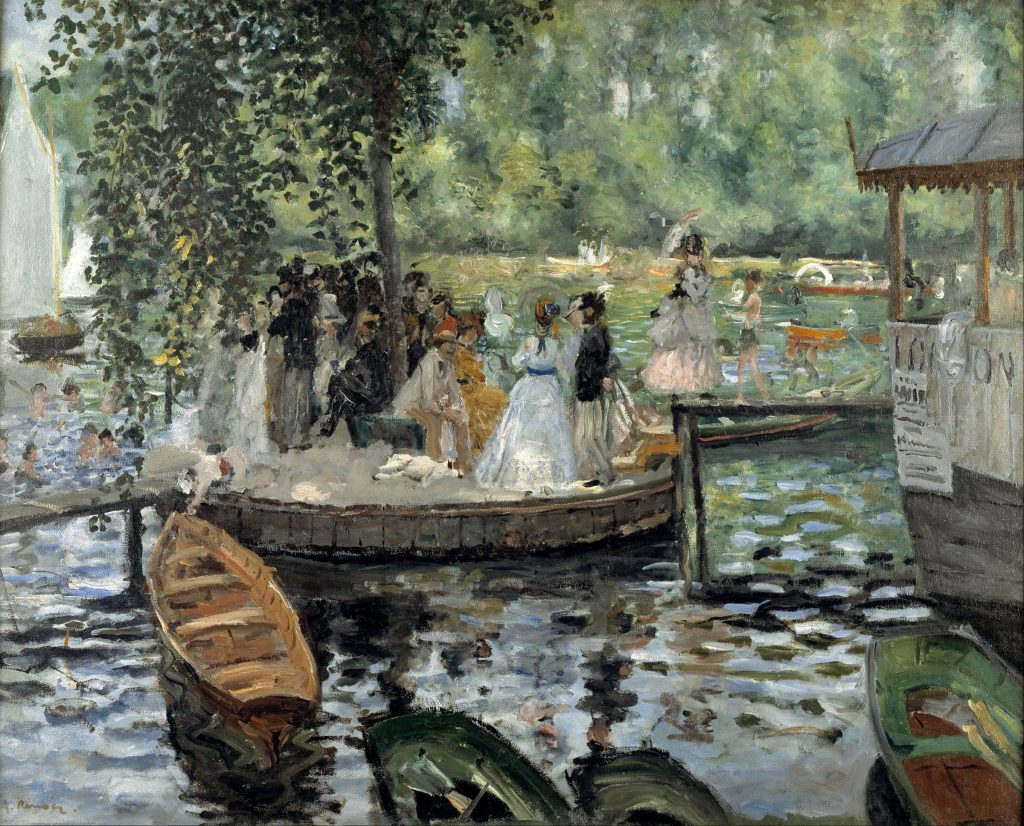
In the summer of 1869, two young painters set up their easels side by side on the banks of the Seine at La Grenouillere, a popular bathing spot near Bougival. They were friends, rivals, and mutual admirers. Claude Monet and Pierre-Auguste Renoir looked at the same shimmering water, the same bobbing boats, and the same crowds of Parisians at leisure, and each produced a canvas that was unmistakably his own. Those parallel sessions gave us one of art history's defining experiments in perception.
Both men were founding figures of Impressionism, the movement that broke from academic tradition by painting light, atmosphere, and the fleeting moment rather than polished, finished surfaces. Yet their temperaments, priorities, and personal visions were strikingly different. Monet concentrated on landscape and changing atmosphere. Renoir was drawn to people, warmth, and the pleasure of being alive. Standing before their respective canvases, you feel those differences immediately.
This article compares the two artists through the lens of their shared painting sessions, their contrasting techniques, and the lasting legacy they built together. Whether you are new to Impressionism or a longtime admirer of both painters, the conversation between these two visions is endlessly rewarding. You can explore their work further in our dedicated guides to Claude Monet and Pierre-Auguste Renoir.

Claude Monet (1840-1926) was a French painter and one of the central figures of the Impressionist movement. Born in Paris and raised in Normandy, he developed an early fascination with painting outdoors and capturing the…


Pierre-Auguste Renoir (1841-1919) was a French painter born in Limoges who grew up in Paris, where he began his career painting porcelain before entering the École des Beaux-Arts. He became a close friend and collaborator…


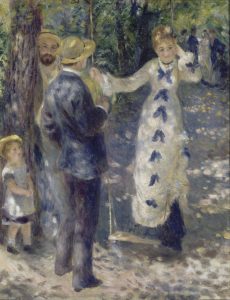

The La Grenouillere sessions of 1869 remain the clearest window into what separated these two friends artistically. Both men painted the floating restaurant and bathing platform on the Seine, both used short dabs and strokes to capture the movement of water, and both were working toward what would become the defining language of Impressionism. Yet place the two canvases side by side and the differences are immediate and revealing.
Monet treats the scene as a problem of light and water. His version of La Grenouillere reduces the bathers and strollers to sketchy, almost anonymous figures. They exist to populate the light rather than to be known as individuals. The water surface commands his attention, broken into horizontal slabs of dark and pale colour that suggest reflection and movement without describing it literally. His brushwork is confident and economical, and the overall mood is cool, clear, and slightly impersonal.
Renoir's version of the same scene is warmer in every sense. His figures are more present and more particular. The dabs of colour he uses for the water are smaller and more varied in direction, giving his surface a sense of sparkle and gentle agitation rather than the monumental ripple Monet achieves. Where Monet is recording a fact of nature, Renoir is recording a feeling of pleasure. Both approaches are valid expressions of the Impressionist ideal, but they point toward very different futures: Monet toward pure landscape and abstraction, Renoir toward portraiture and the figure.
This contrast also appears in later paired works from their time together at Argenteuil in the early 1870s. Monet consistently subordinates the human presence to the broader envelope of light and atmosphere, while Renoir finds ways to make the scene feel inhabited and welcoming. The river is the same river, but the two painters are seeing it with fundamentally different desires.
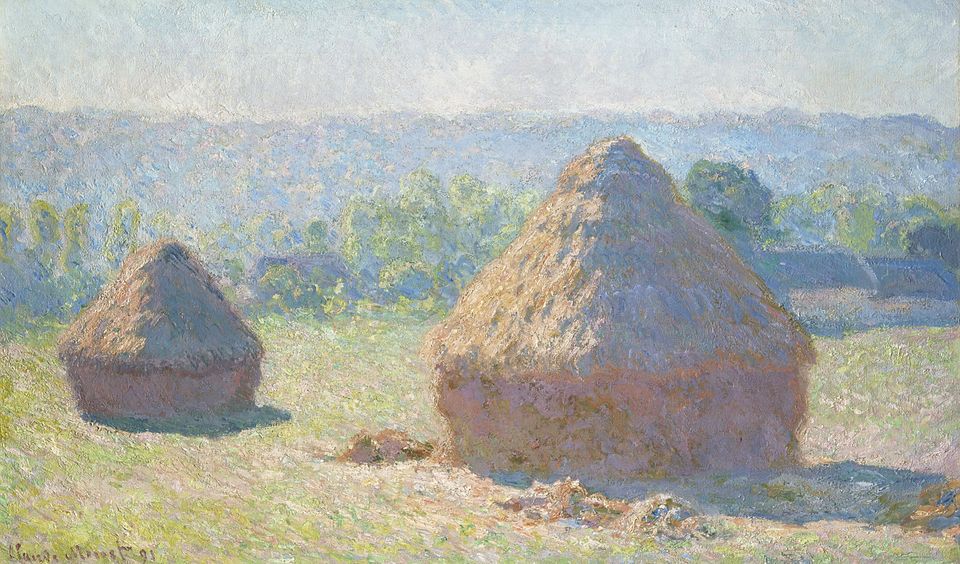
By the mid-1870s, Monet and Renoir had each found the subjects that would define their mature careers. Monet turned his full attention to landscape and series painting, pursuing the idea that a single motif, seen under changing conditions, could become an inexhaustible subject for a lifetime of work. Renoir meanwhile was reaching the peak of his gift for capturing French social life with a richness of texture and human warmth that no other painter of his generation could match.
Monet's Haystacks, End of Summer series, begun in 1890, represents perhaps his most radical commitment to the idea of time and light as subject matter. The stacks themselves are almost incidental. What Monet is painting is the particular quality of late-summer afternoon light as it settles over the fields of Giverny, the way warm ochres and pinks dissolve at the edges into haze, and the way shadows hold a faint blue cool even in intense sunshine. The series demonstrated that a painter could return to the same spot repeatedly and never paint the same picture twice.
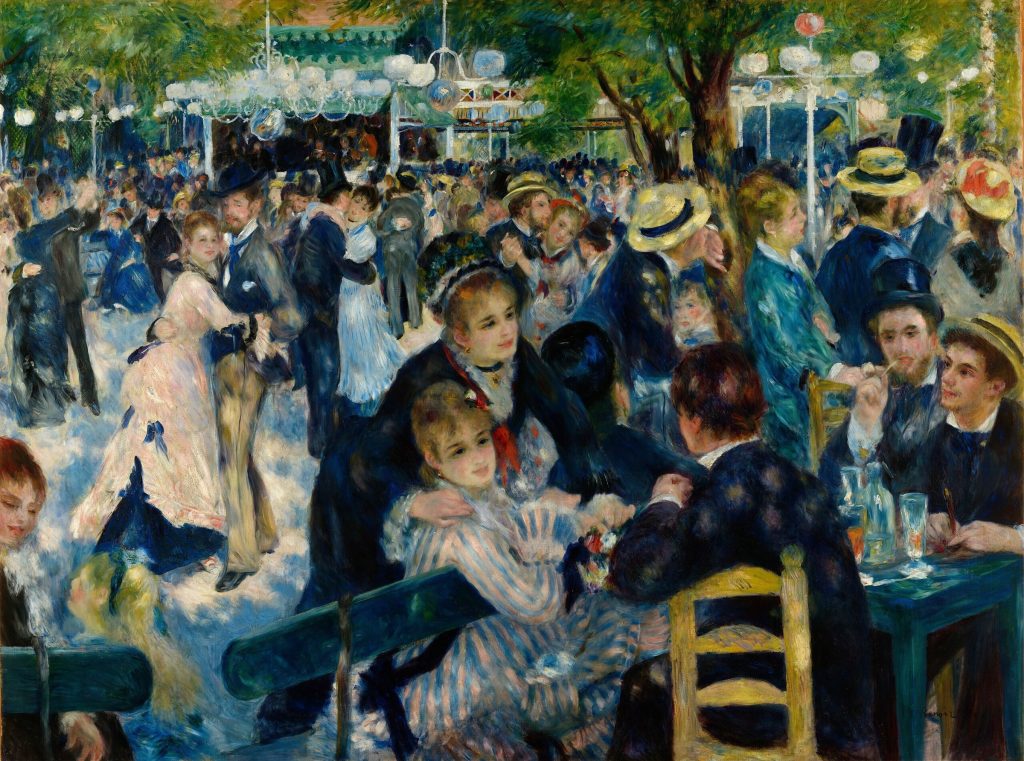
Renoir's Dance at Le Moulin de la Galette, painted in 1876, is a canvas of extraordinary social vitality. Renoir carried his canvases to the outdoor dance garden in Montmartre and painted the scene over several sessions, capturing the dappled light filtering through the trees and falling in patches of gold and violet across the dancers and drinkers below. The result is a painting that feels genuinely inhabited, a record of a specific Sunday afternoon that somehow seems to contain the whole spirit of Parisian pleasure in the 1870s. Admirers of Renoir can find further context in our article on Dance at Le Moulin de la Galette.
Together these two works illustrate the fork in the road that Impressionism took through its two leading practitioners. Monet pushed the movement toward an increasingly private and meditative engagement with the natural world. Renoir kept it rooted in human pleasure and social life. Both directions produced paintings of lasting power, and both continue to draw admirers from around the world.
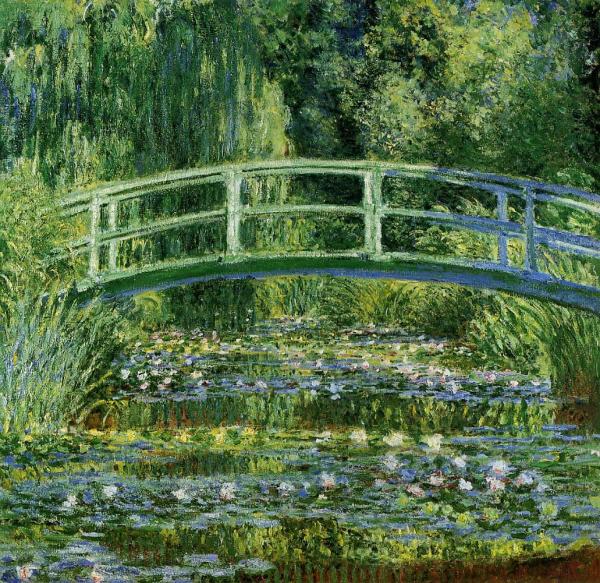
Monet and Renoir shaped Impressionism together, but the movement they helped create ultimately carried them in opposite directions. Monet lived until 1926 and spent his final decades at Giverny, building the water garden that became his primary subject and painting the vast Water Lilies panels that the Orangerie in Paris now displays in an immersive oval installation. Those late canvases, with their dissolution of horizon and their all-over fields of colour, were not fully appreciated until the rise of abstract painting after World War II, when artists such as Mark Rothko and the Abstract Expressionists acknowledged them as a direct precursor to their own work.
Renoir died in 1919, his hands twisted by arthritis, still painting with brushes strapped to his wrists. His late work is less universally admired than his paintings of the 1870s, but his influence on painters who cared about the figure, about warmth, and about the pleasurable surface of the painted canvas has been continuous and wide. Pablo Picasso expressed admiration for Renoir and the tradition of French pleasure painting that ran through him. Vincent van Gogh and Paul Cezanne both engaged seriously with what Renoir had achieved, even as they moved beyond it.
The Impressionist movement they built together also prepared the ground for Georges Seurat, whose Pointillist method was a direct response to the broken brushwork Monet and Renoir had pioneered. And the commitment to painting from direct observation, to trusting the eye over academic convention, opened a door that would eventually lead to everything from Fauvism to plein air painting traditions that remain vital today.
What endures most powerfully is the friendship and the dialogue between these two visions. The La Grenouillere canvases, painted within feet of each other, are a kind of artistic conversation that has never really ended. Every time a painter sets up an easel outdoors and asks how to translate light and life into paint, the question Monet and Renoir were asking in the summer of 1869 is being asked again. Our hand-painted oil reproduction of Water Lilies and Japanese Bridge offers one way to bring that legacy into your own space.
If you are drawn to the natural world, to the way light changes a field or a river over the course of a day, to painting as a form of sustained meditative attention, then Monet is your painter. His series paintings, from the haystacks to the Rouen Cathedral facade to the water lilies, represent a level of concentrated observation that has few rivals in the history of Western art. His willingness to strip away narrative and human drama in pursuit of pure atmospheric sensation made him one of the most radical painters of his century, and his influence on twentieth-century abstraction was profound and lasting. Our Rouen Cathedral, Full Sunlight hand-painted oil reproduction gives a vivid sense of how far he pushed that vision.
If you are drawn to people, to warmth, to the sense that a painting can hold the pleasure and colour of a specific afternoon in a way that makes you feel welcome inside it, then Renoir is your painter. His gift for the figure, for skin in light, for the social texture of French life in the 1870s and 1880s, has never been surpassed within the Impressionist tradition. Works like By the Seashore and Two Sisters (On the Terrace) show a painter who could make you feel the warmth of the sun and the ease of a good afternoon with a directness that is almost physical. The two artists are not in competition so much as in conversation, and together they define the full range of what Impressionism at its height could achieve.
Enjoyed this story?
Save articles to your collection
Log in or create a free account, and this article will be waiting in your Private Collection.
Log in or sign up
Man Writing a Letter
Gabriel Metsu, c. 1664
The gallery list
Every painting is already 50% off. Join the list and we will send you an extra $15 code, plus first access to new collections.
No spam. Unsubscribe anytime. · Privacy Policy
Welcome
Your $15 code is on its way. Explore the gallery while you wait.