Loading cart…
No products in the cart.

Save articles to your collection
Log in or create a free account, and this article will be waiting in your Private Collection.
Log in or sign upVisit the National Gallery of Art in Washington, DC: free admission, opening hours, entrance advice and ten paintings by Leonardo, Vermeer and others.

The National Gallery of Art in Washington, DC offers a painting visit without a general-admission bill. Its collection lets a visitor move between a Leonardo portrait, Vermeer's suspended domestic moment, Rembrandt's self-examination and scenes of modern life by Manet and Renoir.
This guide is about the Washington institution on the National Mall, not the National Gallery in London. The ten paintings below are an editorial selection from its public-domain collection, with practical information for planning a visit. They provide reasons to stop and look, rather than a claim that one route can exhaust the museum.
The National Gallery does not require tickets or passes for general admission, exhibitions or guided tours. Some events have separate free registration. Use the official visit page to check the arrangements for a particular programme.
The West Building is the natural starting point for the older European and American paintings in this selection. The East Building adds a different architectural and collection experience, and the Sculpture Garden offers another change of pace. Consult the campus guide before treating them as a single uninterrupted sequence of rooms.
As checked on 5 November 2026, the West Building's 7th Street entrance is closed until further notice. The museum lists other entrances, including the accessible 6th Street entrance. Check the current entrance map rather than following an old route to a closed door.
The museum recommends public transport and identifies Archives–Navy Memorial–Penn Quarter as the nearest Metro station to the West Building. There is no public parking garage on campus. See the current directions.
We suggest setting aside two to three hours for a selection of paintings, with more time if you want both buildings and the garden. Free admission makes a return visit a reasonable alternative to trying to see every department at once. Pair an intimate picture with a dramatic one: Vermeer's balance and Copley's shark rescue ask for very different kinds of attention.
Visitors with access requirements can consult the accessibility information and ask staff about suitable routes. Collection membership, room access and current display are separate questions; consult the individual artwork pages for the latest information.

These ten public-domain paintings are selected for their visual interest and the different experiences they offer. This is an editorial collection guide, not an official ranking or a live display checklist.
Leonardo da Vinci · c. 1474/1478
 Leonardo da Vinci collection
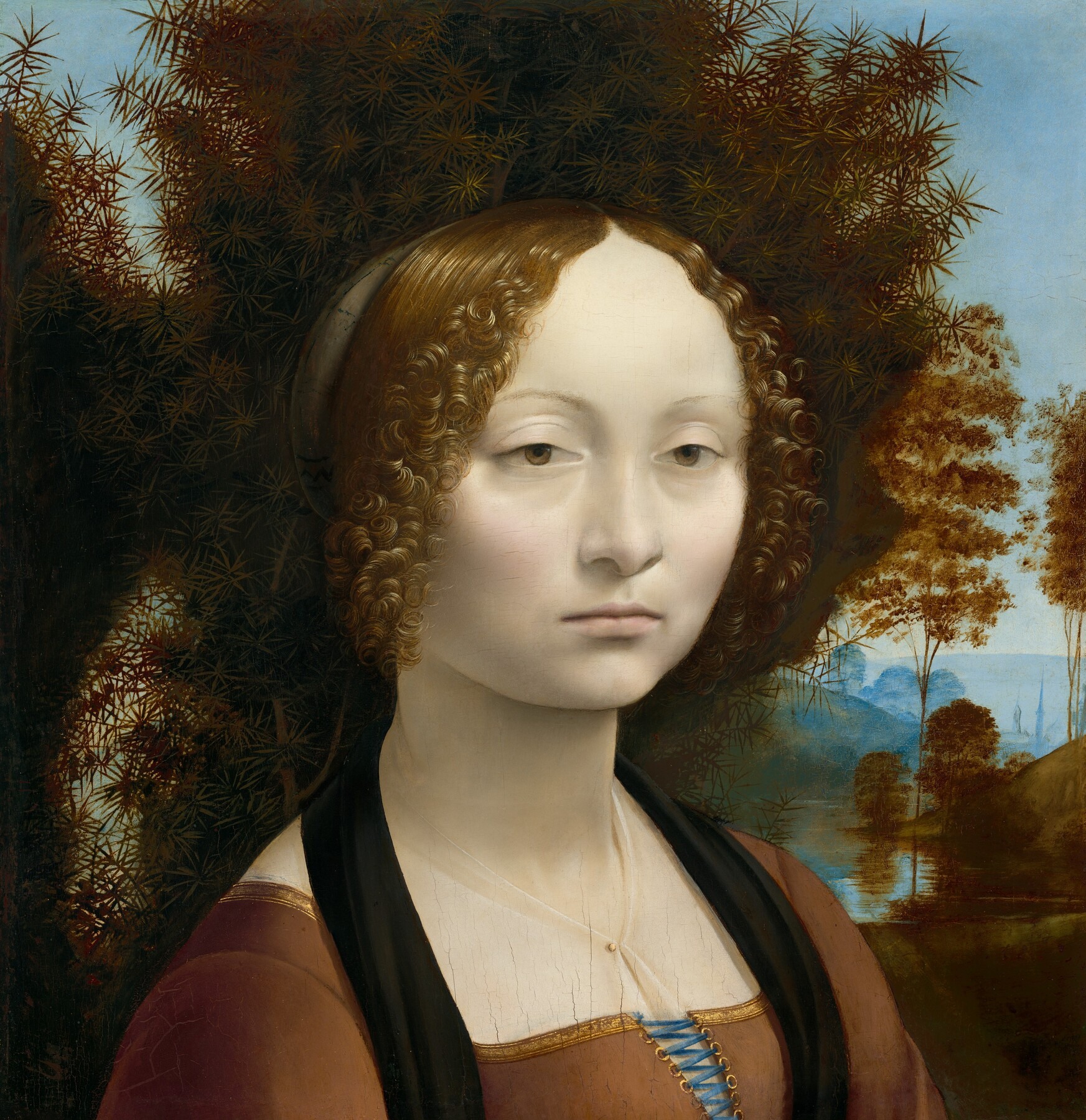
The face emerges from a dense background of juniper, with pale skin and carefully observed curls set against darker foliage. Leonardo's portrait feels restrained: the expression and the small shifts of light carry more weight than a conspicuous gesture.
Look at the transition from the face to the distant landscape. The different degrees of clarity create depth without a dramatic architectural setting. This is a useful place to begin a visit by slowing down, allowing subtle changes around the eyes and mouth to become visible.
Johannes Vermeer · c. 1664
 Johannes Vermeer collection
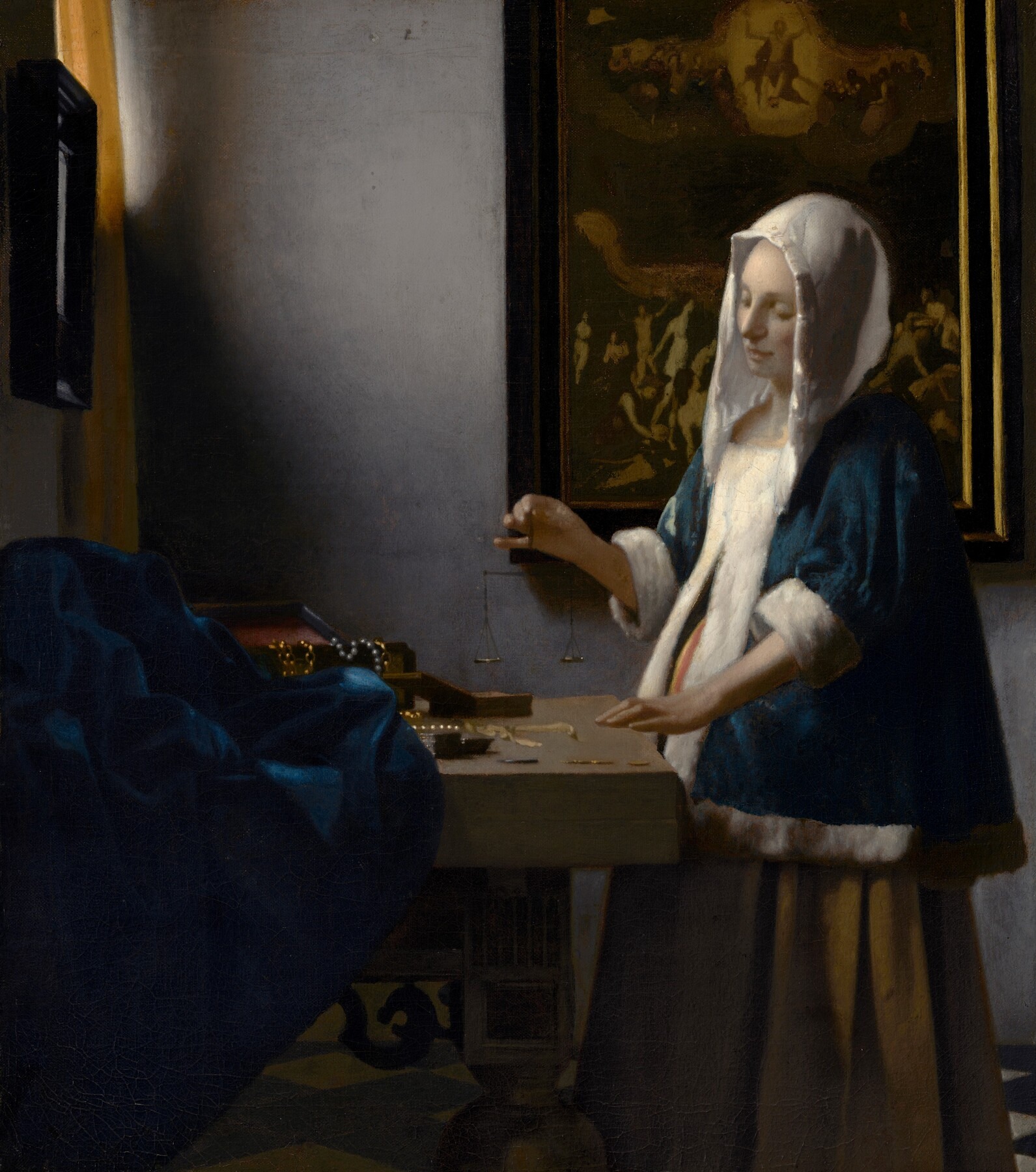
The small balance is held close to the centre of the picture, but the scene does not feel like a hurried transaction. The woman stands in a measured pool of light, with jewellery and other objects spread across the table.
Notice the painting behind her and the space around her hand. Those relationships invite thoughts about judgement and value without reducing the scene to a single decoded message. Vermeer's control of edges and light lets an ordinary action carry a much larger sense of pause.
Rembrandt van Rijn · 1659
 Rembrandt van Rijn collection
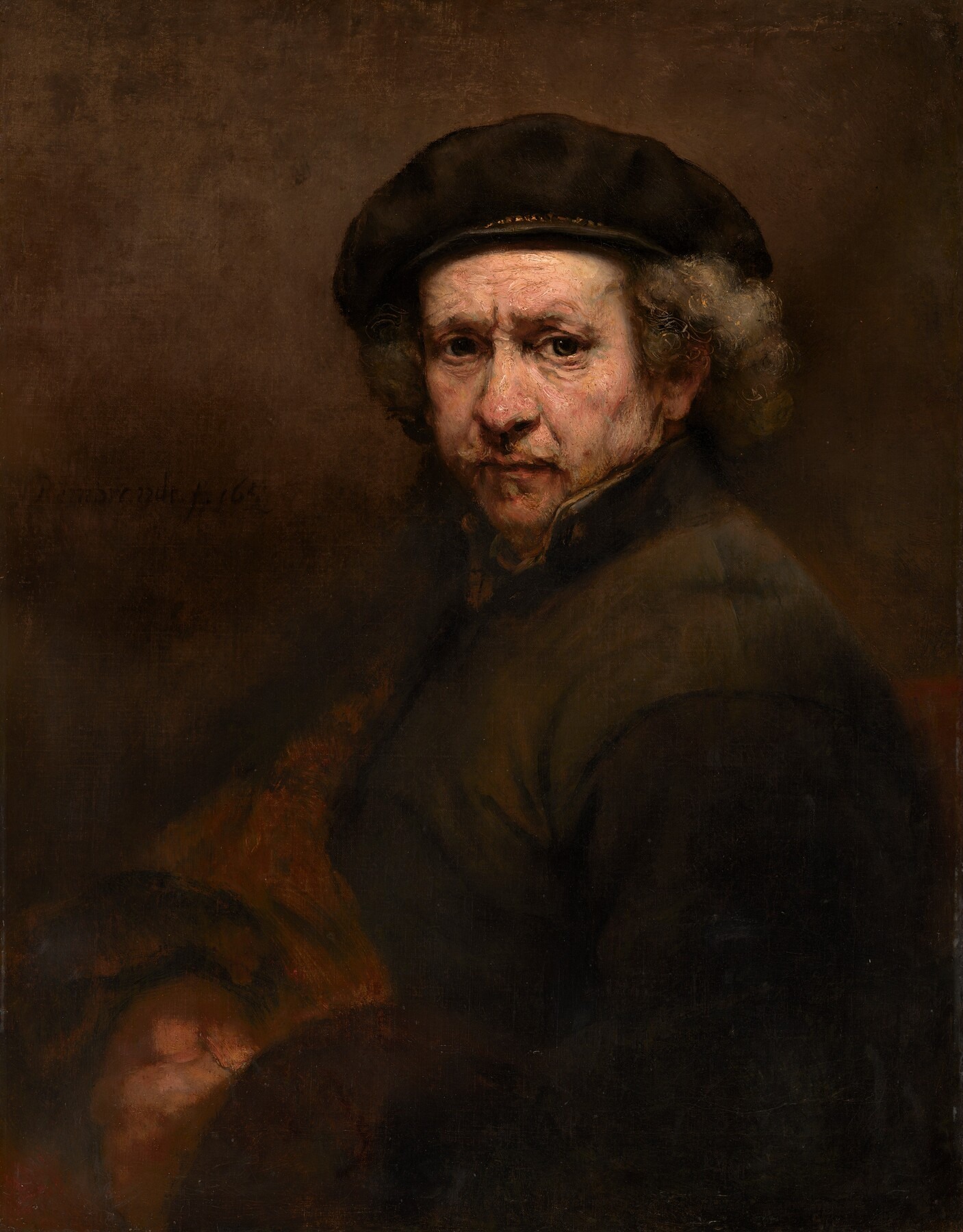
Rembrandt presents a face that is attentive without becoming theatrically expressive. The broad masses of dark clothing place the head in a strong setting, while variations of paint make the face feel worked and unevenly lit.
Try looking first at the whole silhouette, then at the painted surface around the eyes. The effect changes with distance: what reads as flesh from farther away becomes a series of deliberate material decisions up close. The portrait makes looking at the person and looking at paint difficult to separate.
John Singleton Copley · 1778
 John Singleton Copley collection
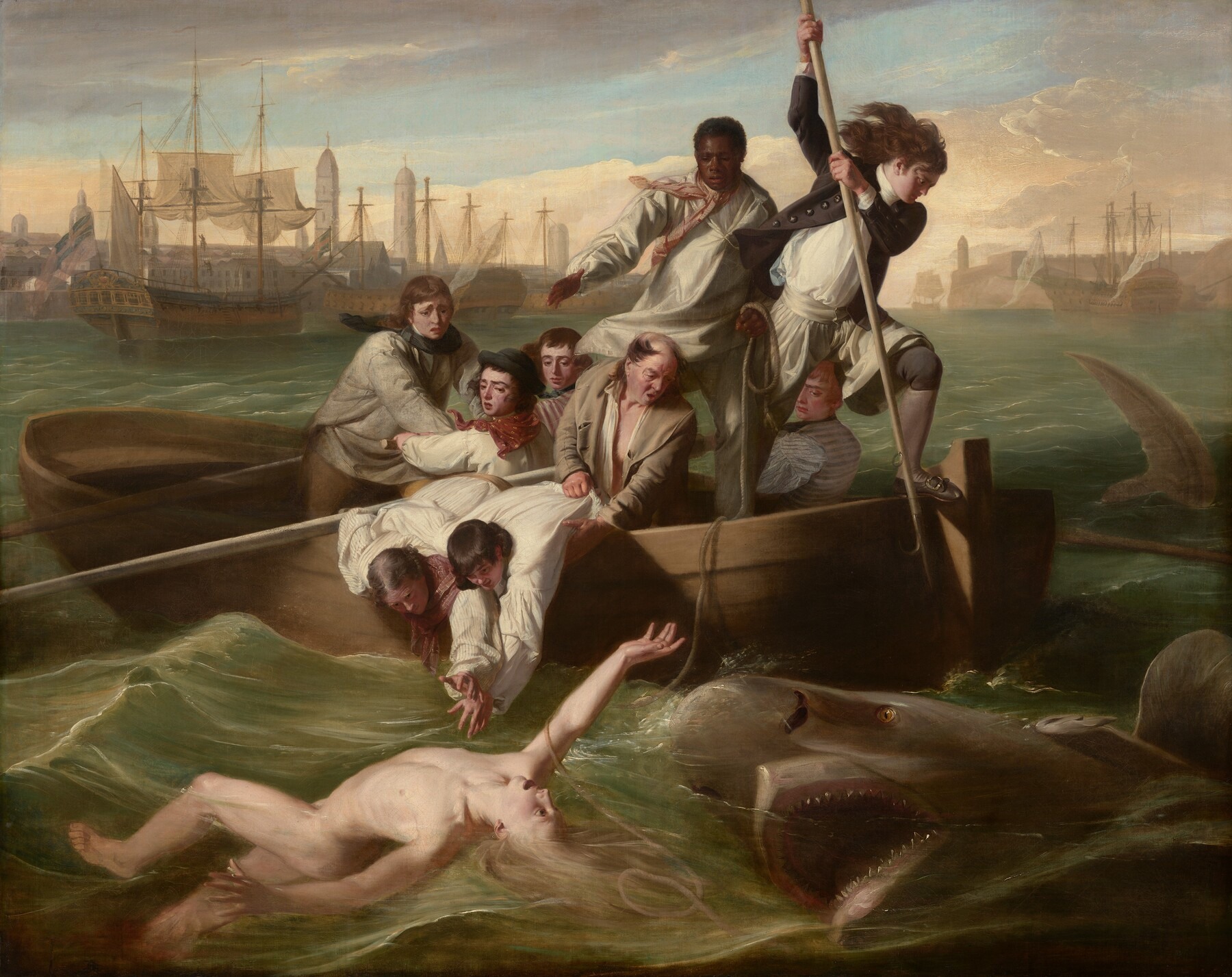
The rescue is arranged around outstretched limbs and a boat whose occupants lean towards danger. The swimmer's exposed body and the shark's approach leave the eye little opportunity to settle.
Copley's 1778 painting turns a rescue story into a carefully organised field of action. Follow the repeated diagonals: arms, poles and the edge of the boat pull different figures into the attempt. The surrounding water and harbour establish a setting, but the urgency is concentrated in the narrowing space between swimmer, boat and animal.
Jacques-Louis David · 1812
 Jacques-Louis David collection
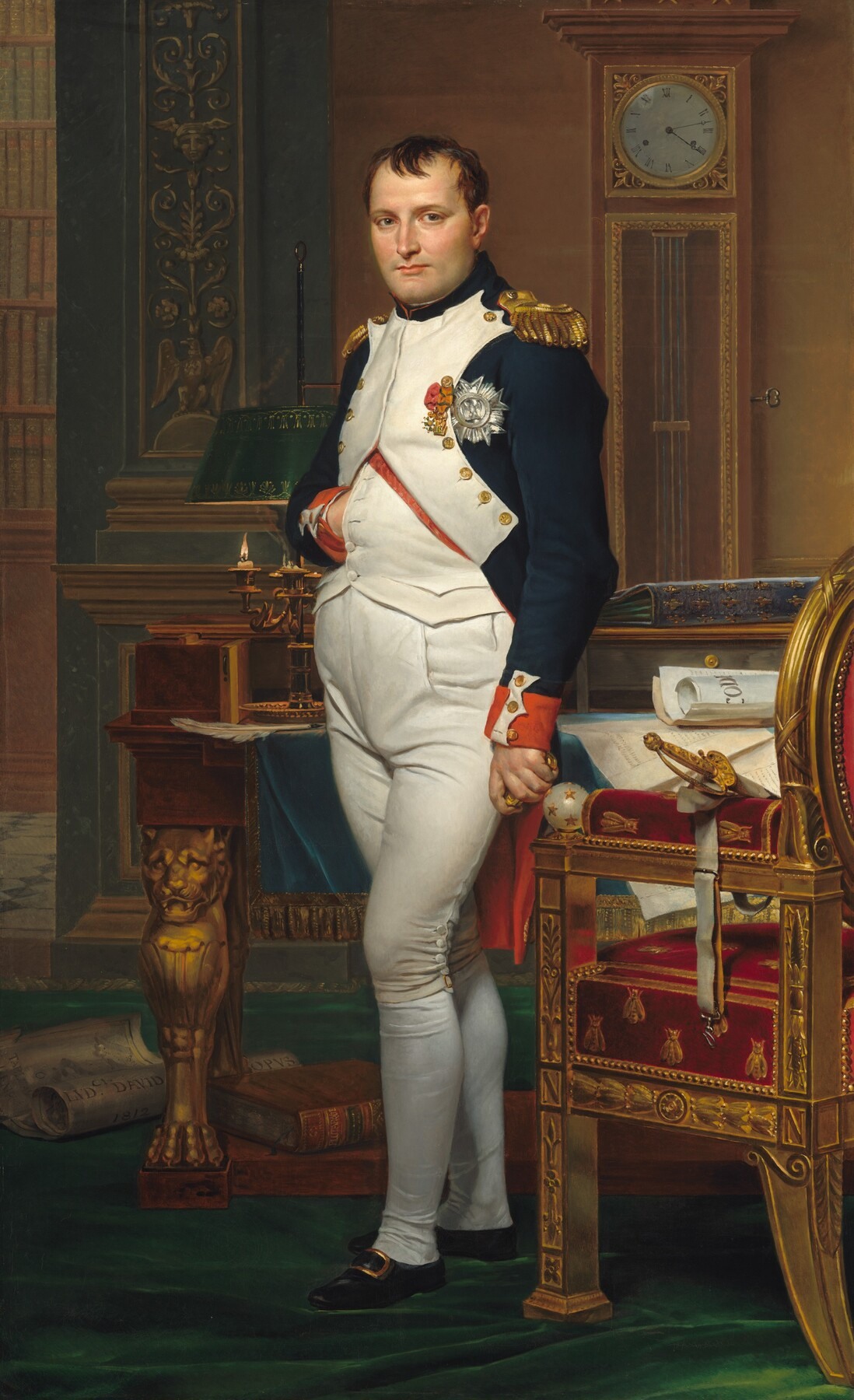
This Napoleon is presented through a working interior rather than a battlefield. The desk, papers and clock are essential to the image, giving the pose a context of administration and sustained attention.
Look at how the upright body is balanced by the furniture and the room's vertical lines. David makes the surrounding objects contribute to a public portrait of authority. Reading those details as part of the painting's construction is more revealing than treating the room as an incidental backdrop or the portrait as a spontaneous glimpse.
Gilbert Stuart · 1782
 Gilbert Stuart collection
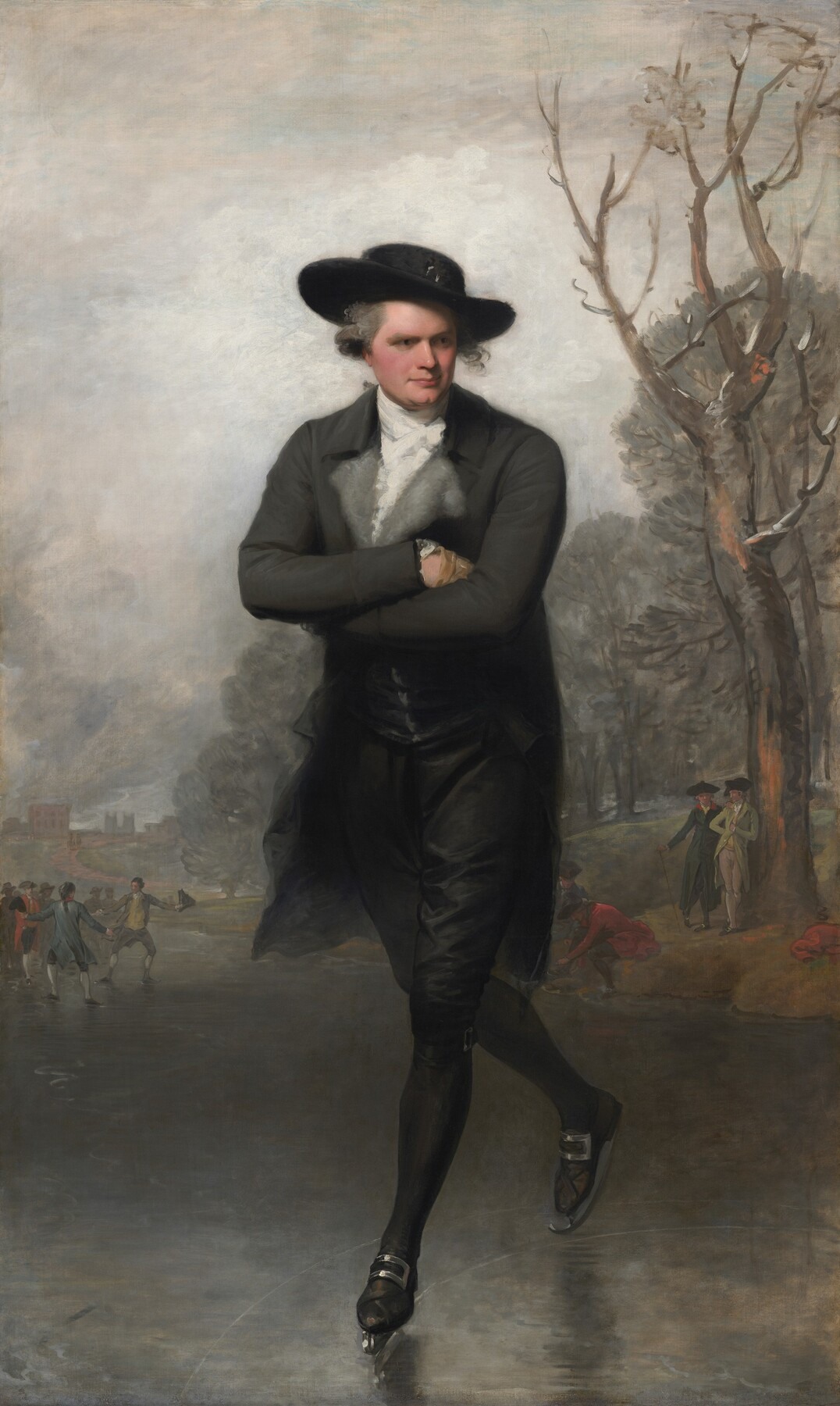
The crossed arms suggest composure, while the skates make balance a practical concern. Stuart places William Grant within a winter setting that allows a formal full-length portrait to become an image of movement.
Look at the angle of the body in relation to the feet. The dark costume gives the figure a clear silhouette, but the subtle shifts of weight prevent it from feeling rigid. Snow, distant figures and the landscape extend the act of skating into a social world beyond the sitter.
Edouard Manet · 1873
 Edouard Manet collection
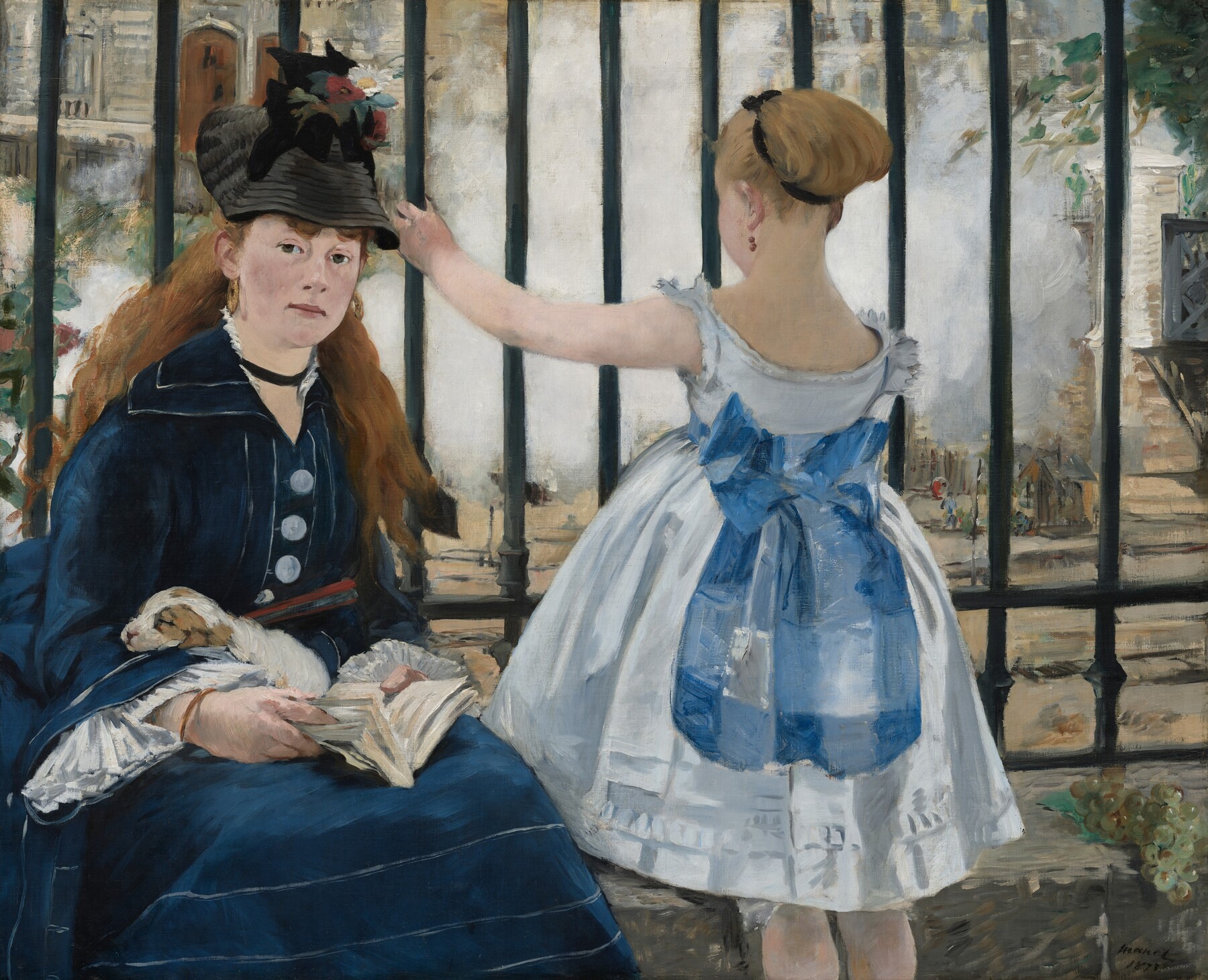
The woman looks out towards the viewer while the child turns away towards the railings and steam. That division of attention is the picture's first puzzle. The railway gives the painting its title but is largely withheld from view.
Manet uses the iron bars to make the separation physically clear. Compare the woman's dark clothing, the child's light dress and the white cloud beyond them. The scene gives enough information to suggest a modern city without allowing us to see everything the figures can see.
Pierre-Auguste Renoir · 1876
 Pierre-Auguste Renoir collection
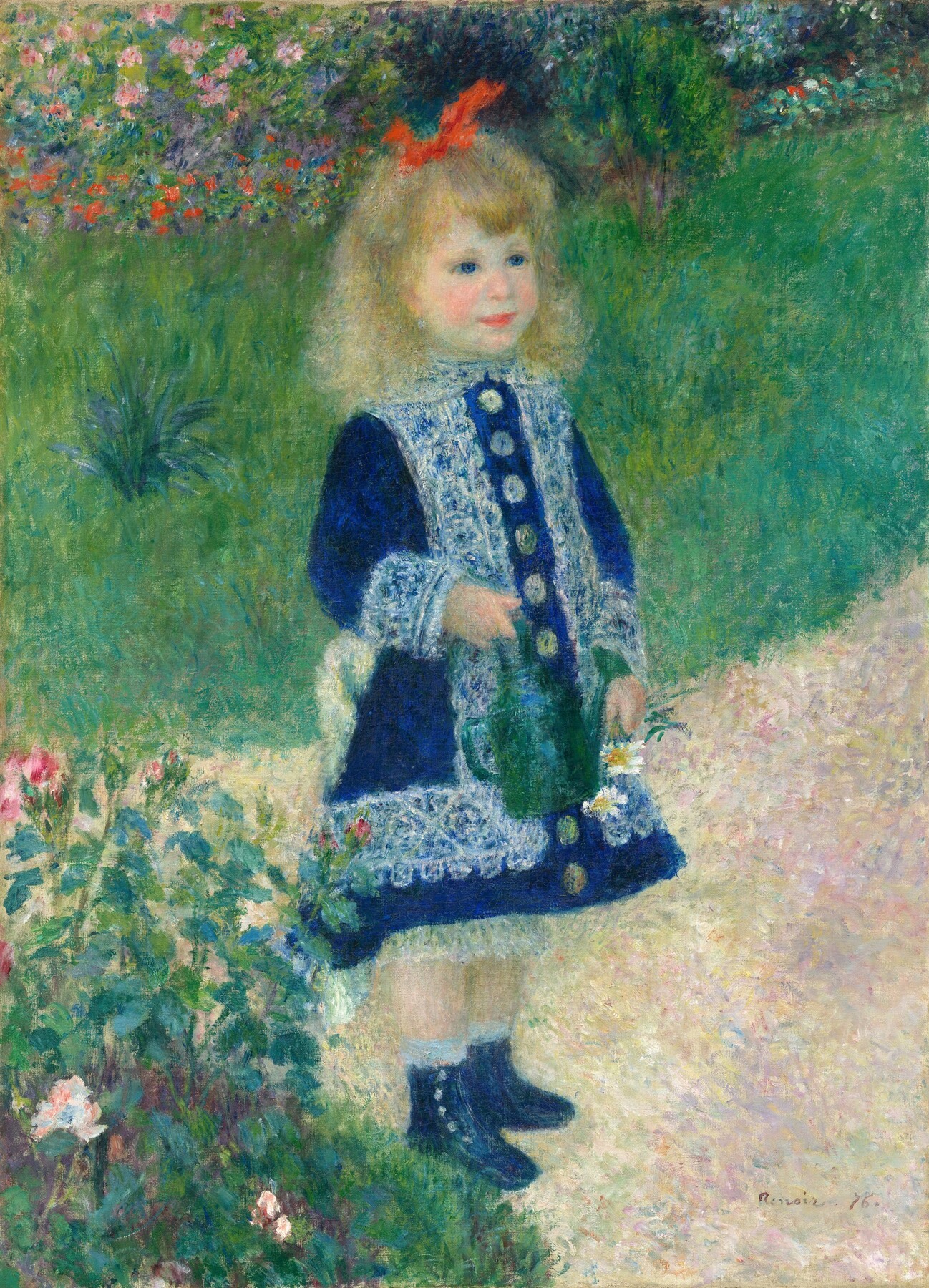
The blue dress holds the child clearly in the foreground, surrounded by softer changes of colour in the garden. Renoir sets a small, practical object in her hand, making the pose feel connected to an everyday activity.
Look at where the figure's outline becomes crisp and where it softens into flowers and foliage. The painting's brightness depends on those relationships as much as on any one colour. It offers a gentler change of pace after the public authority of David or the physical danger in Copley's rescue.
Raphael · c. 1506
 Raphael collection
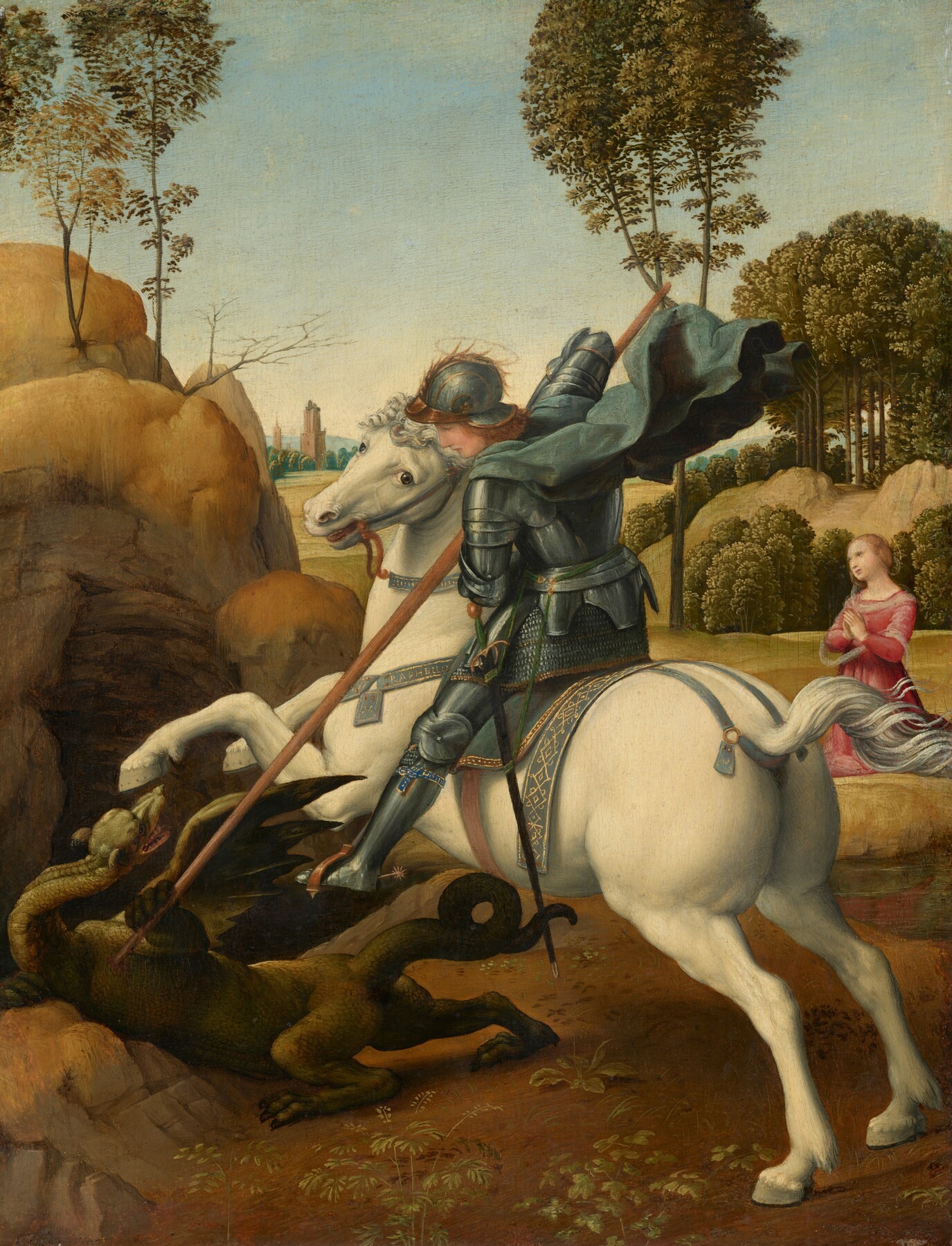
The horse and rider move across the small panel with a clarity that makes the action easy to grasp. The dragon, the weapon and the direction of the horse create a concentrated encounter within a broader landscape.
Compare the dramatic centre with the calmer distance and the figure of the princess. Raphael uses their different scales and positions to organise the story. The picture rewards the same care as a large history painting, even though its small format brings the whole scene close to the viewer.
El Greco · c. 1610/1614
 El Greco collection
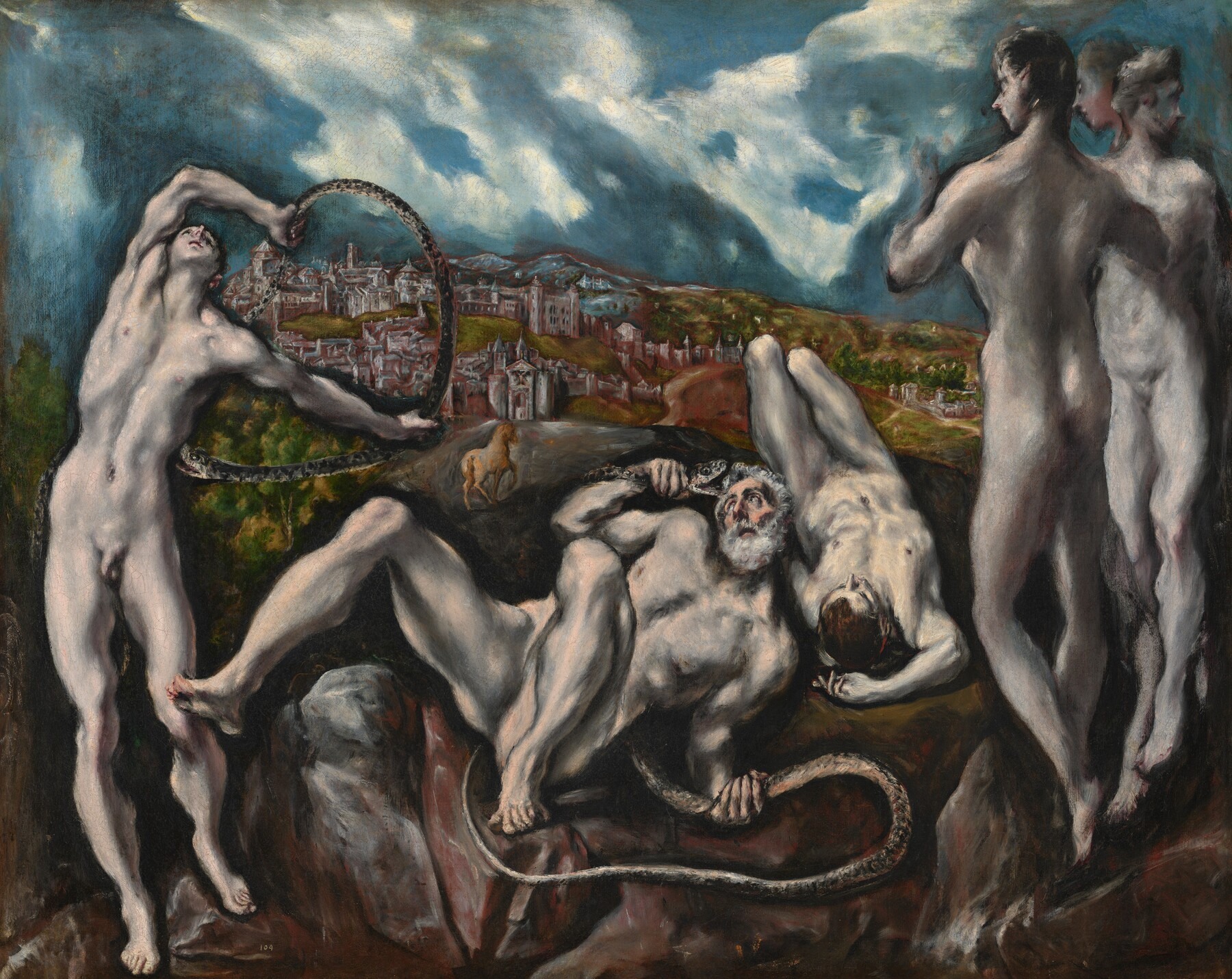
The bodies do not settle into the calm proportions of an academic demonstration. They twist and stretch, with pale flesh set against a landscape and sky that seem to share their agitation.
El Greco's treatment of the Laocoön story is especially striking beside the more ordered action of Raphael. Follow the limbs and serpents as lines across the canvas. Their movement prevents the eye from resting on a single stable figure, while the distant city keeps the struggle from becoming an isolated sculptural group.
No. This guide covers the National Gallery of Art in Washington, DC. The similar names refer to different collections and cities.
The museum states that galleries, exhibitions and guided tours do not require general admission tickets. Check separate registration requirements for individual events.
No. Loans, conservation and gallery changes can affect access. The selection describes works in the collection, not a live display checklist.
Explore another collection in our Louvre Museum guide.
Enjoyed this story?
Save articles to your collection
Log in or create a free account, and this article will be waiting in your Private Collection.
Log in or sign up
Man Writing a Letter
Gabriel Metsu, c. 1664
The gallery list
Every painting is already 50% off. Join the list and we will send you an extra $15 code, plus first access to new collections.
No spam. Unsubscribe anytime. · Privacy Policy
Welcome
Your $15 code is on its way. Explore the gallery while you wait.