Loading cart…
No products in the cart.

Save articles to your collection
Log in or create a free account, and this article will be waiting in your Private Collection.
Log in or sign upPlan an Art Institute of Chicago visit with current admission prices, public opening hours and ten paintings by Seurat, Van Gogh, Caillebotte and others.

A visit to the Art Institute of Chicago can move from a Parisian street in the rain to a bedroom in Arles, a bright riverside gathering and a fishing boat at work. These pictures do not simply represent different places. They offer different ways of making a world from colour, space and marks on a surface.
The ten paintings in this guide form a public-domain introduction to the collection. Alongside the familiar Seurat and Van Gogh are works by Berthe Morisot, Jules Breton and Gustave Moreau that invite a different pace of looking. The practical information below distinguishes public hours from members' access and general admission from optional extras.
General admission covers the collection and nonticketed exhibitions. The current general rates are $32 for adults and $26 for seniors 65+, students and teens aged 14 to 17. Chicago-resident adults pay $20; other Illinois-resident adults pay $27. Children under 14 and members enter free, with additional eligibility programmes available. The museum also offers Fast Pass tickets, a separate option. Check the official admission categories for your circumstances.
The first hour, 10 to 11 am, is reserved for members. It is not the ordinary public opening time. The official ticket portal also notes that same-day online sales stop an hour before closing.
We suggest allowing three to four hours if paintings are your main interest. Choose a few priorities and use the current map to connect them, rather than assuming the numbering below is a walking route. A smaller plan also leaves room for a picture you did not expect to enjoy.
One productive comparison is between Seurat and Caillebotte. Both construct a modern social space, but their figures inhabit it very differently. Then change scale with Morisot's intimate interior or Van Gogh's bedroom. The shift helps keep a visit from becoming a sequence of recognisable titles.
The museum's Bedroom is Van Gogh's 1889 Chicago canvas. Other versions are held elsewhere. Moreau also developed his subjects through studies; a sketch and a finished painting should not be used as interchangeable illustrations. The institutional records linked below identify the objects discussed here.
Check the museum's current access information, exhibition arrangements and collection records before travelling. Loans and conservation can change what is visible. The visit page includes routes to accessibility information and visitor guidance.

These ten public-domain paintings are selected for their visual interest and the different experiences they offer. This is an editorial collection guide, not an official ranking or a live display checklist.
Georges Seurat · 1884 to 86, border added 1888 to 89
 Georges Seurat collection
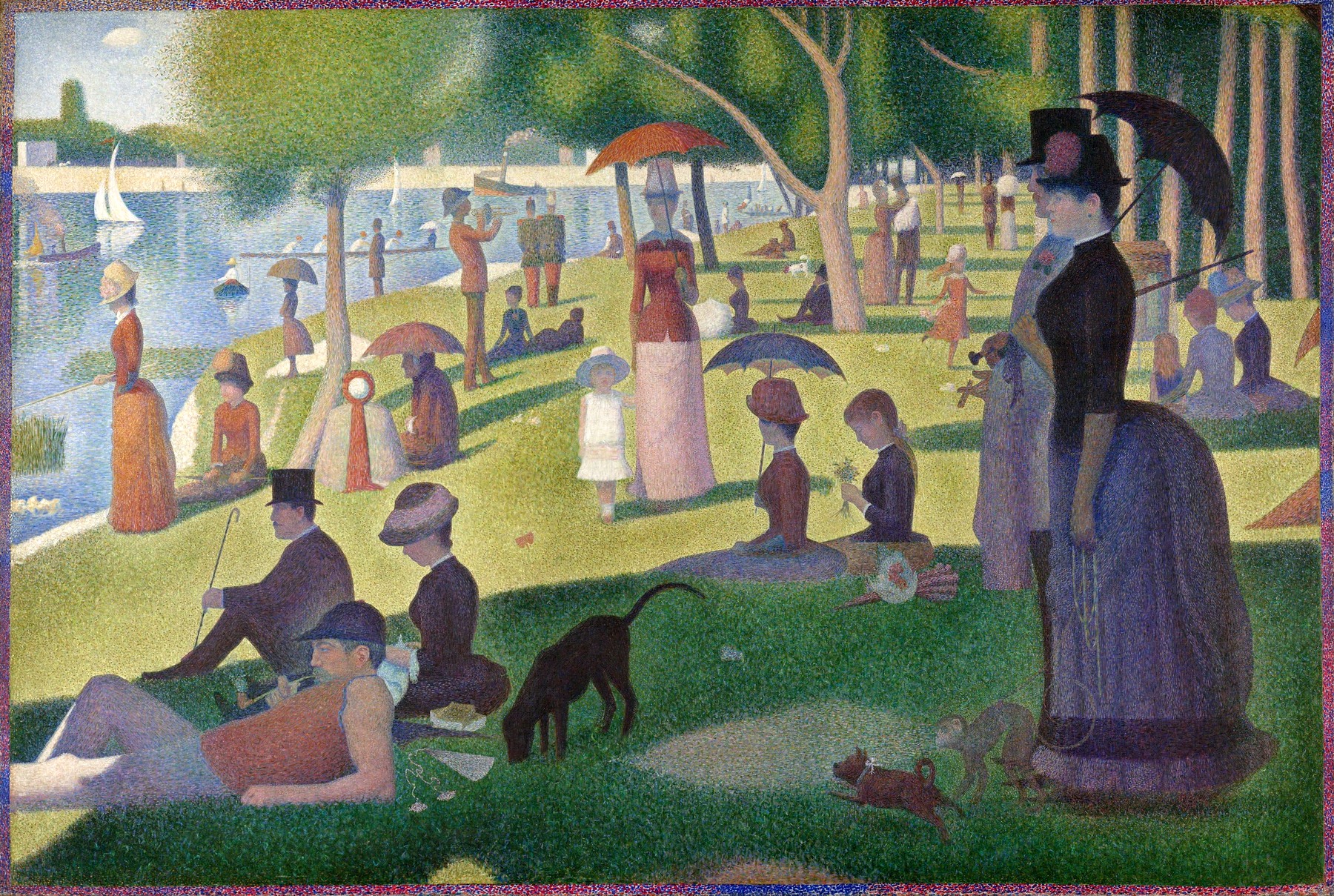
From a distance, the figures seem held in an unusually still arrangement. Closer looking reveals the accumulation of small coloured marks that makes the surface work. Seurat asks the viewer to keep changing the distance between those two experiences.
Notice the intervals between people as carefully as the people themselves. The upright figures, shadows and riverbank establish a rhythm across the canvas. The museum records work on the painting in 1884 to 1886, with the border added later, an important reminder that its apparent stillness was built over time.
Vincent van Gogh · 1889
 Vincent van Gogh collection
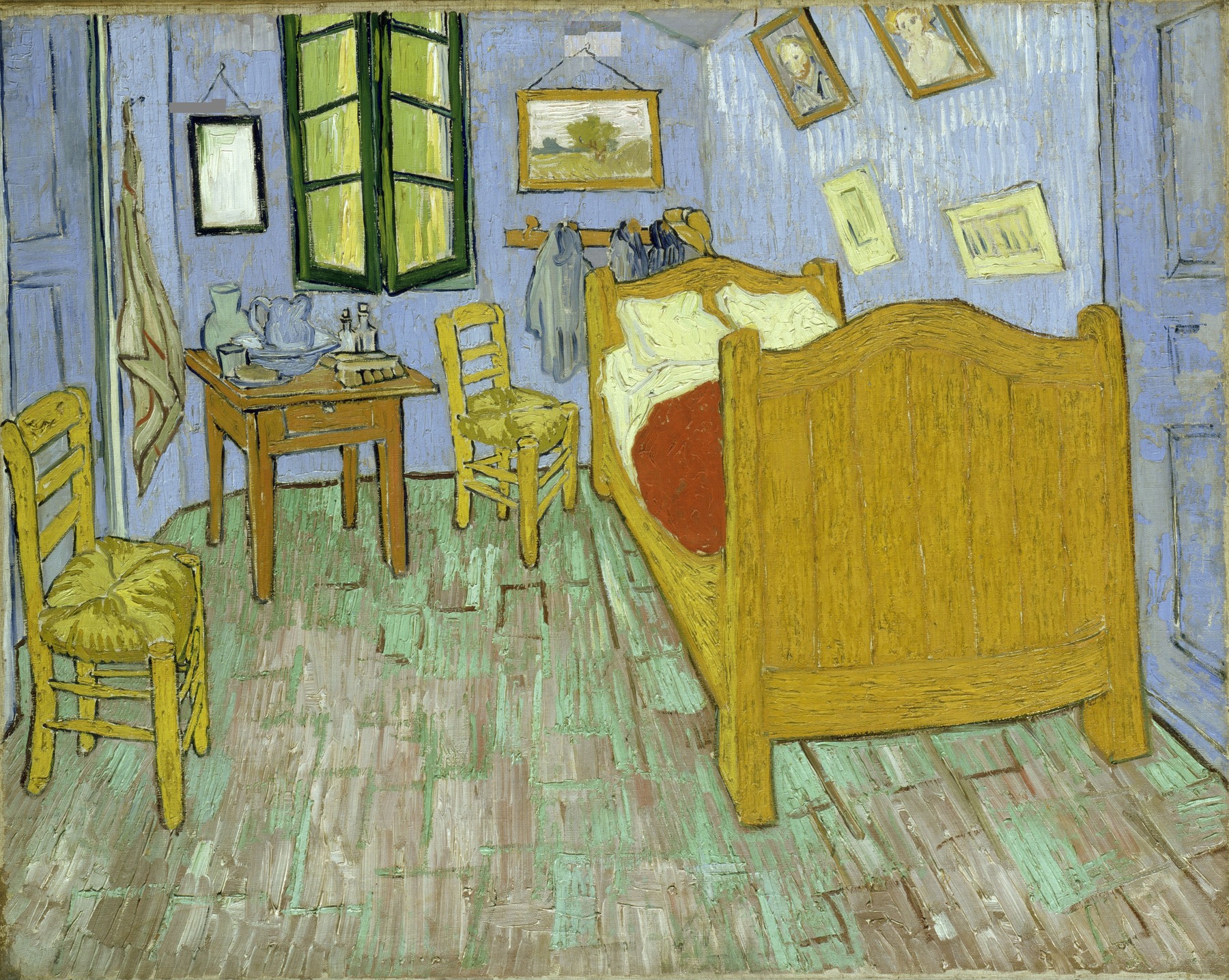
The bed, chairs and wall pictures make the room easy to recognise, but the perspective does not behave like a neutral architectural diagram. Floorboards and furniture direct the eye through a space that feels at once familiar and slightly unsettled.
This is the Art Institute's 1889 version. Look at how colour gives the modest objects their force: the bed and chairs stand against the walls without requiring fine descriptive detail. The room's character comes through relationships between those large shapes, not through a complete inventory of possessions.
Primary museum record or research.
For a comparison with other versions, read our guide to Van Gogh’s Bedroom paintings.
Gustave Caillebotte · 1877
 Gustave Caillebotte collection
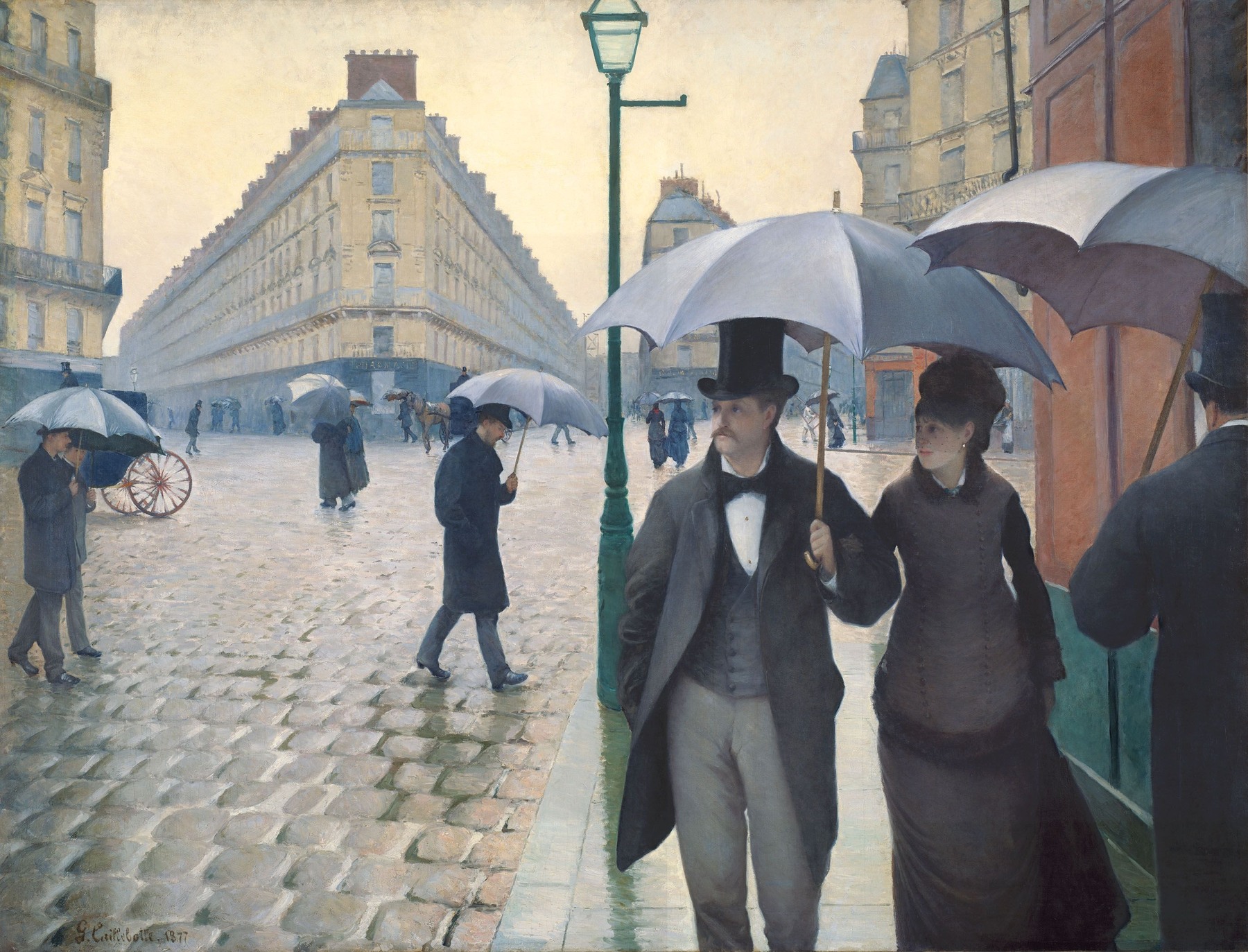
The couple at the right seems near enough to pass, while other pedestrians recede across an expansive junction. Umbrellas interrupt one another, and the wet street creates a broad reflective space between the figures.
Caillebotte makes the city both open and divided. Follow the lamppost, the building edges and the directions of walking. Their order does not bring the people into a single shared encounter; many seem absorbed in separate paths. That tension gives the large urban view a distinctly impersonal atmosphere.
Paul Cezanne · c. 1893
 Paul Cezanne collection
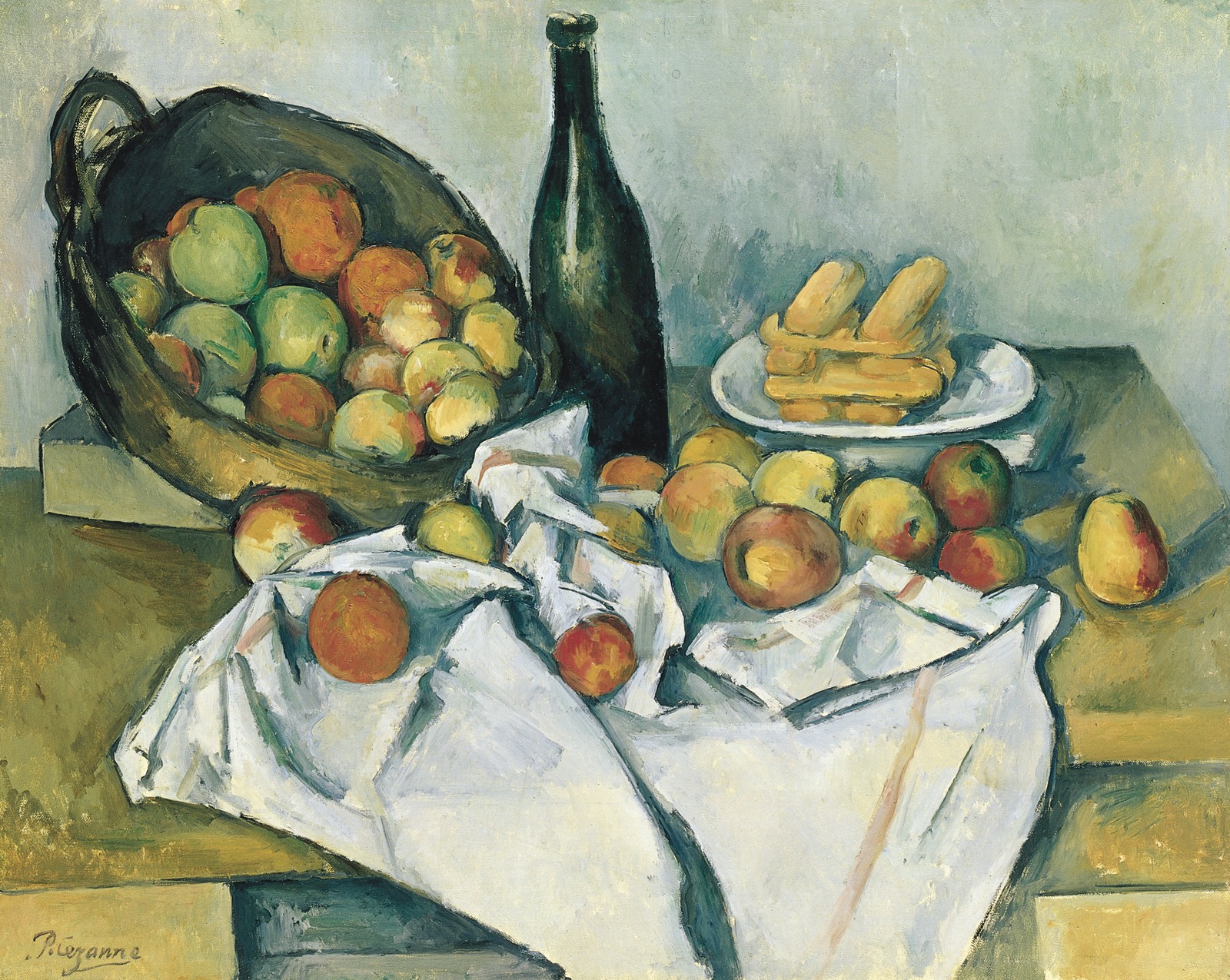
The basket tilts, the cloth rises in folds and the table edges refuse to settle into one simple alignment. Cézanne gives ordinary fruit the force of a constructed landscape, with each round form pressing against its neighbours.
Look at the bottle as a stabilising dark vertical, then return to the uncertain surfaces around it. The picture is not an exercise in making every object obey a single photographic viewpoint. Its interest lies in the balance created across those small disruptions of space.
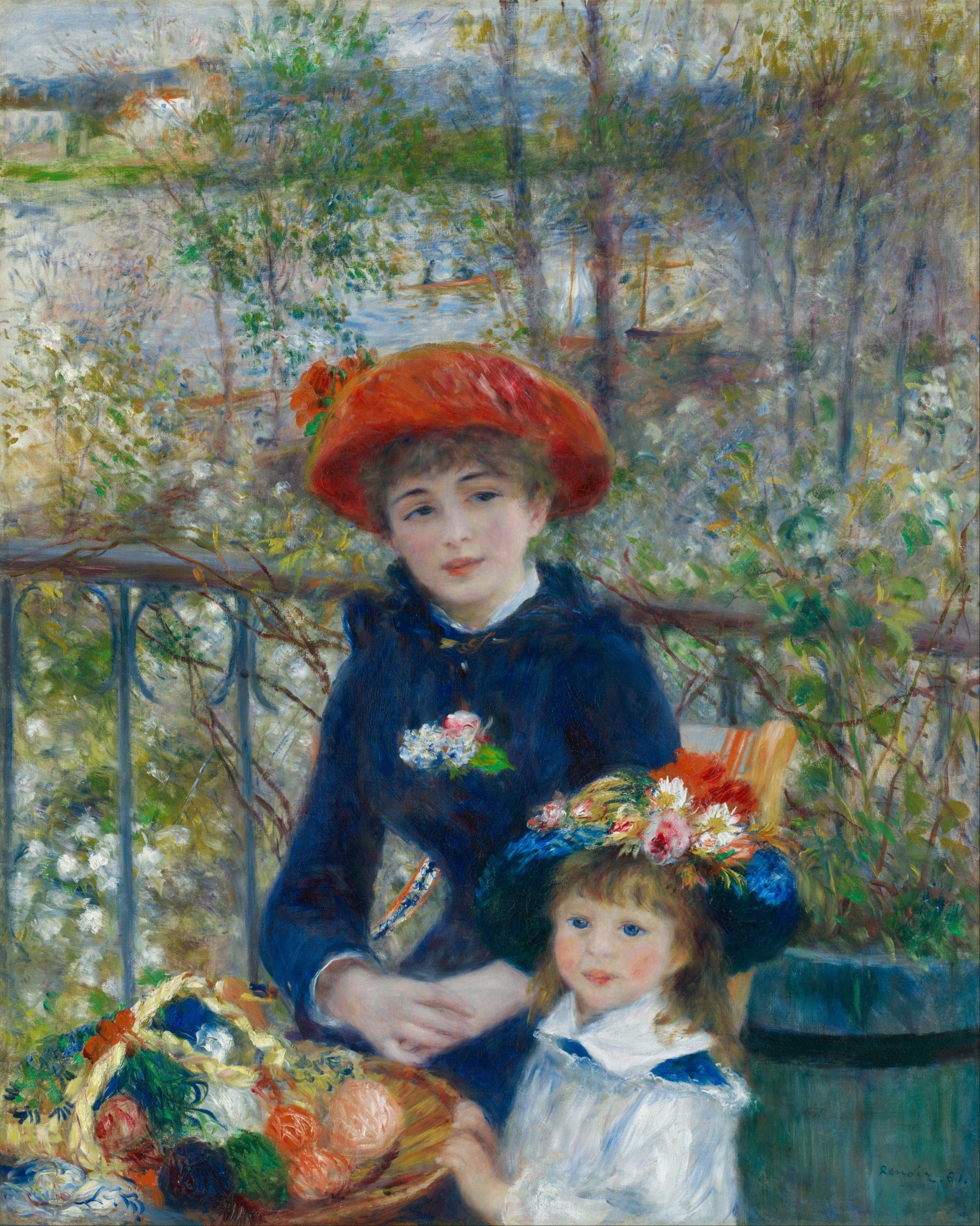
Pierre-Auguste Renoir · 1881
 Pierre-Auguste Renoir collection
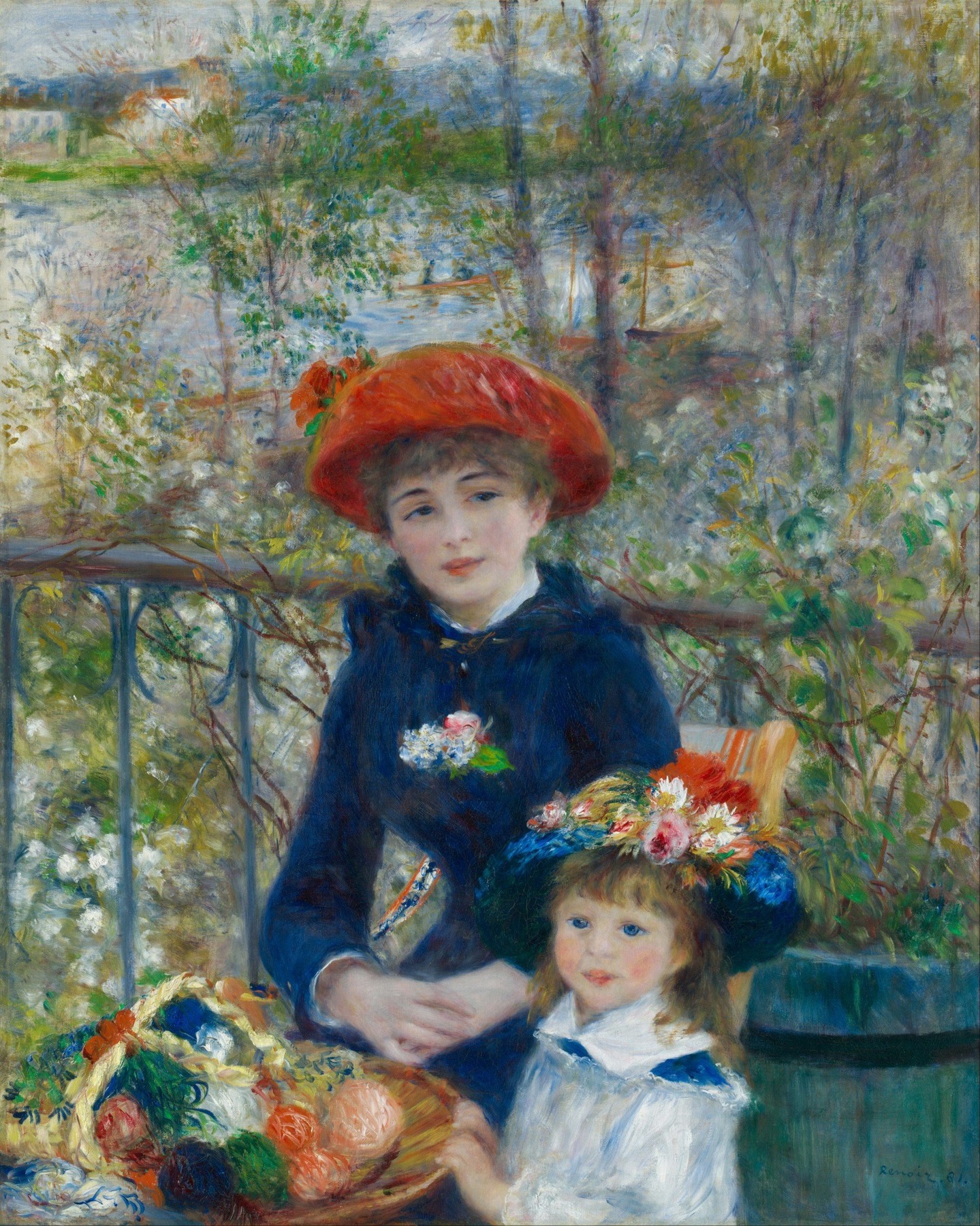
The older figure's red hat and the younger child's flower-trimmed hat establish two bright centres of attention. Around them, a basket, railing and shifting foliage create a setting that is detailed in some places and much looser in others.
The title can tempt a viewer to begin with a family story. A useful first approach is simpler: compare the faces, the different poses and the colour returning across the canvas. Renoir connects the figures to the surrounding light without making every part equally sharp.
Henri de Toulouse-Lautrec · 1892 to 95
 Henri de Toulouse-Lautrec collection
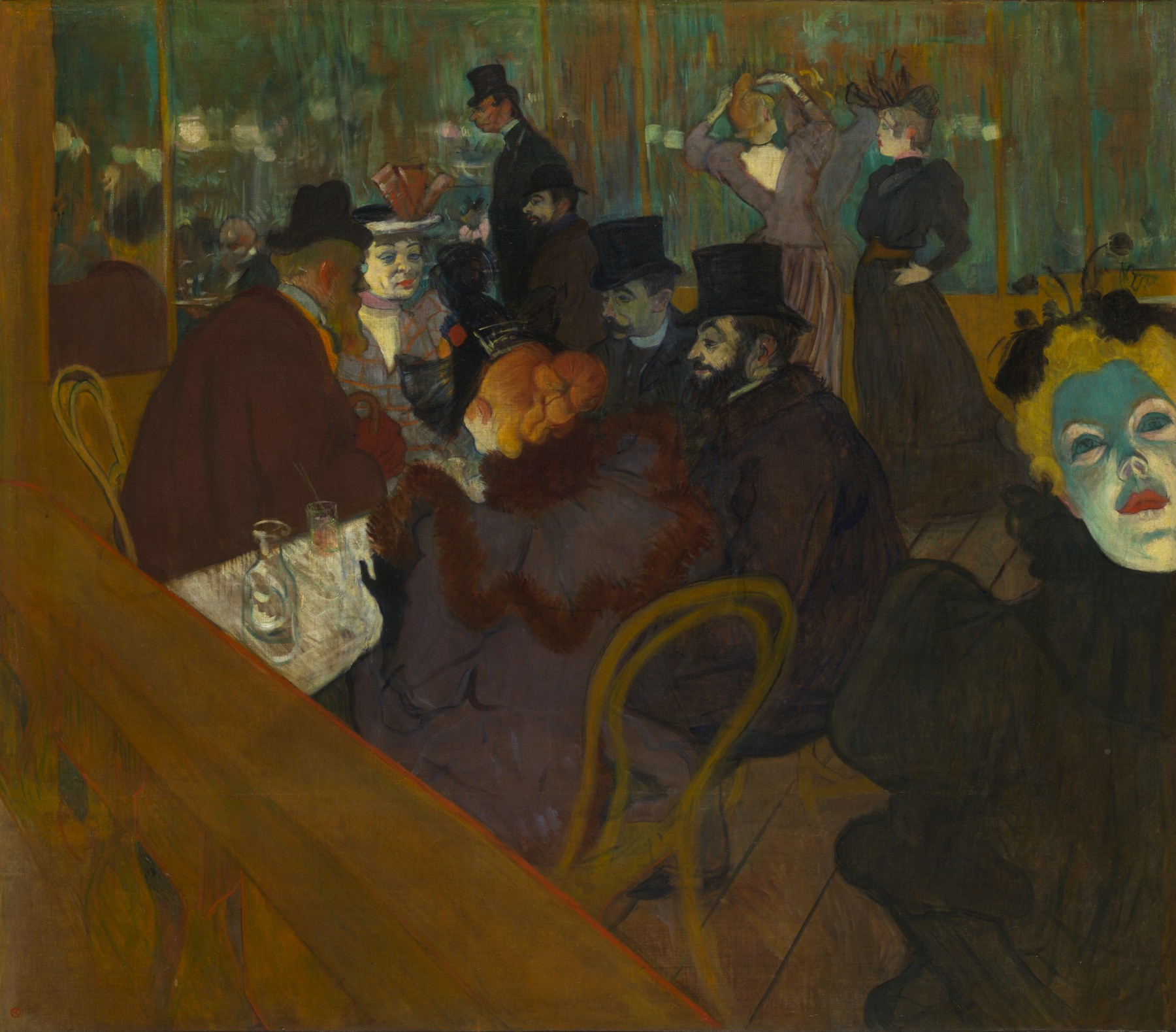
The foreground figure's green-lit face is difficult to ignore, but the gathering at the table has its own withdrawn atmosphere. Toulouse-Lautrec lets figures overlap, turn away and cut across the space rather than presenting a welcoming social scene.
Follow the strong diagonals of the furniture and the different directions of looking. The nightclub becomes a place of proximity without easy connection. Colour does psychological work here: the artificial light makes familiar facial features appear strange, especially at the edge nearest the viewer.
Jules Breton · 1884
 Jules Breton collection
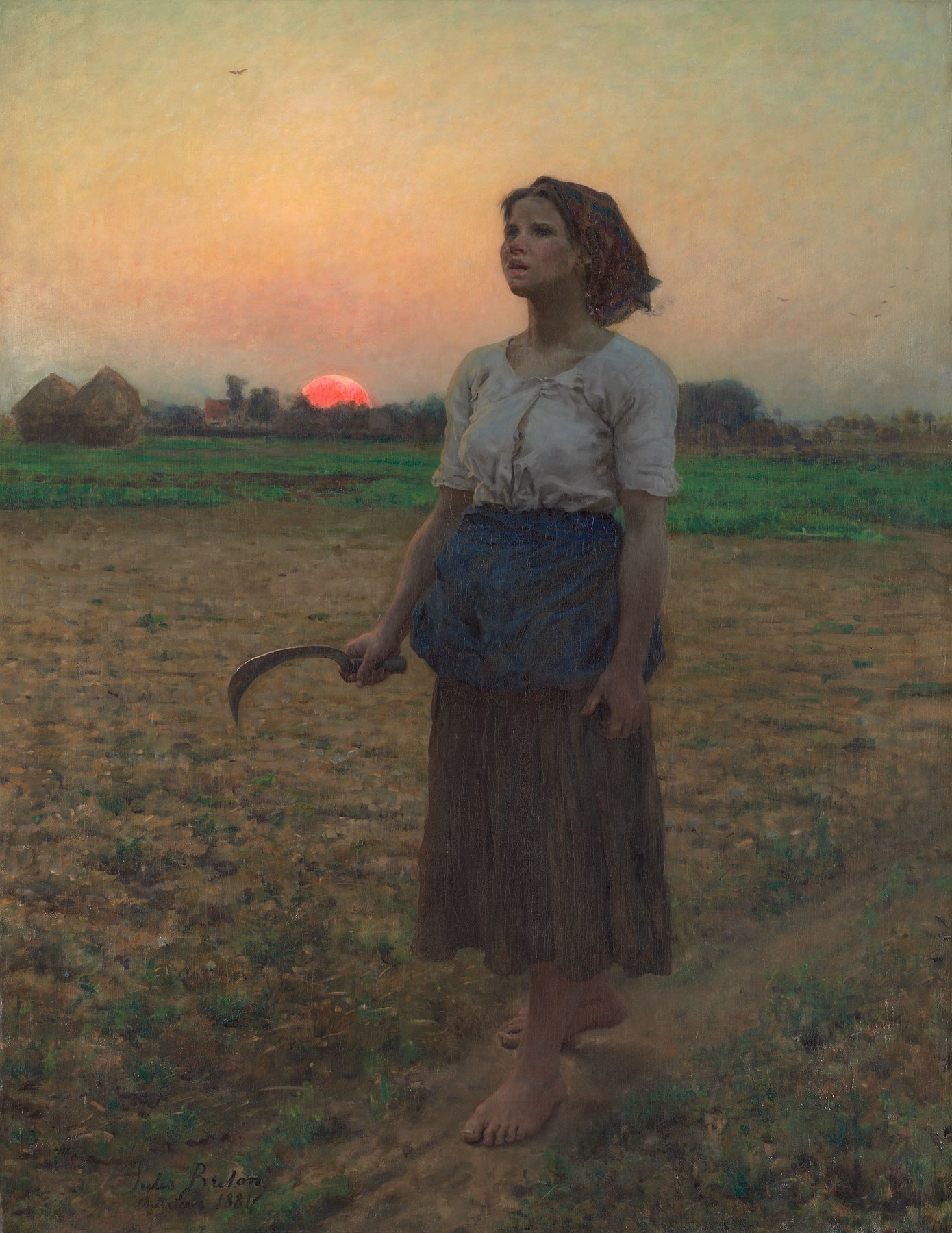
The field worker stands still with her head lifted and a sickle hanging at her side. The title supplies a sound that the painting cannot literally reproduce, turning the raised attention of the figure into the centre of the scene.
Notice the bare feet and the contrast between the dark foreground and the low sun. Breton gives the pause a physical setting in labour rather than treating it as an abstract moment of inspiration. The picture rewards attention to what has stopped, as well as to what remains visible.
Winslow Homer · 1885
 Winslow Homer collection
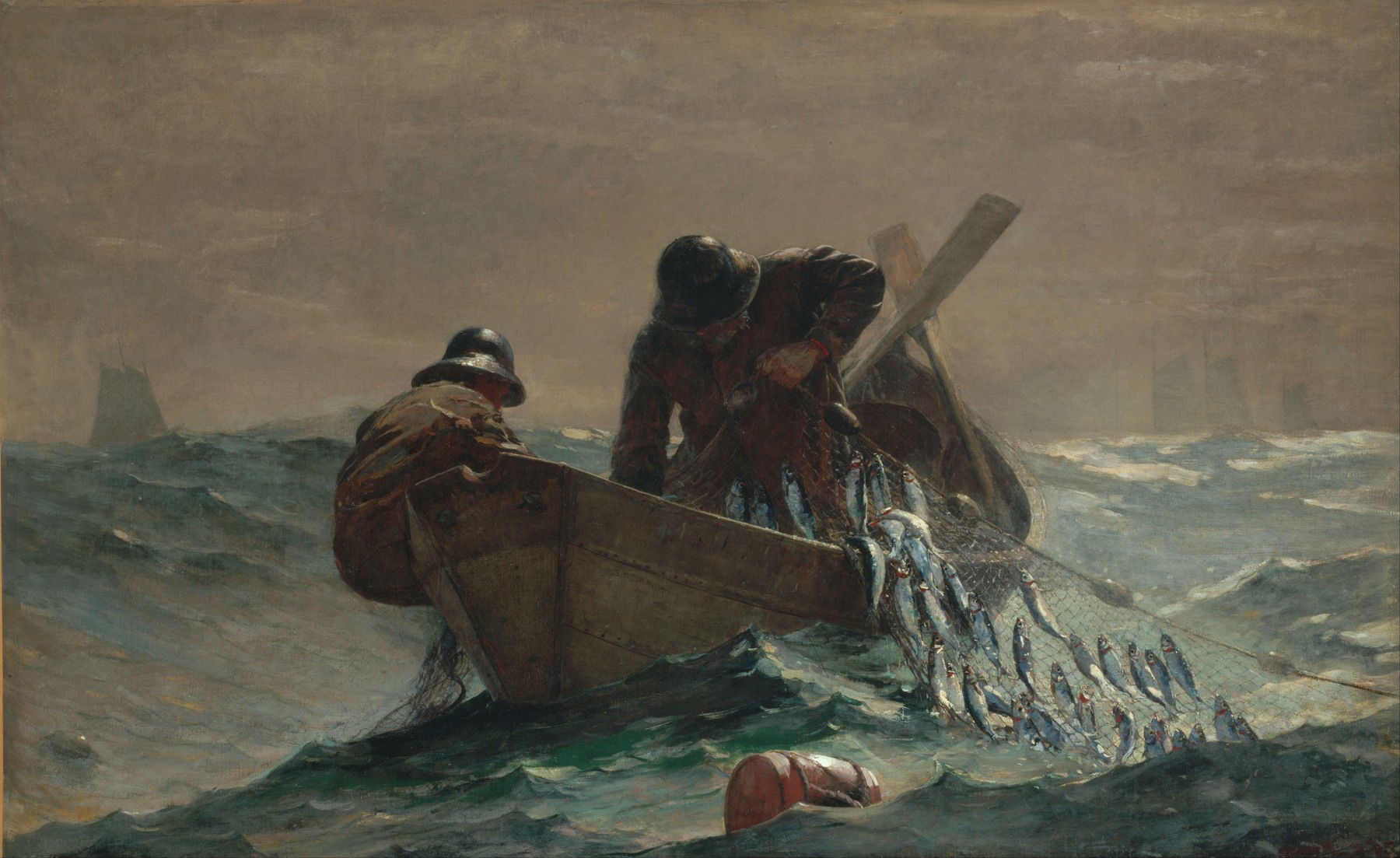
The two fishermen lean into work that appears to require their whole bodies. The boat is small against the moving water, and the net's weight makes the action feel specific rather than decorative.
Compare their different postures and the dark mass of the catch. Homer keeps the sea active around them, so that concentration on a task never removes the surrounding risk. A distant vessel and the horizon extend the scene, but the closest encounter is between bodies, equipment and the boat's unstable surface.
Berthe Morisot · 1875 to 80
 Berthe Morisot collection
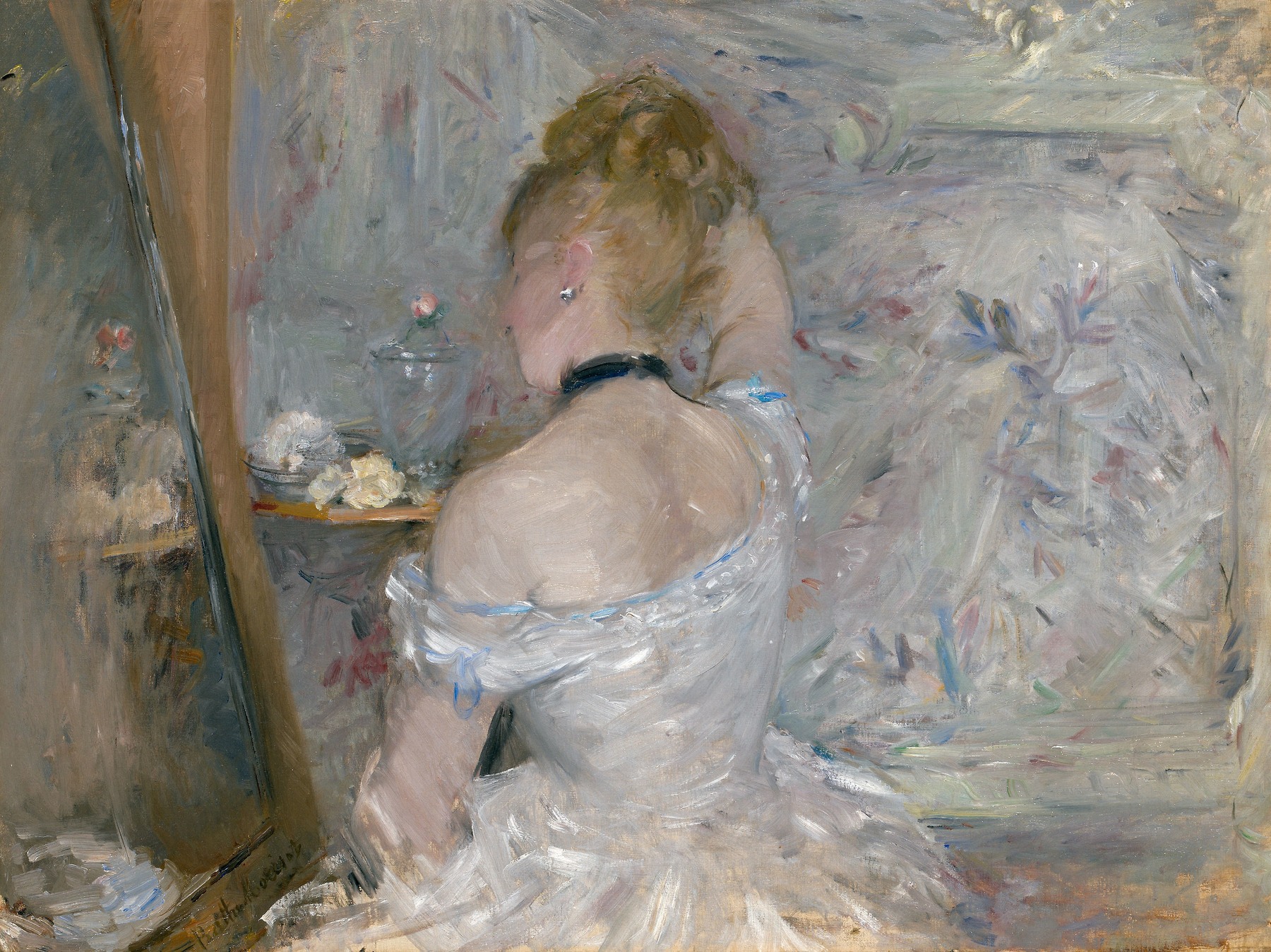
Morisot gives us a partial view of an ordinary private activity. The turned body and the dressing-table setting establish the scene, while much of its atmosphere depends on paint that remains loose and visibly responsive.
Look at how differently the figure and surrounding surfaces resolve as you move your attention across the canvas. A detail can become clear, then dissolve into a broader stroke. That variation makes the picture feel intimate without making the viewer all-seeing. The withheld face is part of its effect.
Gustave Moreau · 1875 to 76
 Gustave Moreau collection
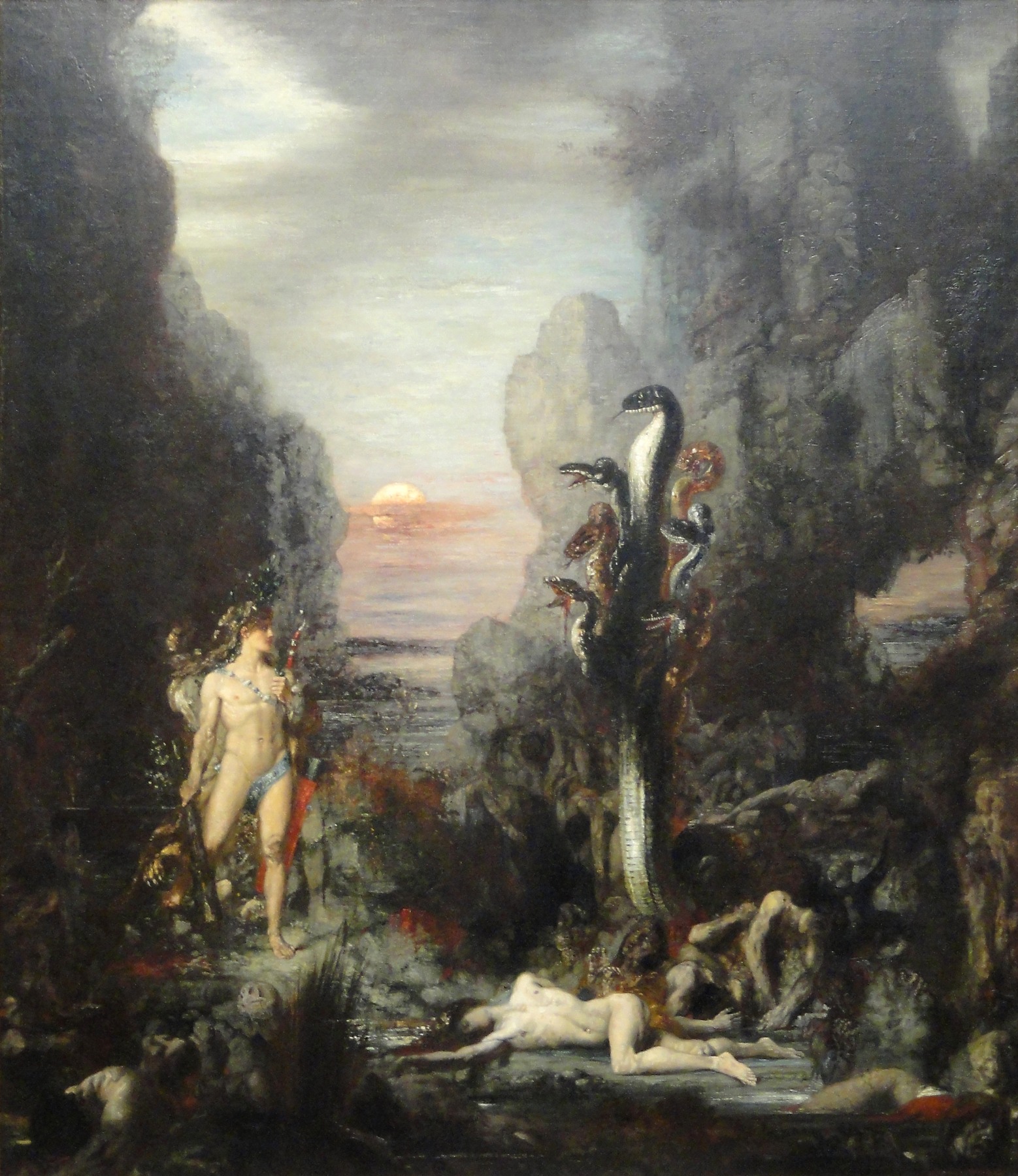
Hercules stands opposite the Hydra in a setting that feels saturated with threat. The repeated heads and coiling forms make the monster difficult to take in as one stable shape, while the surrounding bodies complicate the idea of a straightforward heroic victory.
Look at the balance between the comparatively clear human figure and the dense, dark setting. Moreau's treatment asks for a slower reading than the myth's familiar outline might suggest. The museum's record identifies the finished Chicago painting, rather than one of the related studies.
No. The published 10 to 11 am hour is for members. Regular public opening is 11 am.
The museum requires proof of Chicago or Illinois residency for those categories. Choose the appropriate ticket and bring the required evidence.
No. This guide illustrates the Art Institute’s 1889 version. Similar titles do not mean that the canvases are the same object.
Explore another collection in our Louvre Museum guide.
Enjoyed this story?
Save articles to your collection
Log in or create a free account, and this article will be waiting in your Private Collection.
Log in or sign up
Man Writing a Letter
Gabriel Metsu, c. 1664
The gallery list
Every painting is already 50% off. Join the list and we will send you an extra $15 code, plus first access to new collections.
No spam. Unsubscribe anytime. · Privacy Policy
Welcome
Your $15 code is on its way. Explore the gallery while you wait.