Loading cart…
No products in the cart.

The meaning and history of famous paintings: what they show, where the originals hang, and how each one is recreated by hand in oil on canvas.
Klimt’s late painting of two women close together in a world of red, destroyed by fire at Schloss Immendorf in 1945 and known today only from…
Explore Klimt’s Death and Life: the open-eyed woman, Death’s red club, the embracing figures and the changes revealed by an earlier version.
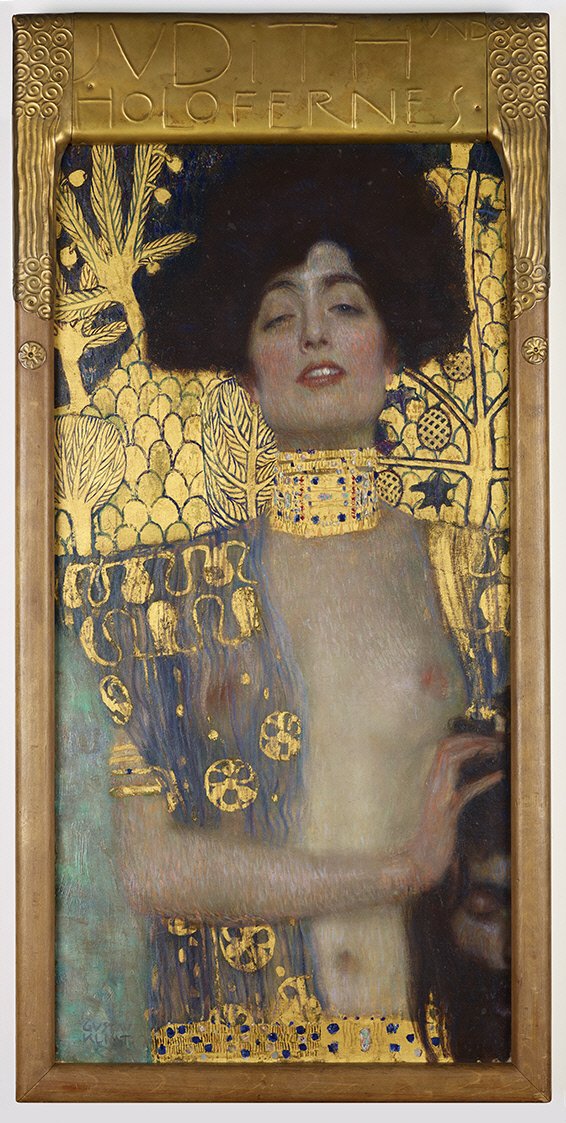
Judith tilts her head back with half-closed eyes, a gold collar at her throat and Holofernes’s head at the edge: Klimt, 1901.
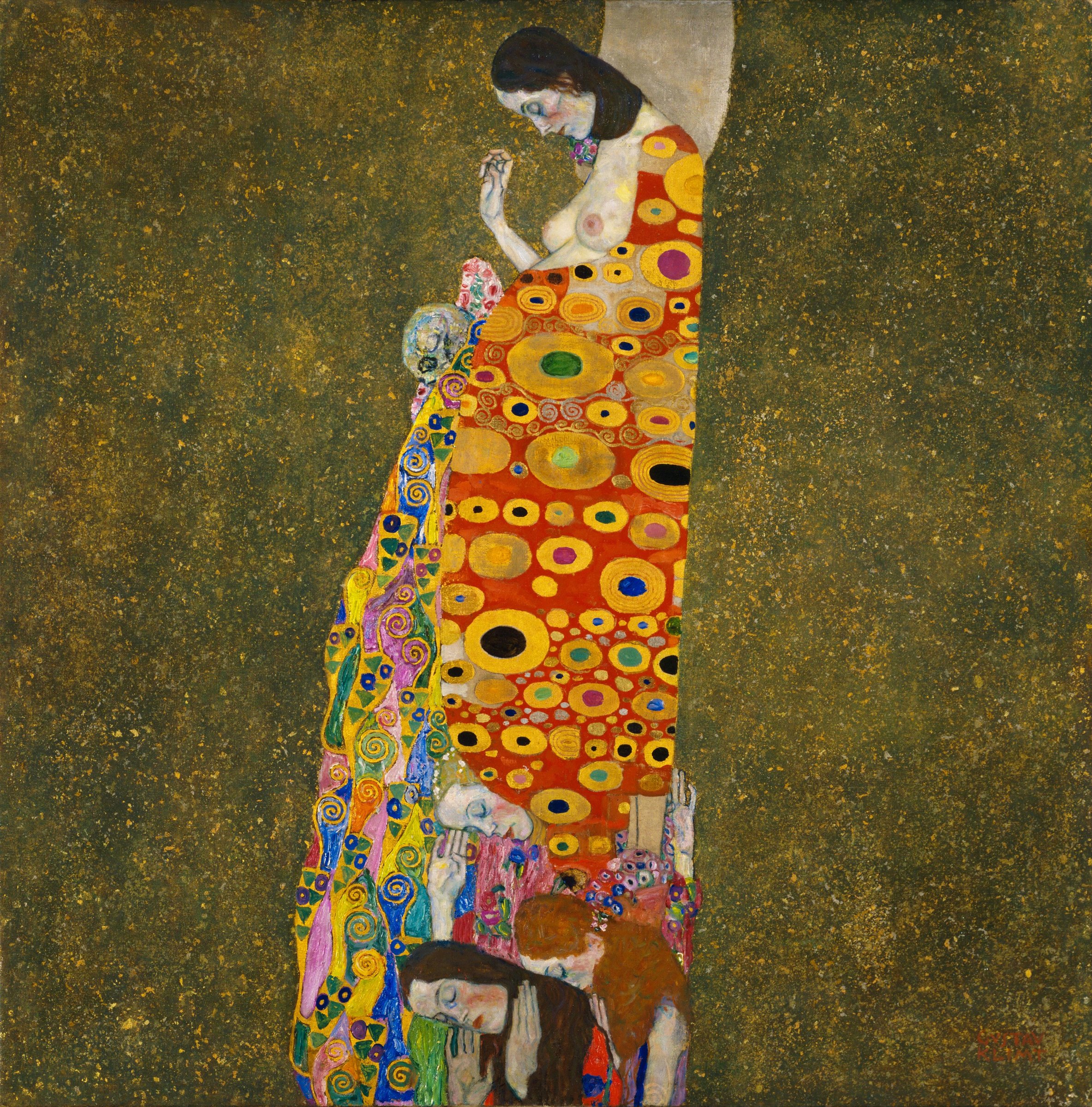
A pregnant woman prays in a robe of red and gold while a skull peeks out at her waist: Klimt’s Vision, now known as Hope II.
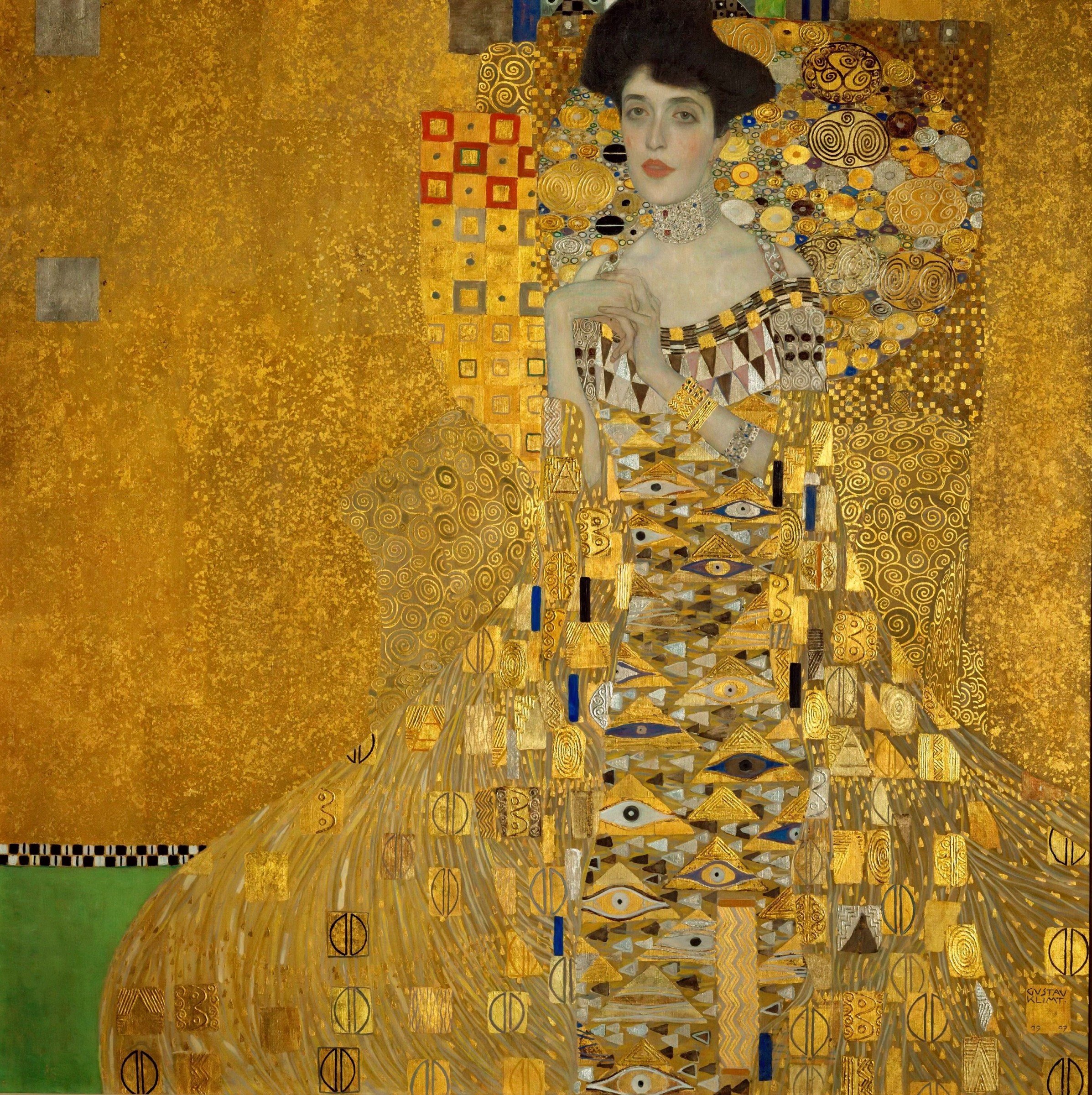
Klimt’s Woman in Gold: a real face and nervous hands inside a field of gold and Egyptian eyes, and a long fight to win it back.
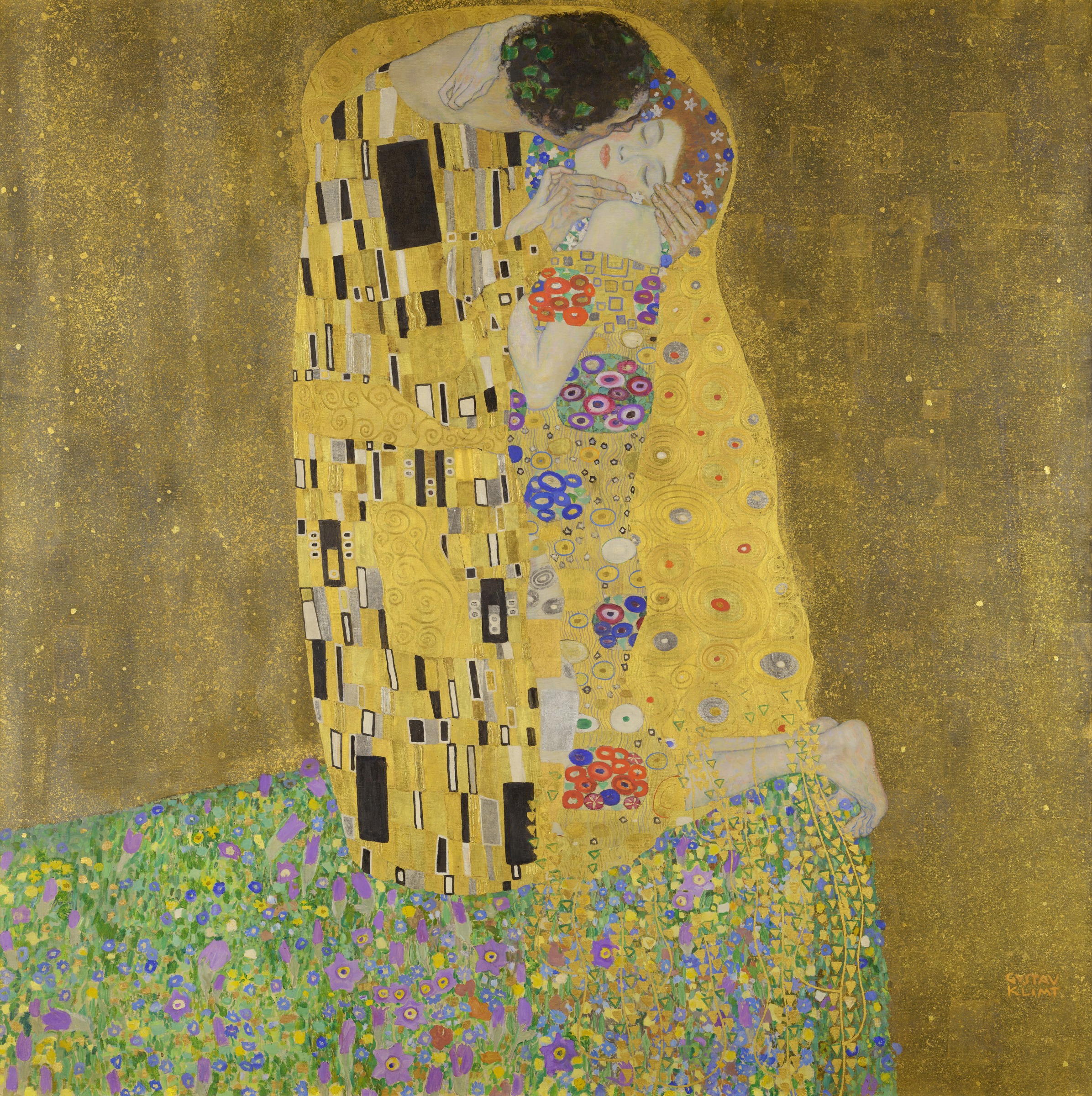
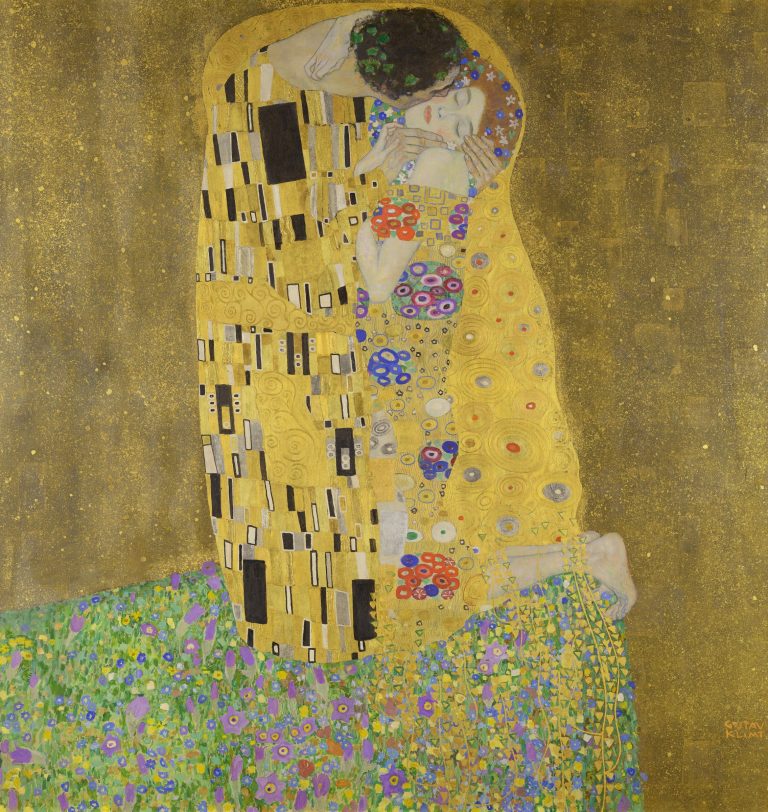
A close reading of Klimt’s The Kiss, with its lovers’ gestures, contrasting patterns, flowered edge, real metal surface and documented Belvedere…
A Sunday afternoon dance in Montmartre, Renoir’s friends at the tables and sunlight falling through the trees in patches of colour.
A young woman crochets in a wicker chair above the sea: a smooth, careful face against waves painted in quick, feathery strokes.
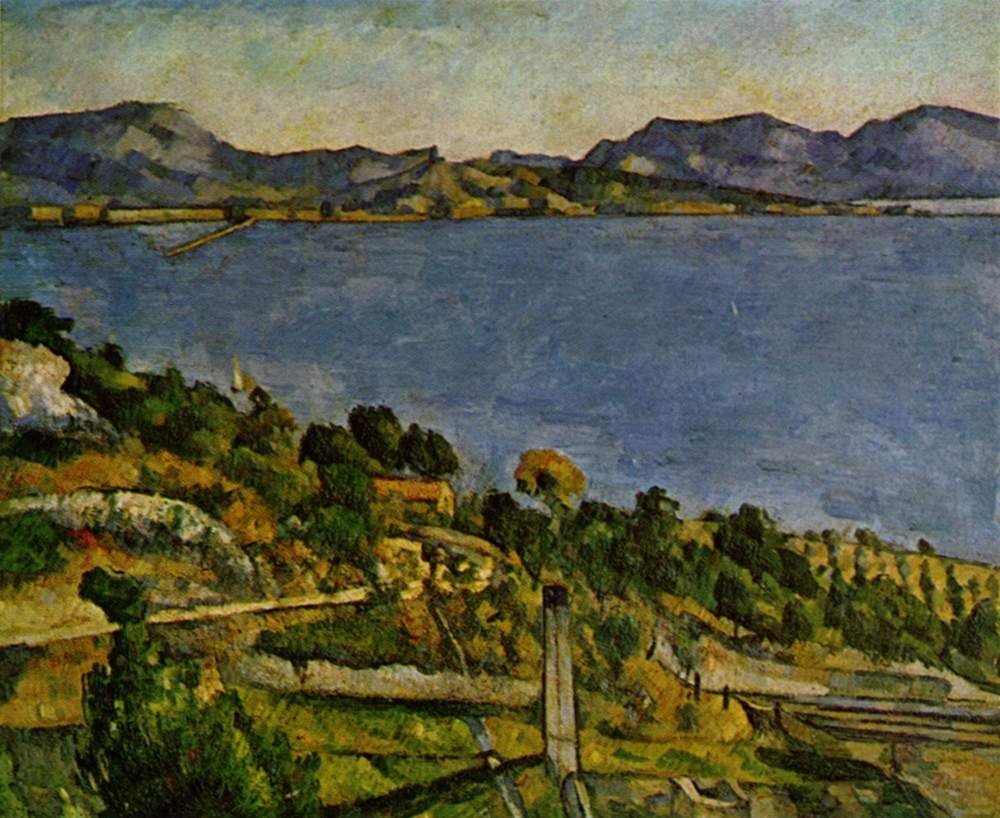
Red roofs, a flat blue sea and mountains beyond: Cézanne’s view of the Gulf of Marseille from the hills of L’Estaque.
A plaster cupid leans among apples and onions while painted canvases blur into the real room: Cézanne’s still life of about 1894.
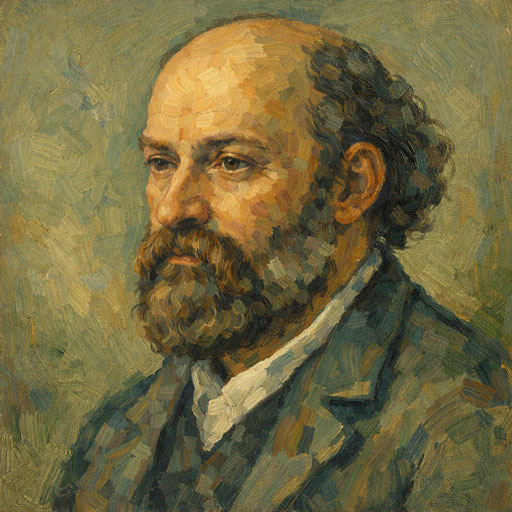
Cézanne looks over his shoulder in a bowler hat, his face built from blocks of colour: a guarded self-portrait from about 1885.
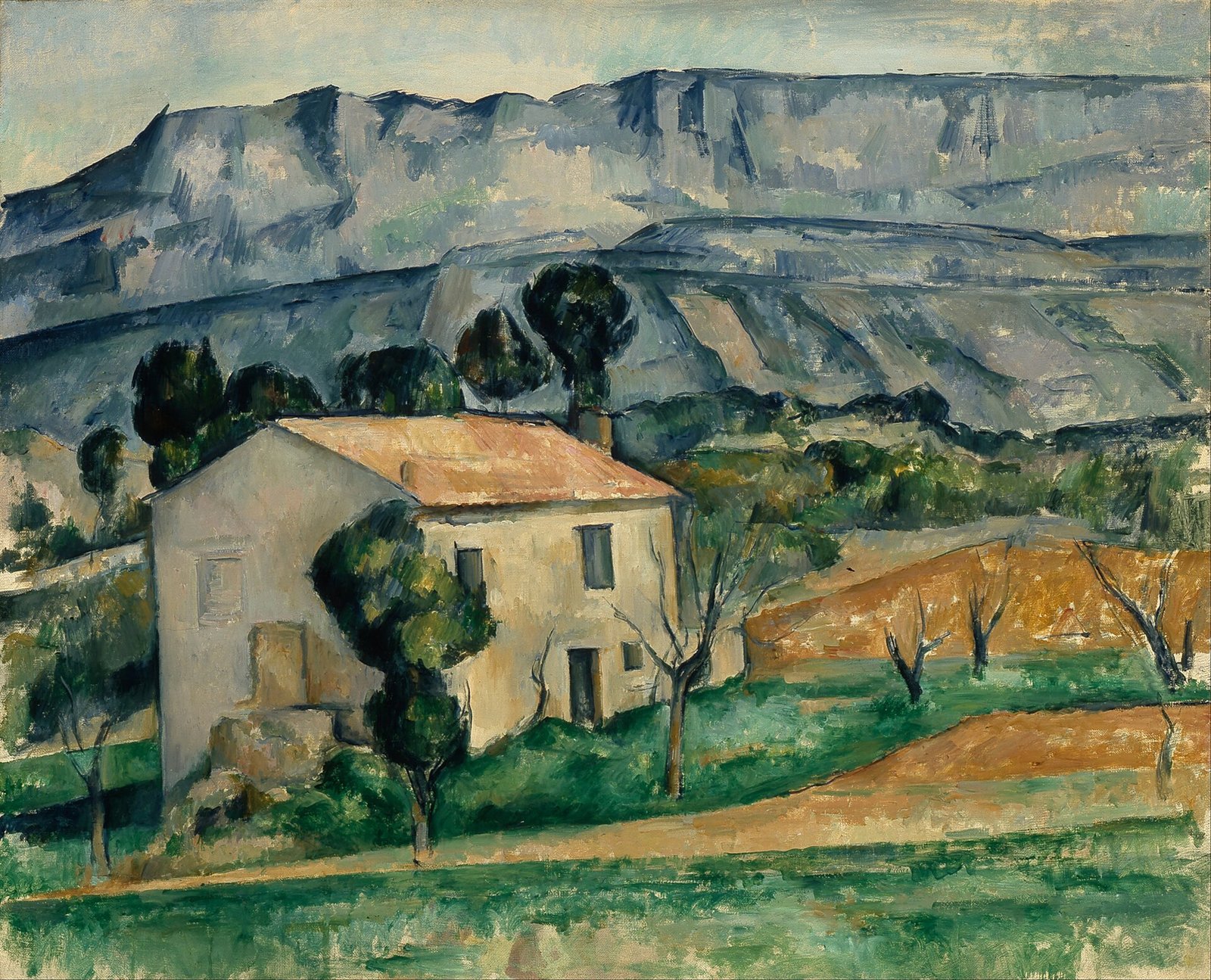
A pale farmhouse below a long blue ridge in Cézanne’s House in Provence, painted near Aix around 1886 to 1890, now in Indianapolis.
Bathers under an arch of leaning trees: the largest of Cézanne’s late bather paintings, worked on until his death in 1906.
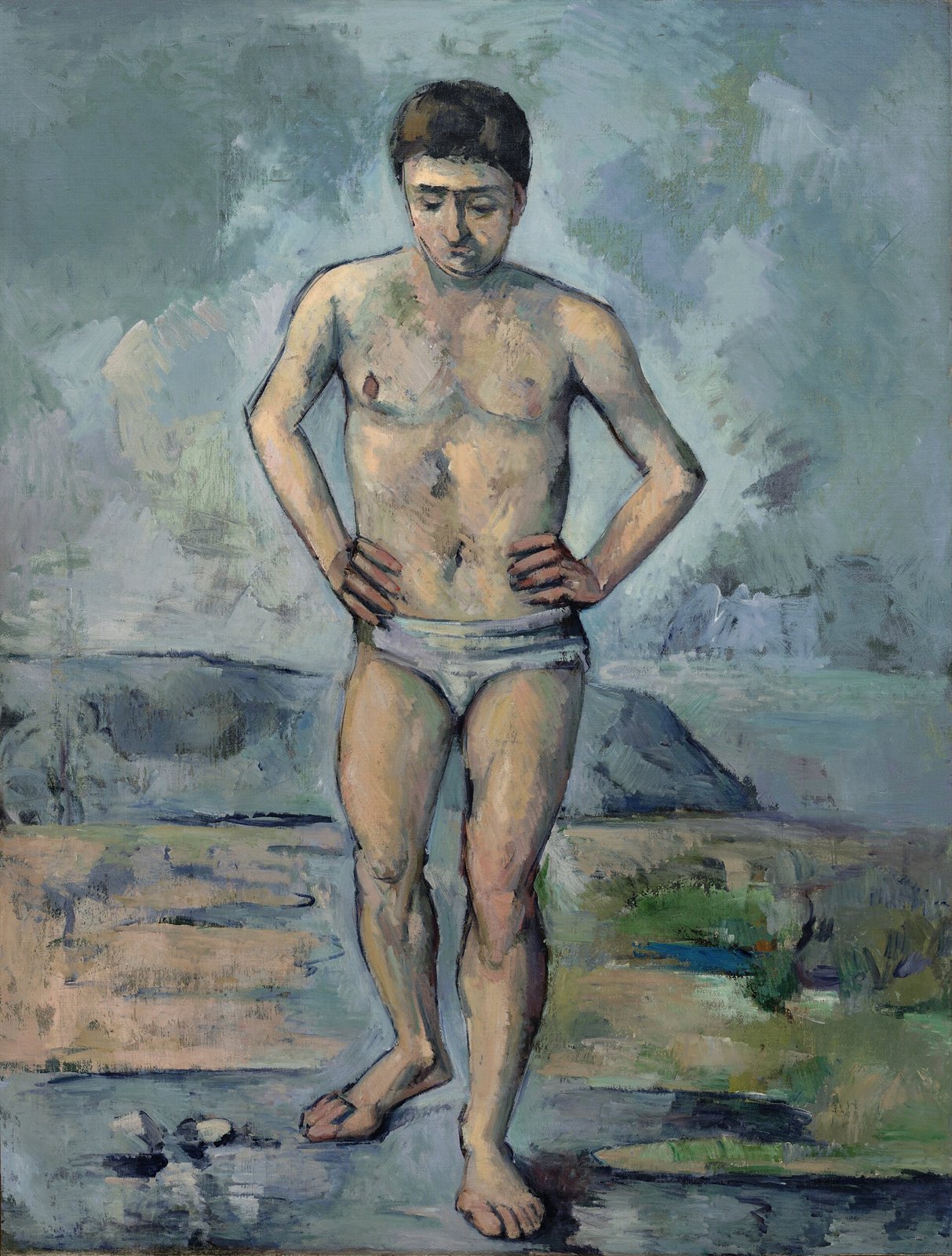
A young man in white trunks walks towards us along a riverbank: Cézanne’s The Bather (Le Grand Baigneur), about 1885, at MoMA.
The mountain above Aix, built from planes of blue, violet and green: one of Cézanne’s late views of Mont Sainte-Victoire, now in Philadelphia.
A tipping basket, a leaning bottle and a table whose edges do not meet: Cézanne’s still life built from several viewpoints at once.
An Italian model in a red waistcoat, hand on hip, painted by Cézanne in patches of colour with deliberately long arms.
Why does Cézanne’s table seem to tilt? Explore the fruit, floral jug, folded cloth, shifting viewpoints and history of Still Life with Apples and…

Man Writing a Letter
Gabriel Metsu, c. 1664
The gallery list
Every painting is already 50% off. Join the list and we will send you an extra $15 code, plus first access to new collections.
No spam. Unsubscribe anytime. · Privacy Policy
Welcome
Your $15 code is on its way. Explore the gallery while you wait.